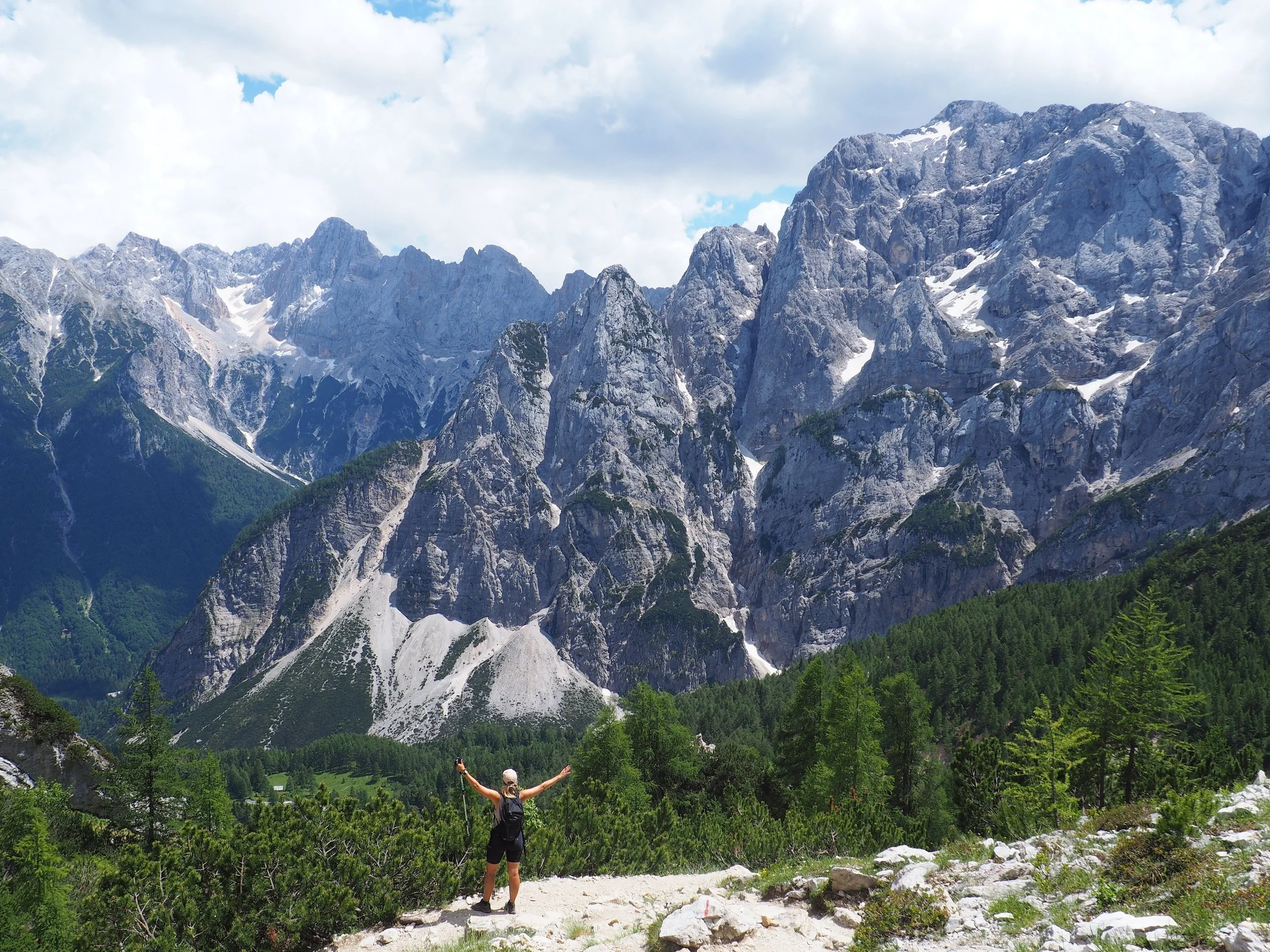
2 Week Slovenia Road Trip Itinerary: A Slow Travel Guide 2026
A slow-paced journey through Slovenia's classic outdoor destinations, from the historic Adriatic coast to the jagged peaks of the Julian Alps
Slovenia is no longer a hidden gem and it would feel a little dishonest to call it one. Places like Lake Bled, Ljubljana and the Soča Valley are well known for a reason. But after travelling across the country for the first time in late May and early June, Slovenia still felt surprisingly underrated to us in some ways.
It is a small country of just over two million people, compact enough to cross in a few hours. But Slovenia rewards a slower pace. Over relatively short distances, the landscapes change from Venetian-influenced coastal towns to limestone caves, a compact capital city, quiet alpine valleys, clear lakes and the blue-green water of the Soča River. Our route focused mostly on the coast, central Slovenia and the mountains, so it does not cover every part of the country.
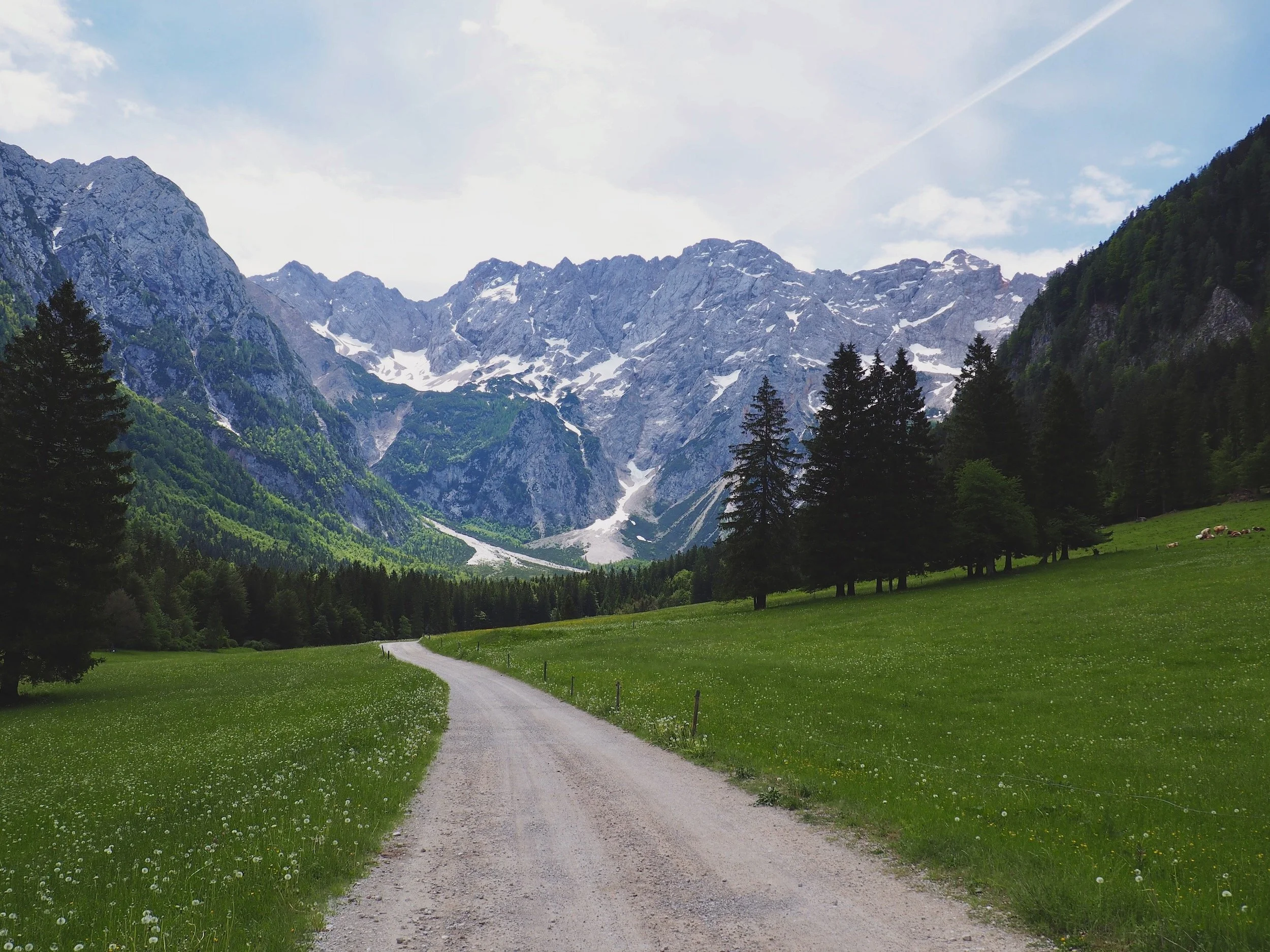
Some areas can feel busy, especially around Bled and parts of the Soča Valley, but we also found peaceful guesthouses, quiet villages and mountain valleys that did not feel overrun at all. As we were arriving from Istria, Croatia, we entered Slovenia from the southwest, began near Piran and finished in Kranjska Gora before continuing north.
How much time do you need?
For a first visit, I would allow at least two weeks. The itinerary below covers 16 days and 15 nights, which gives enough time to travel slowly and maintain some flexibility around changing mountain weather. If you have exactly 14 calendar days, use the route as a framework and shorten it by two nights. Piran can be reduced to one night if the coast is not a priority, while hikers may prefer to preserve more time in the Soča Valley or Julian Alps.
Route at a glance
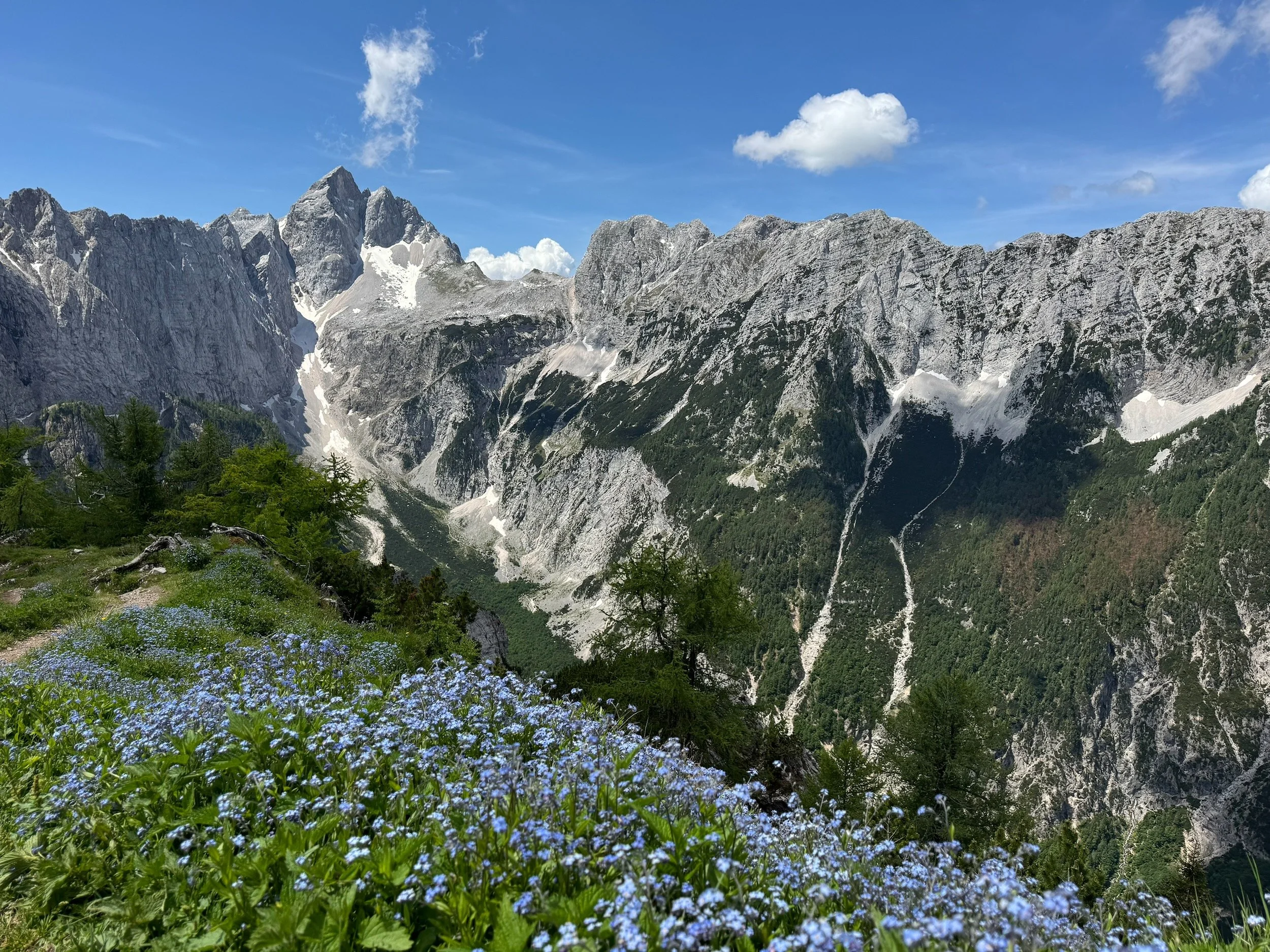
Piran → Škocjan Caves → Ljubljana → Logar Valley → Jezersko → Lake Bohinj & Lake Bled → Soča Valley → Vršič Pass → Kranjska Gora/ Julian Alps
16-Day Slovenia Itinerary
2 nights Piran
2 nights Ljubljana
2 nights Logar Valley
3 nights Lake Bled/ Lake Bohinj
3 nights Soča Valley
3 nights Kranjska Gora/ Julian Alps
This follows the route we travelled, just slightly condensed. I would make a few adjustments depending on where you enter and leave Slovenia. If you are flying in and out of Ljubljana, a more efficient order would be
Ljubljana → Logar Valley → Bled and Bohinj → Kranjska Gora → Vršič Pass and the Soča Valley → Piran → Ljubljana.
This avoids travelling directly from Bohinj to the Soča Valley as we did. Our drive was beautiful, but visiting Kranjska Gora first creates a more natural route across Vršič Pass into the Soča Valley when the pass is open.
Practical Slovenia Tips
Book accommodation early in popular alpine areas
Keep some flexibility in your plans
Bring layers and rain gear, even in summer
Choose a few main hikes rather than every gorge and waterfall
Allow extra time for mountain drives and check road closures
Expect paid parking near most sights
Carry cash for mountain huts and kiosks
Bring Visa or Mastercard; American Express was not accepted
Cross-check trailheads rather than relying only on Google Maps
Tap water is generally safe to drink, so bring a reusable bottle
Trip planning can quickly feel overwhelming, so this guide is intended to make a Slovenia road trip feel more manageable. It follows the slow-paced route that worked well for us, with suggestions for where to adjust the order, shorten your stay or add extra time.
To preserve the slower pace, I would only add another region if you have several extra days. Maribor, the wine regions of eastern Slovenia and the thermal spa towns would make a worthwhile extension. Otherwise, use any additional time within the existing route: stay longer in the Julian Alps for hiking, extend the Soča Valley for rafting or canyoning or spend a few more days along the Istrian coast in summer.
Before You Go | Slovenia Road Trip Tips
When to visit: For this kind of Slovenia road trip, the best time to visit is May, June, September or early October. We originally considered April, but after looking more closely at mountain conditions, we pushed the trip to late May and early June. That worked well for green landscapes, full rivers, waterfalls and hiking without peak summer crowds.
April can still be early for higher trails and many mountain huts only open later in the season. July and August are better for swimming, rafting and a more summery atmosphere, but they are also busier and usually more expensive. September is another strong option for hiking, while early October can be lovely for a quieter road trip as long as mountain plans stay flexible.
Getting around: A car makes exploring Slovenia much easier. Public transport connects the main towns, but reaching valleys, villages, trailheads, scenic roads and accommodation outside the main centres is far more convenient with a car. Drive times can look short on a map, but narrow roads, mountain passes and scenic stops often make journeys slower than expected.
Slovenia uses an e-vignette system for motorways and expressways, which must be arranged before driving on them. It is also good to check road closures before longer drives. We narrowly avoided closures twice and might otherwise have faced delays of several hours.
Parking: Download EasyPark before your trip. It is accepted at many paid parking areas across Slovenia and makes it easy to start or extend a parking session from your phone.
Accommodation: Booking ahead is worthwhile if you want a convenient location, parking or a smaller family-run guesthouse. We spent quite a bit of time choosing our bases and were glad we did, as the right location can prevent a lot of unnecessary driving. Throughout the itinerary, I’ll mention where we stayed and what worked well to help you choose bases that fit your own route. We mostly used Booking.com.
Trail planning: We mainly used AllTrails to compare routes and read recent comments, while Google Maps helped us find parking and trailheads. Do not rely on Google Maps alone for mountain trails. Cross-check more demanding routes with maPZS, Slovenia’s official mountain-trail map and download maps for offline use where possible.
Payments: Carry some euros, especially on hiking days, as many of the mountain huts and smaller kiosks accept cash only. We also found that American Express was not accepted anywhere we tried, so bring a Visa or Mastercard as your main card.
Piran & Slovenia’s Adriatic Coast | Day 1-3
Since we were coming from the southern part of Croatian Istria, Piran was our first stop in Slovenia. We stayed about 30 minutes out of town, just across the border on the Croatian side, which worked well for us because we had a car and wanted easy parking. But there are also great options closer to Piran.
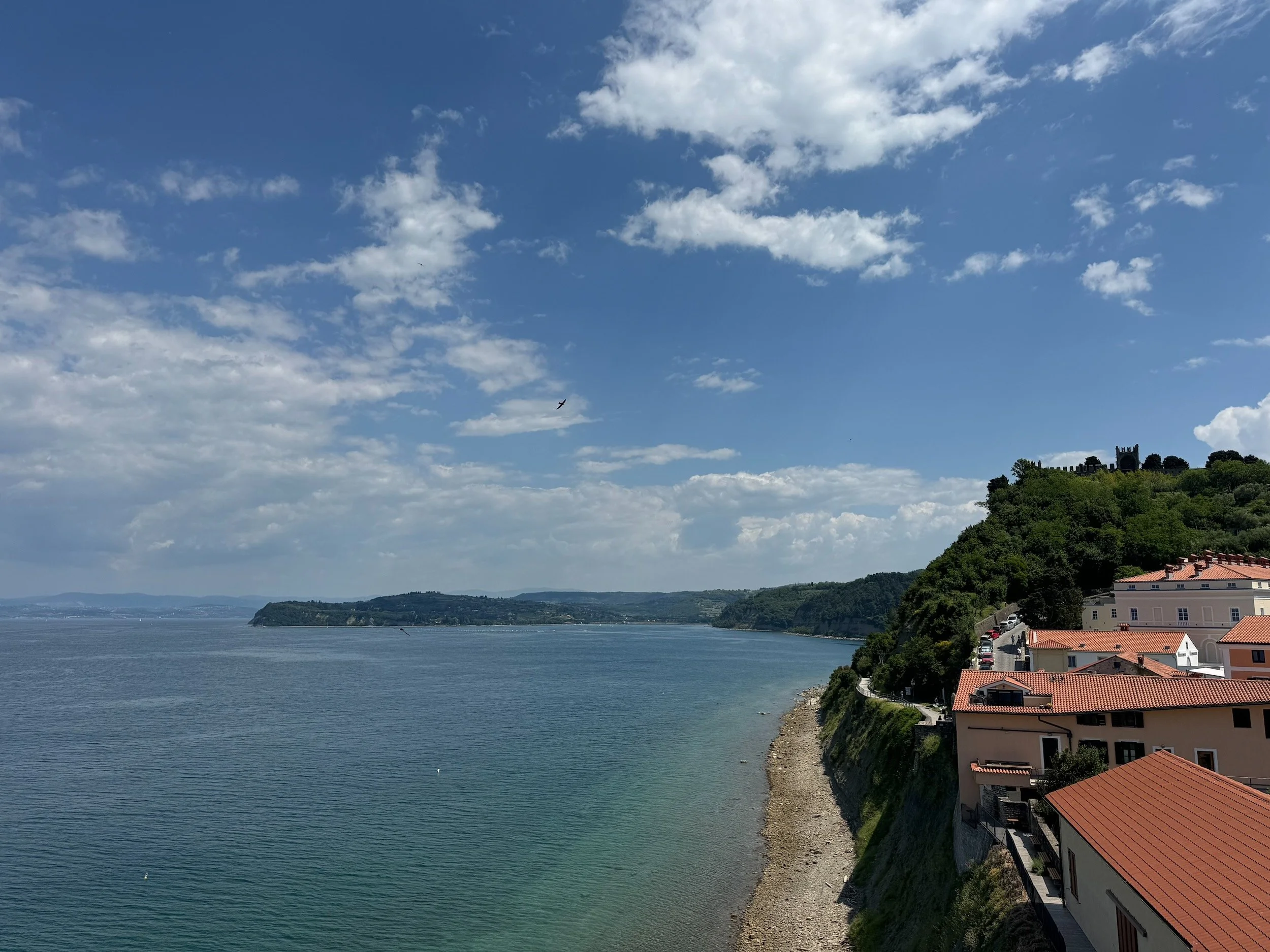
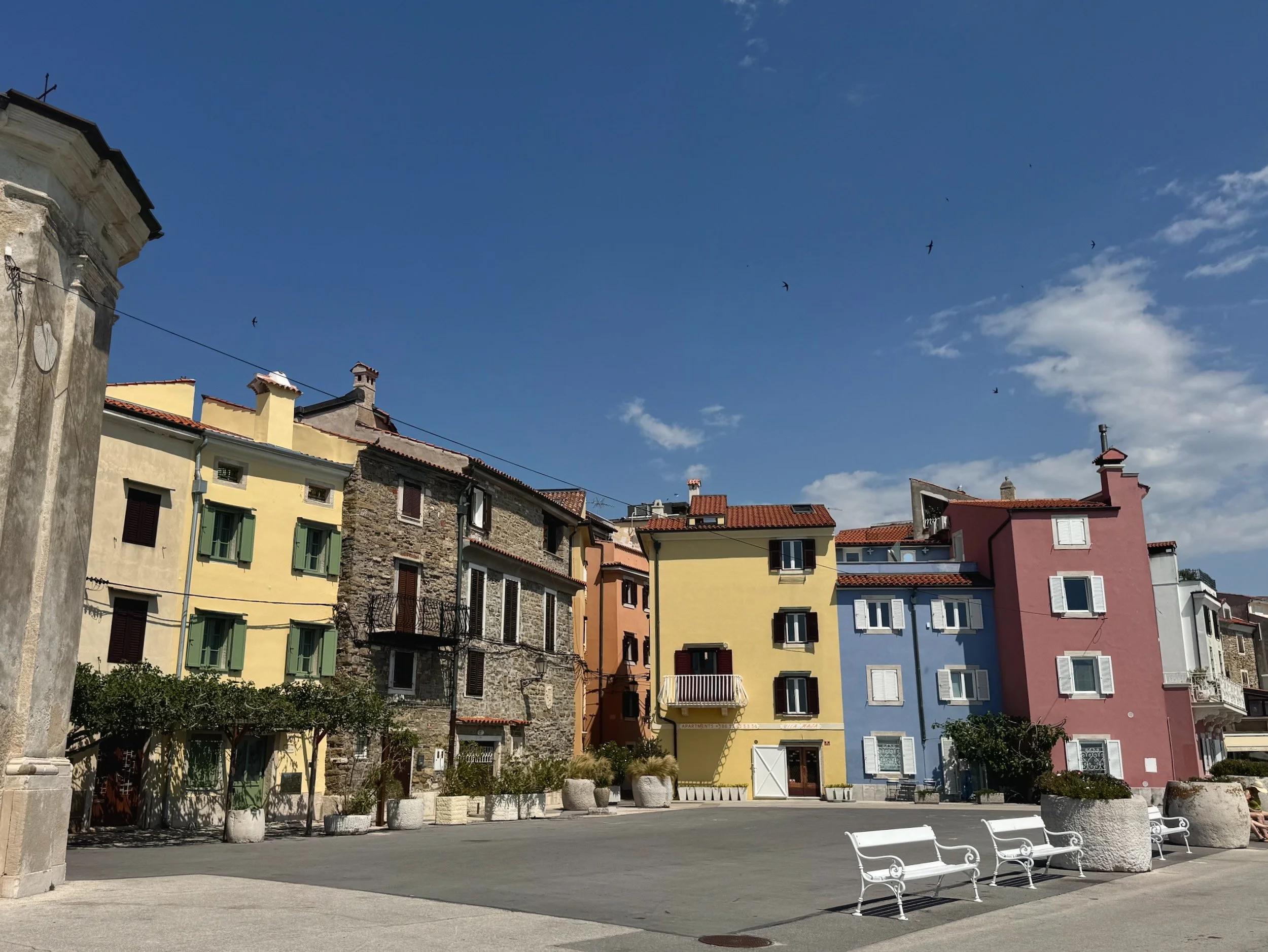
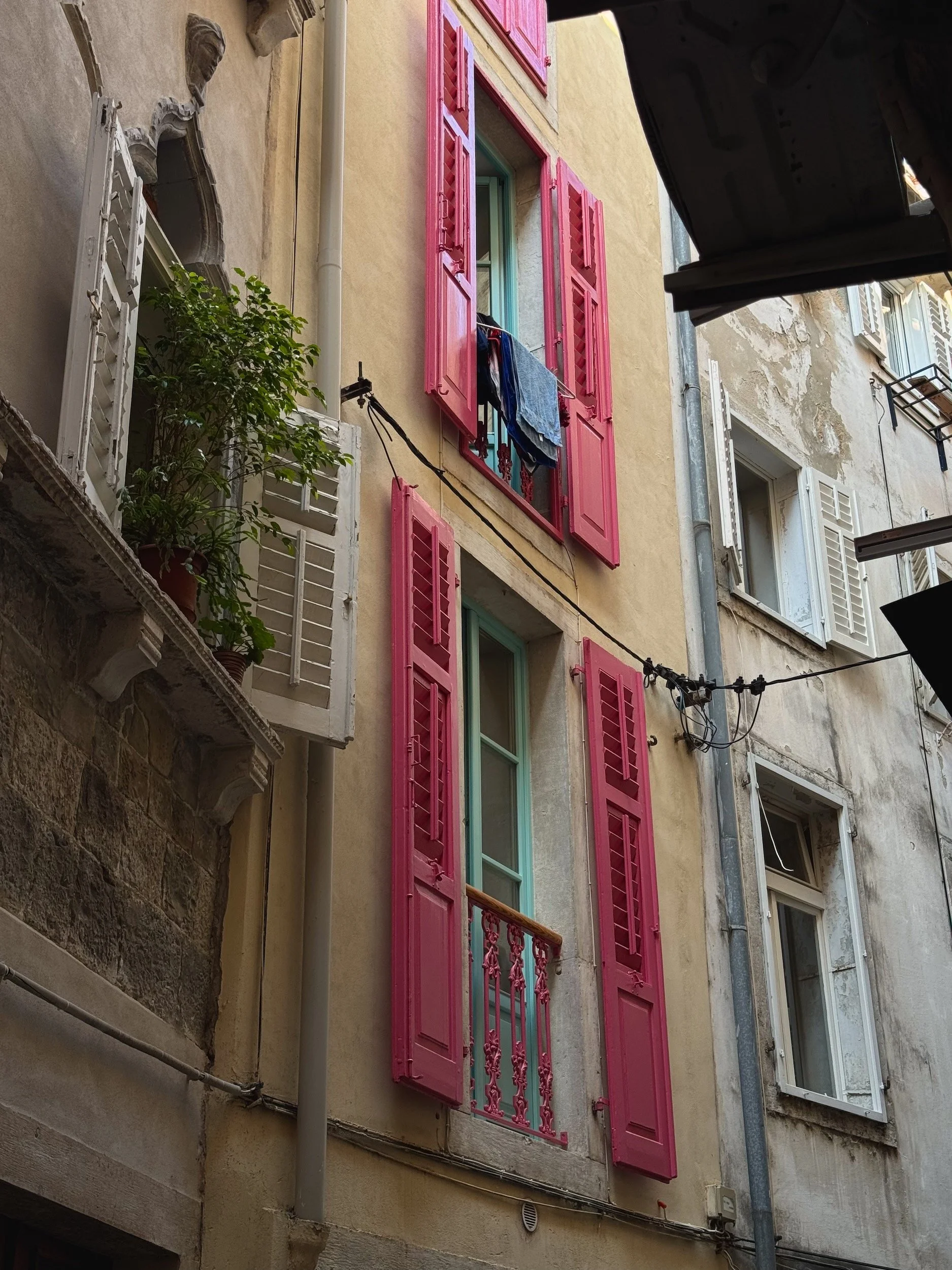
Piran sits on Slovenia’s short stretch of Adriatic coastline, tucked between Italy and Croatia. It is often described as Venetian and while it is obviously not Venice, the influence is visible in the architecture, narrow streets and coastal atmosphere. The town’s official tourism site also highlights its Venetian architectural heritage, salt history and Mediterranean character.
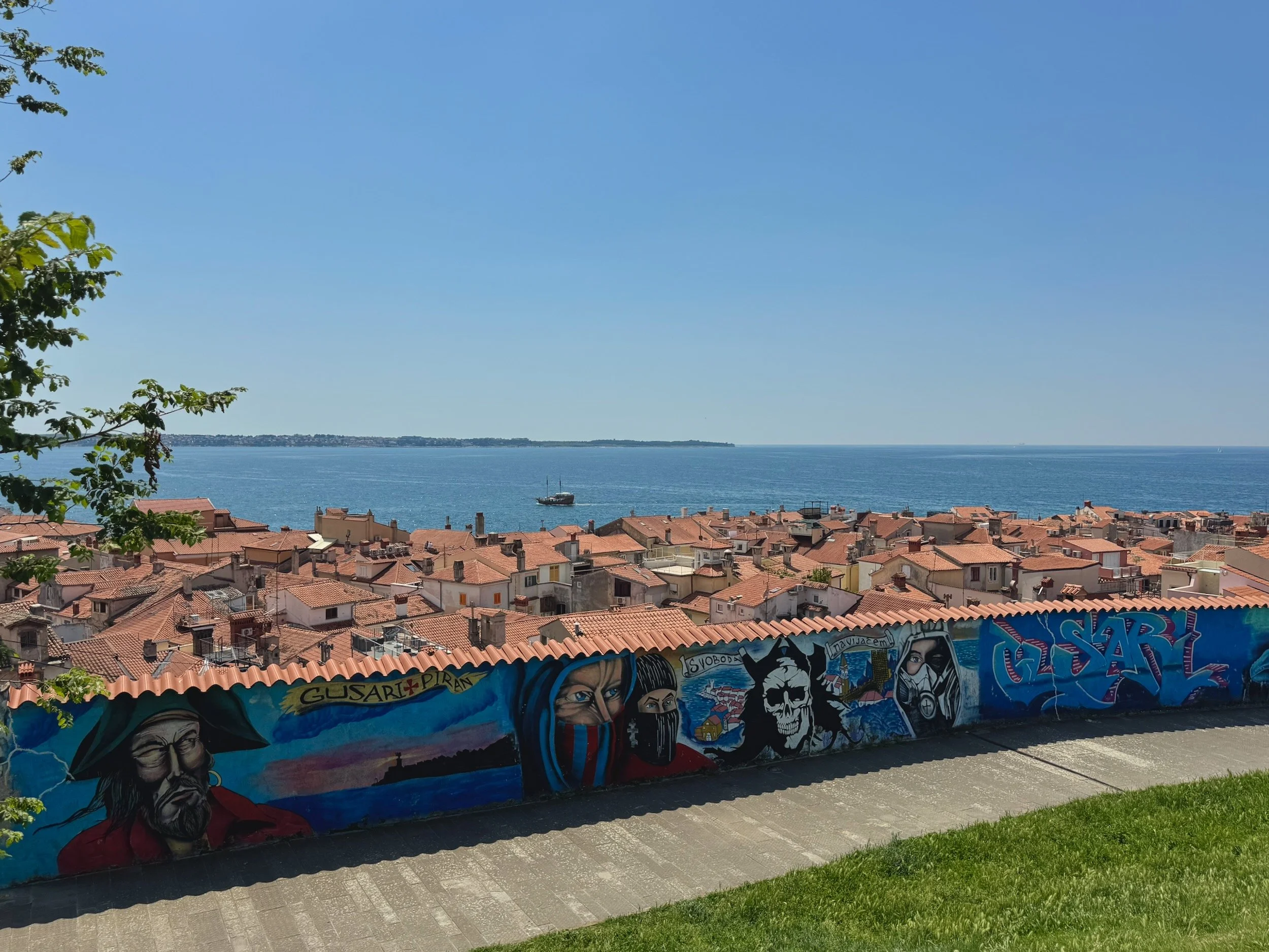
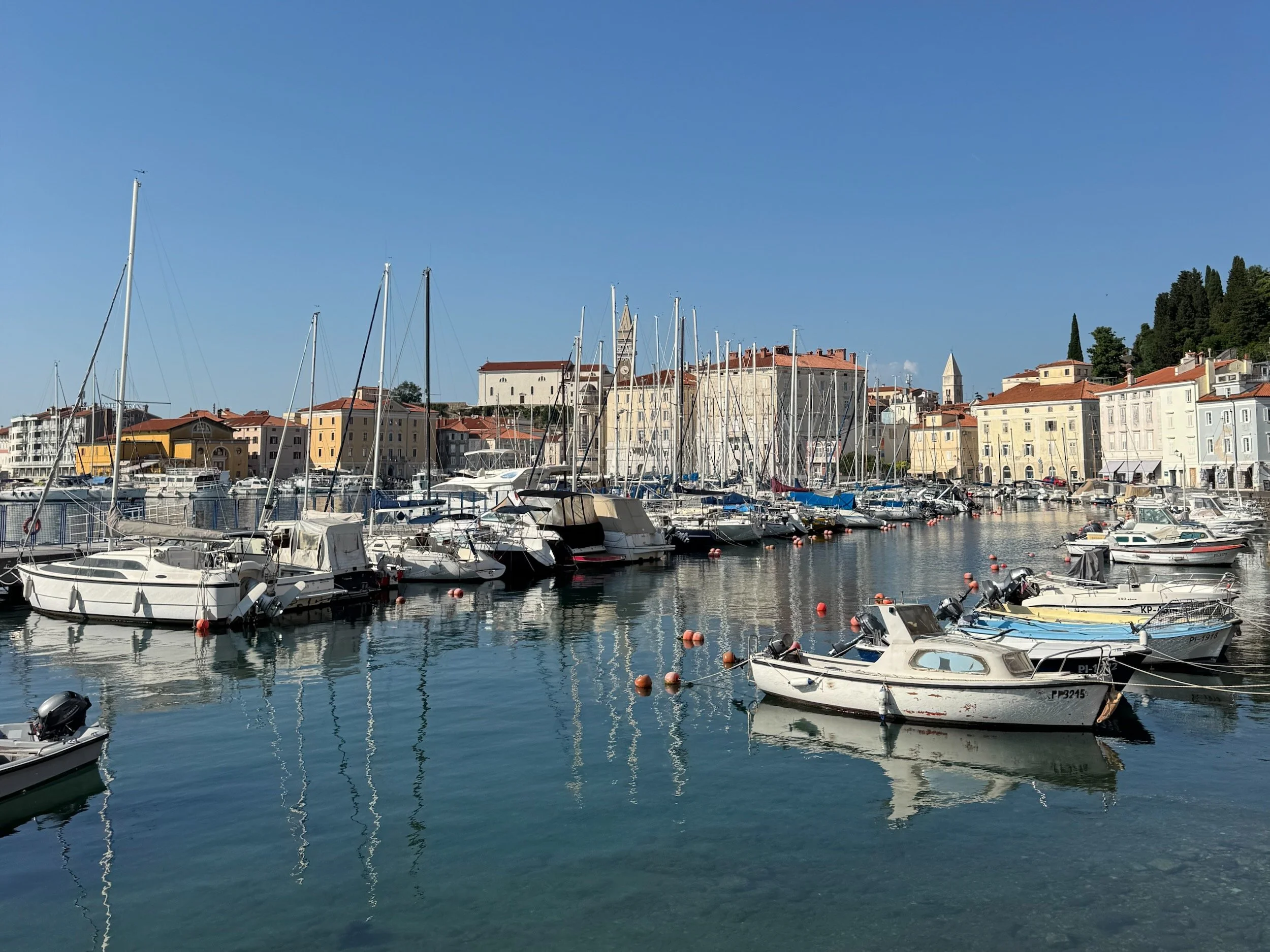
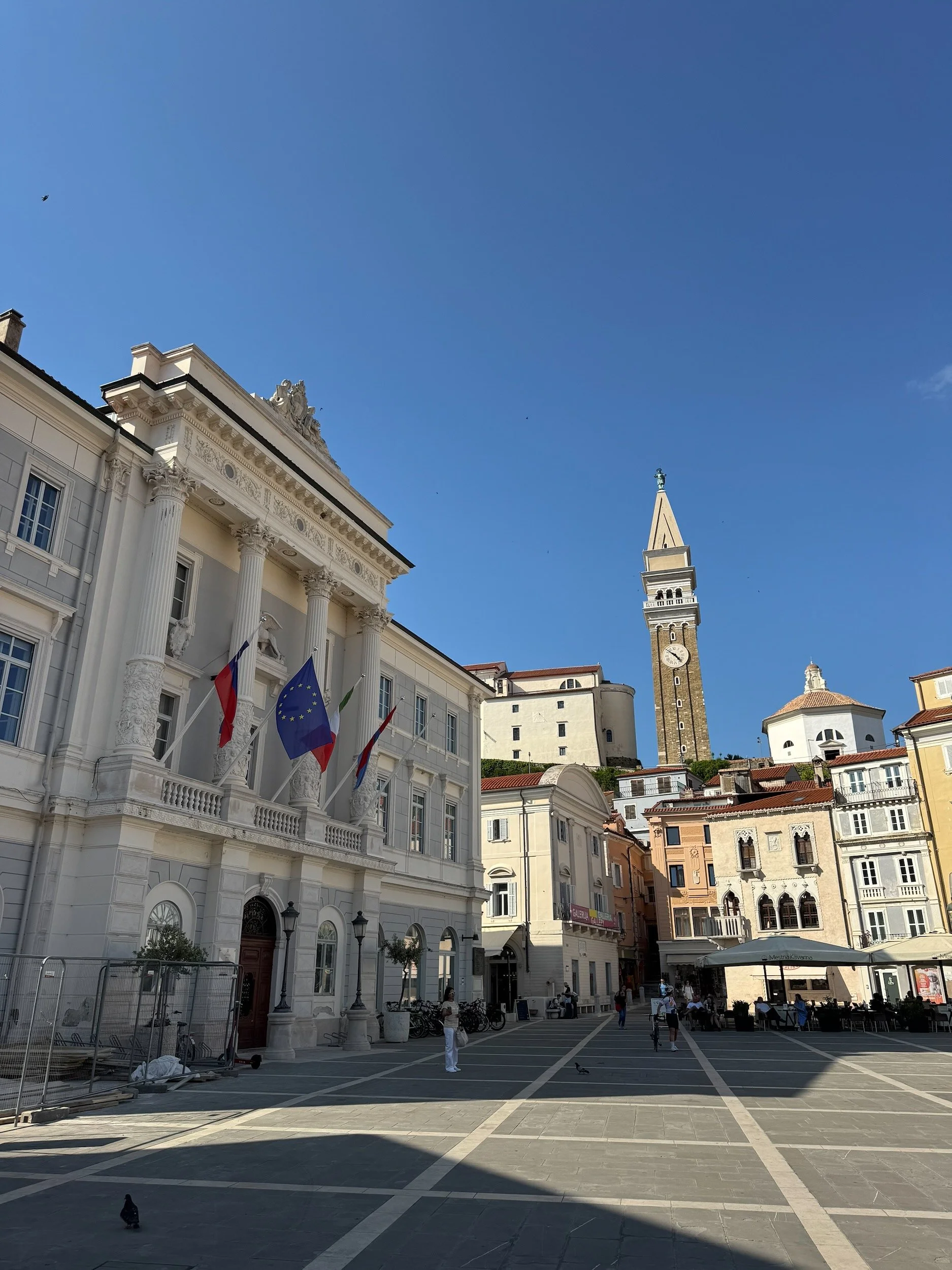
We parked outside the old town and walked in, passing the old town walls and views over the Adriatic. Piran is compact and very walkable, which makes it easy to explore without a strict plan. The best way to experience it is simply to wander through the alleys, make your way down towards the harbour, walk along the promenade and stop somewhere for a long lunch.
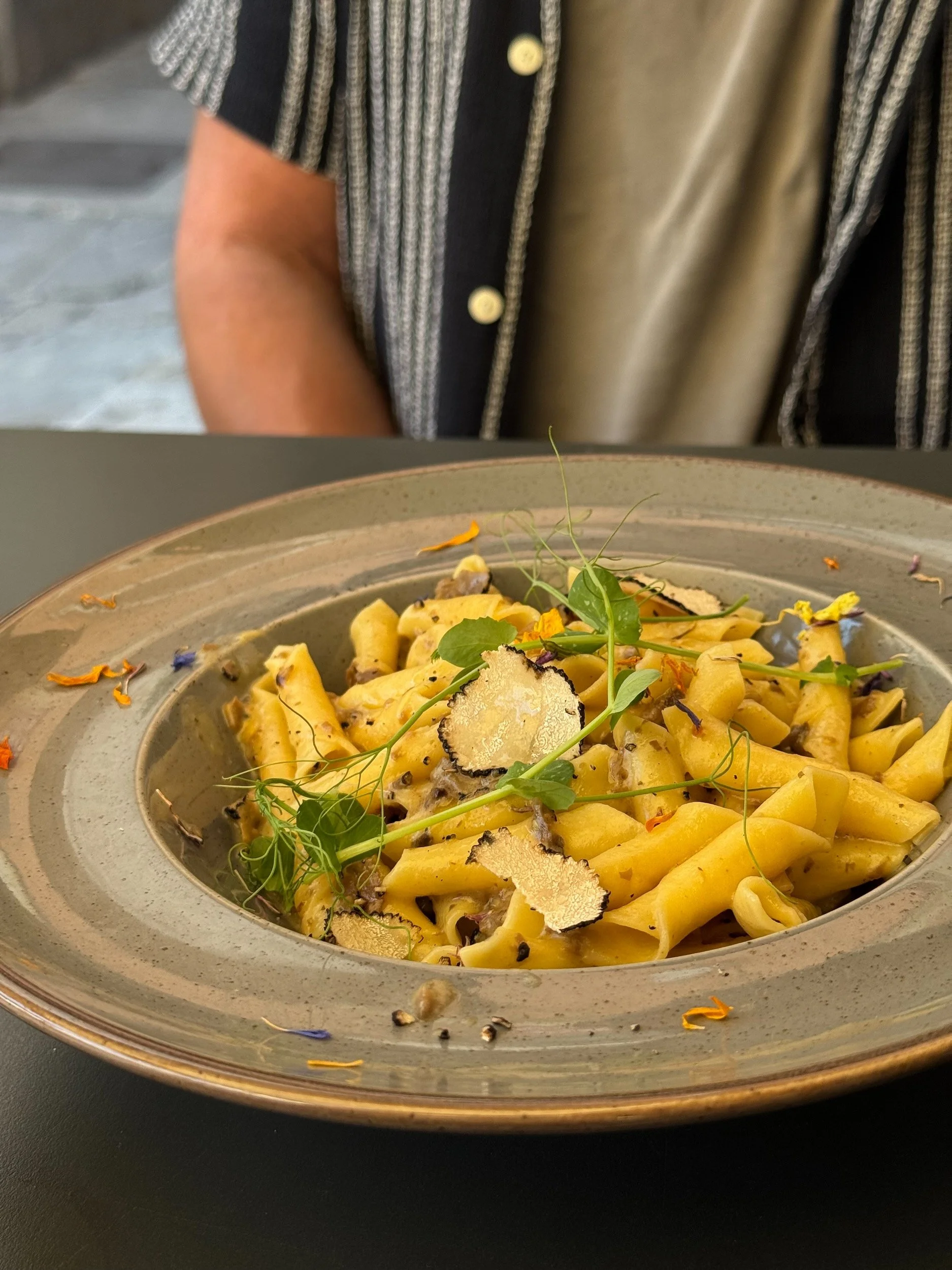
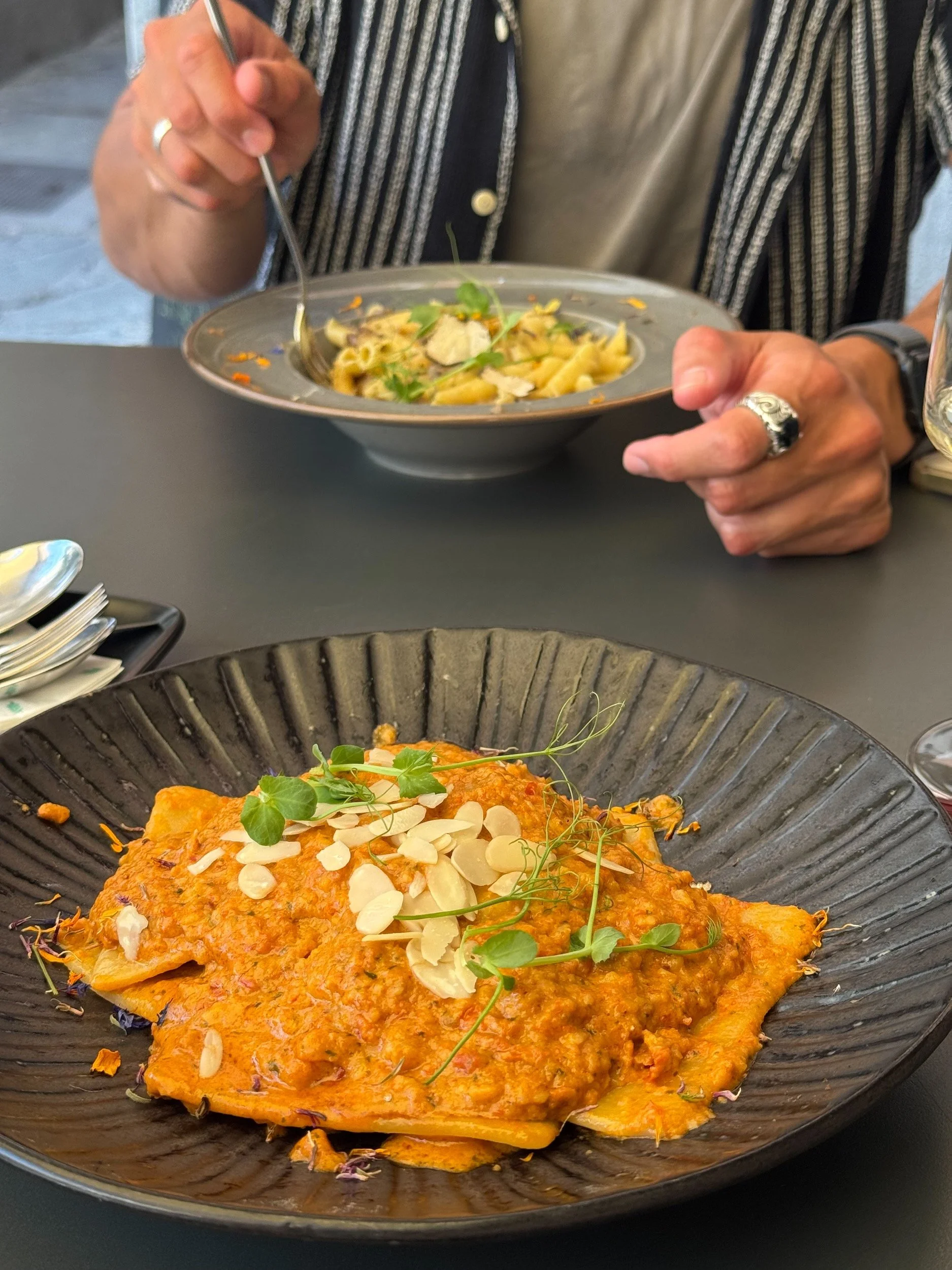
This part of Slovenia has strong Istrian and Italian influences, reflected in the seafood, pasta, olive oil, truffles and Mediterranean flavours served alongside Slovenian dishes. We had some excellent pasta at Rostelin.
For most road trip itineraries, one full day in Piran is enough, particularly if Slovenia’s mountains and valleys are your main focus. If you are visiting in summer or want more coastal time, consider adding Izola or Mesečev Zaliv, also known as Moon Bay. Izola has a more local feel than Piran, while Moon Bay near Strunjan offers a quieter, more natural beach setting. It is best reached on foot, so wear comfortable shoes rather than treating it as an easy drive-up beach.
Piran
How long to stay: 1–2 nights
Best for: old town streets, Adriatic views, seafood, white truffles, pasta and coastal atmosphere
Food: Caffe Neptun for specialty coffee, Rostelin for homemade pasta & traditional cuisine, Restaurant Polpo for seafood
Good to know: parking inside Piran is limited, so it is easier to park outside and walk in
Škocjan Caves | Day 3
From the coast, we continued inland towards Ljubljana and stopped along the way at the Škocjan Caves. Slovenia has several well-known cave systems and the famous Postojna Cave is also in this region. I would choose one rather than trying to visit both on the same day. Postojna is the more developed, more commercial and accessible option, with a cave train and an easier walking route. It is also easy to combine with nearby Predjama Castle, a Renaissance castle built within a cave mouth.
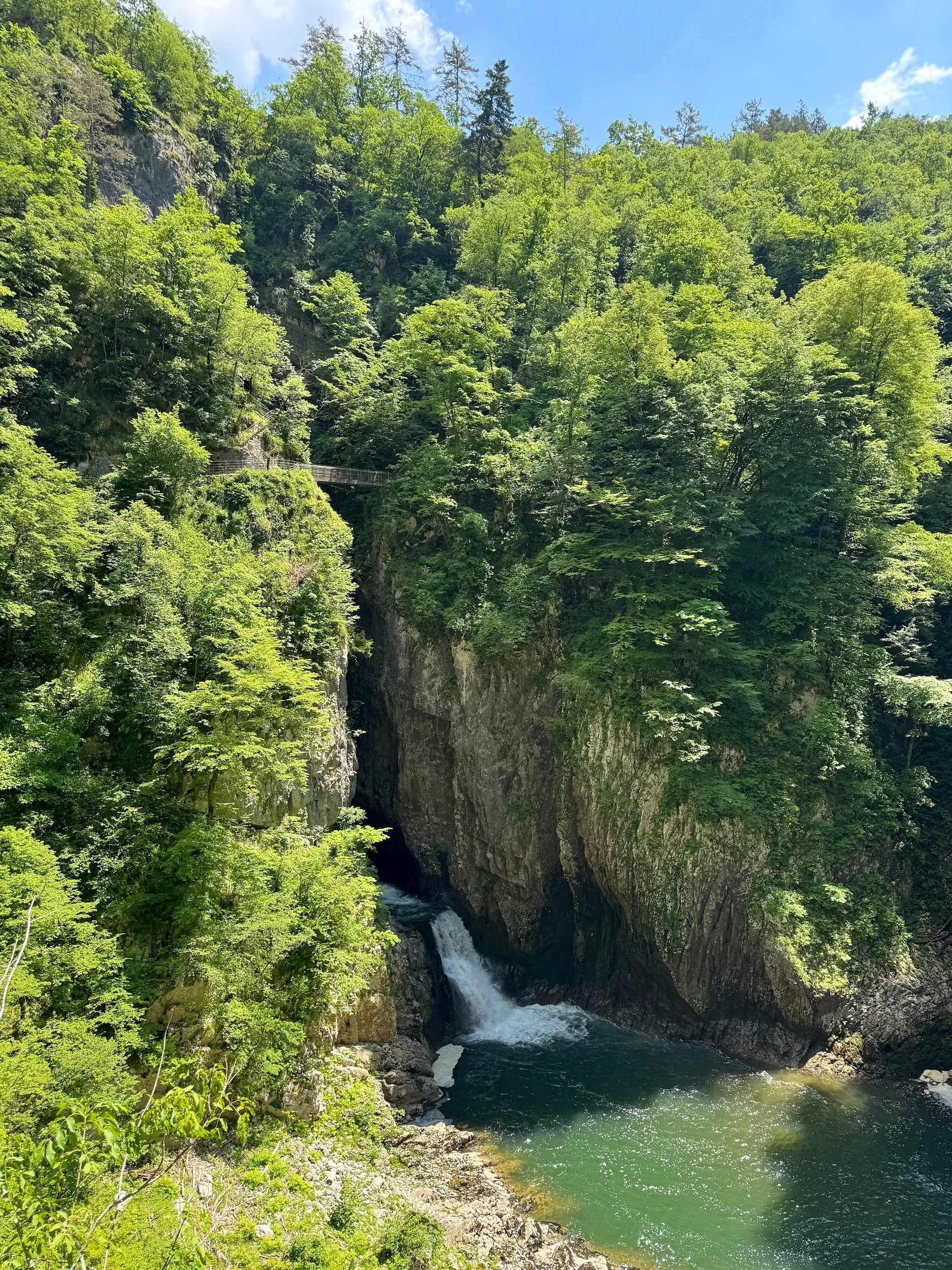
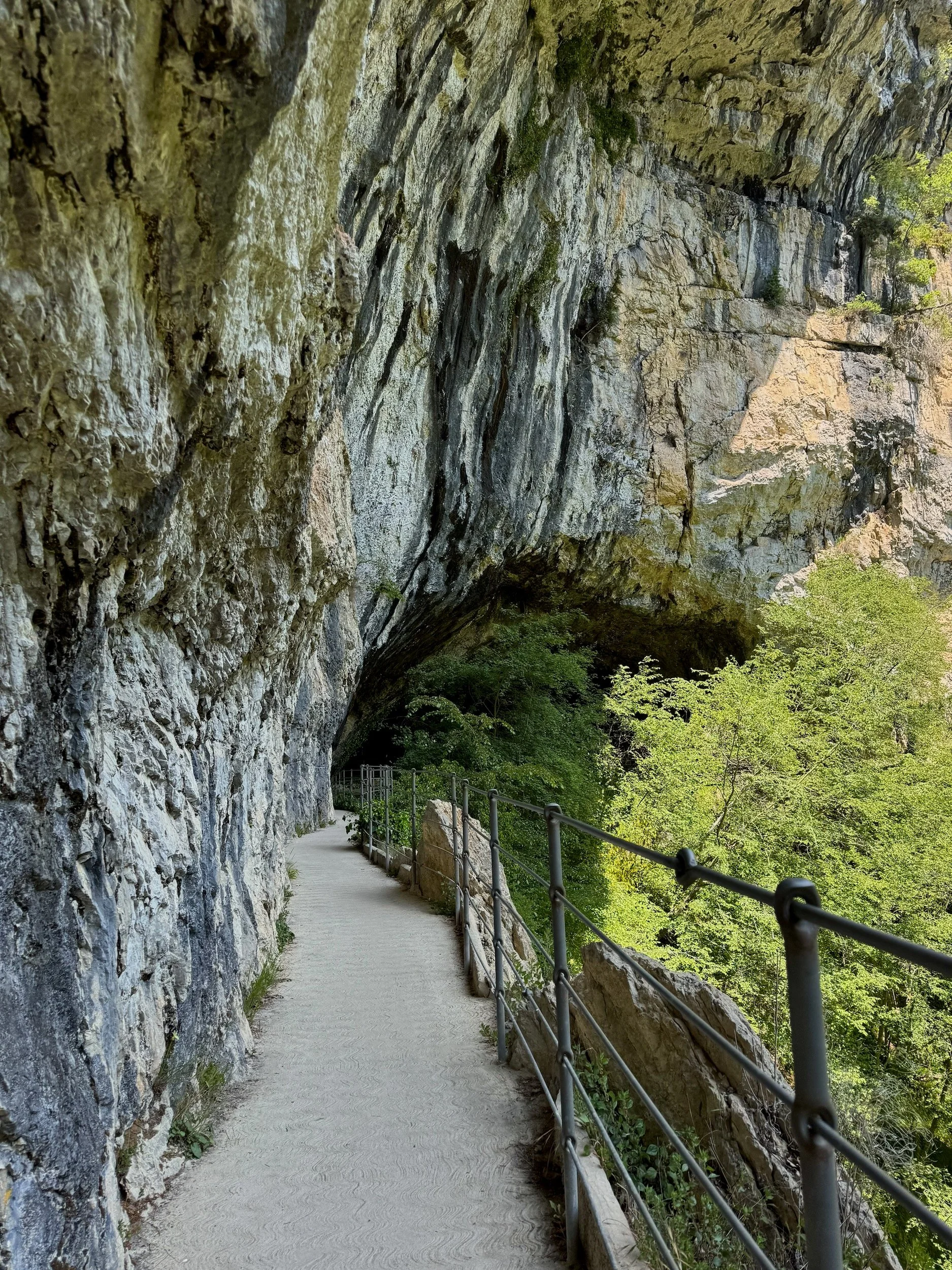
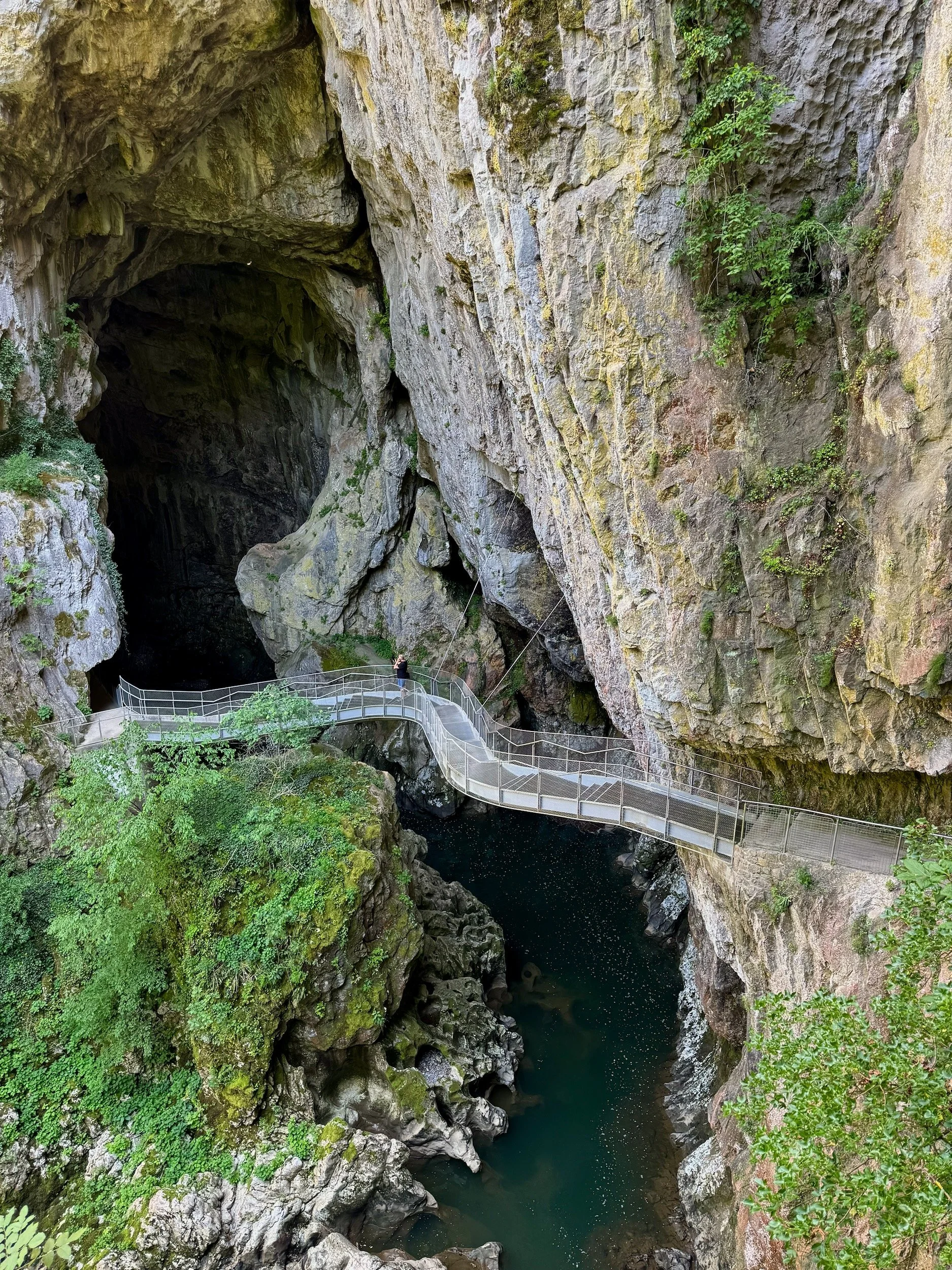
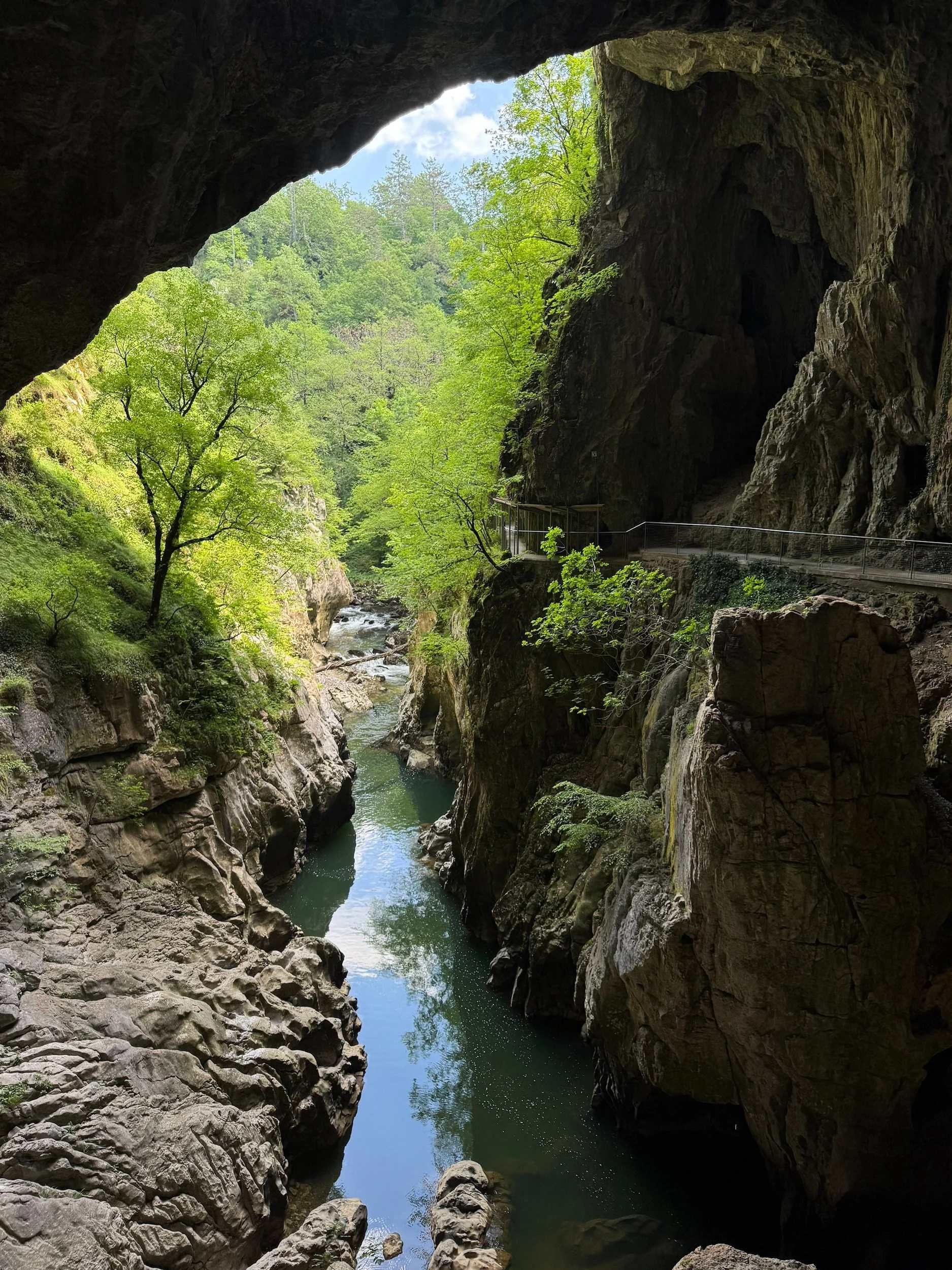
The Škocjan Caves on the other hand are listed as a UNESCO World Heritage Site and appealed to us because it is more nature-focused and less polished as an experience. Instead of a train ride through large chambers, the main reason to visit Škocjan is the scale of one of the world’s largest underground canyons carved by the Reka River.
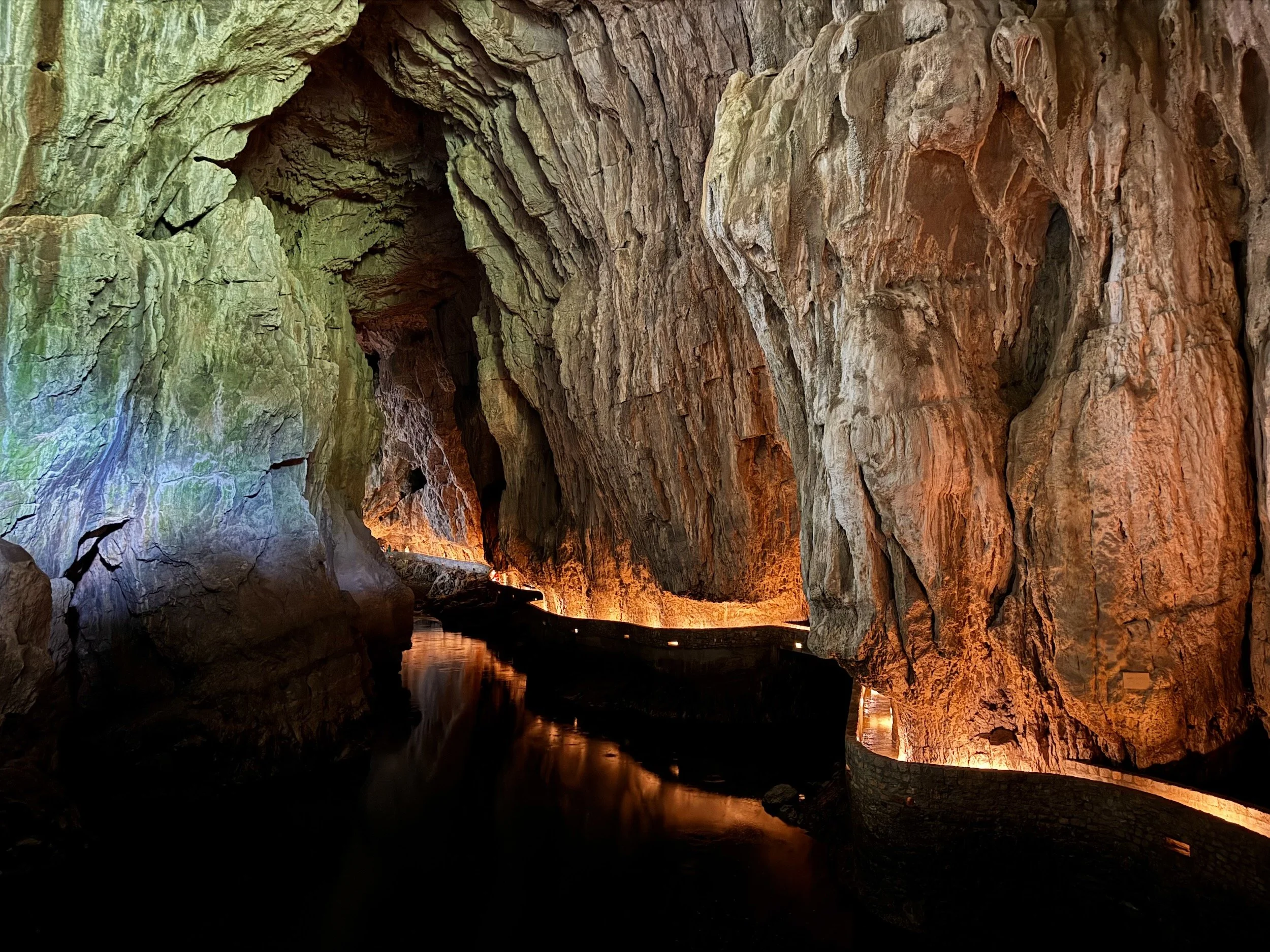
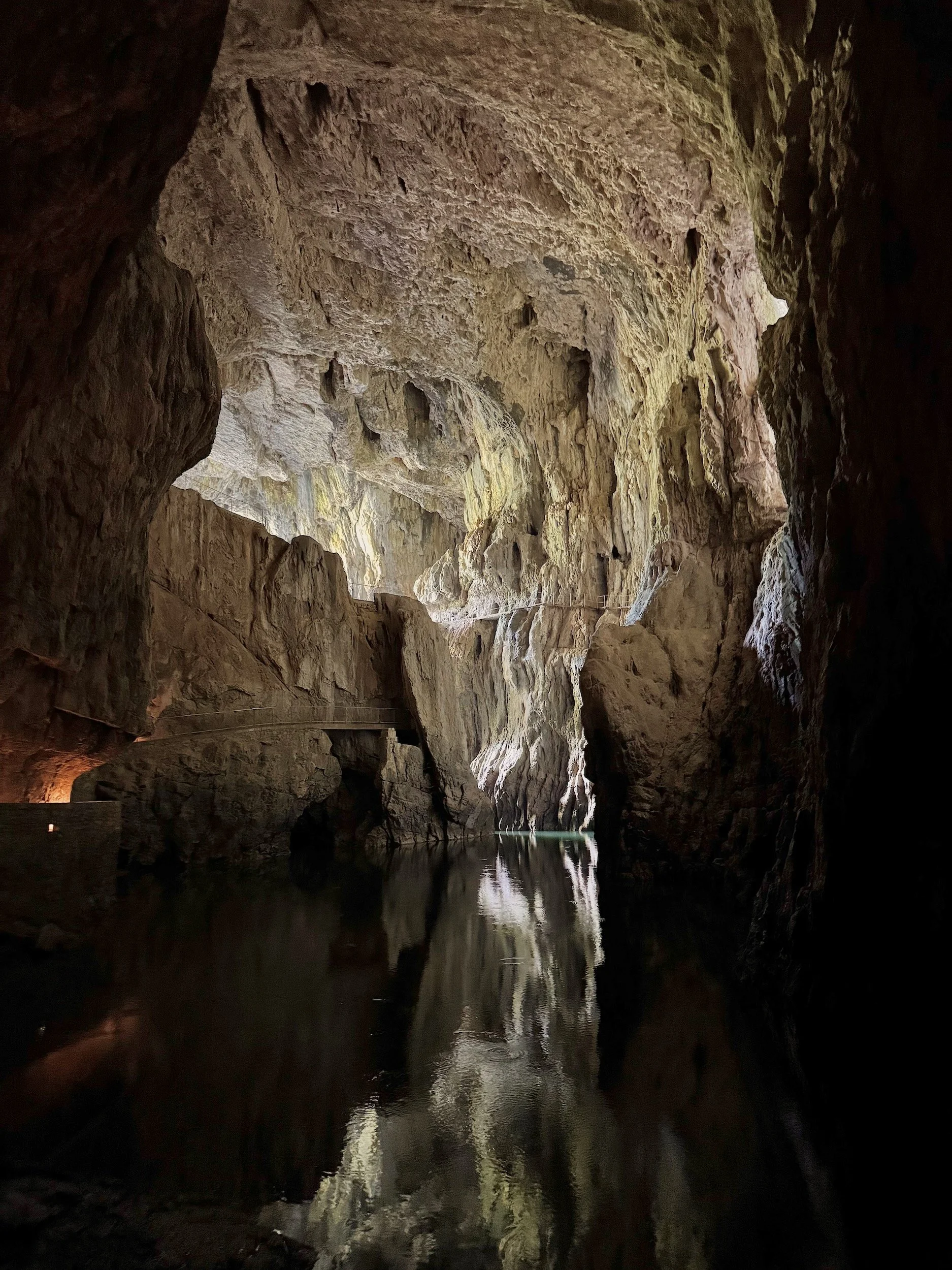
The guided route starts at the visitor centre, followed by a short walk to the cave entrance. After an introduction, visitors are divided into groups before entering the cave. The first part leads through the quieter Silent Cave, with classic limestone formations and large chambers. But the most impressive part comes later, when the path opens into the Murmuring Cave and the enormous underground canyon. We have visited a few caves in other countries, but this felt completely different. The scale, the darkness, the river far below and the narrow path along the canyon walls made it feel almost otherworldly. Photography is not allowed inside the cave, which is a little disappointing but makes sense. It keeps the group moving and protects the atmosphere of the tour, without people constantly stopping for photos.
After the guided cave tour, we opted for the slightly longer return walk through the collapsed dolines and surrounding landscape. I’d recommend doing this since it gives you a much better sense of the whole area, not just the underground part. Škocjan was a unique and fascinating stop. It felt very different from anything else on our route and we were glad we chose it instead of trying to squeeze in multiple cave visits.
Škocjan Caves
How long to stay: Half a day. The full Škocjan route takes around 2.5 to 3 hours, including the walk through the cave system and the return route outside.
Best for: A unique natural experience, dramatic cave landscapes, geology and travellers who prefer a less theme-park-like cave visit.
Good to know: Tours are guided, start on time and should be booked ahead in busier months. Wear comfortable shoes and bring a layer, as the cave temperature is around 12°C. Parking and a restaurant are available at the visitor centre. Adult Škocjan Tickets cost around €24.
City Vibes in Ljubljana | Day 3-5
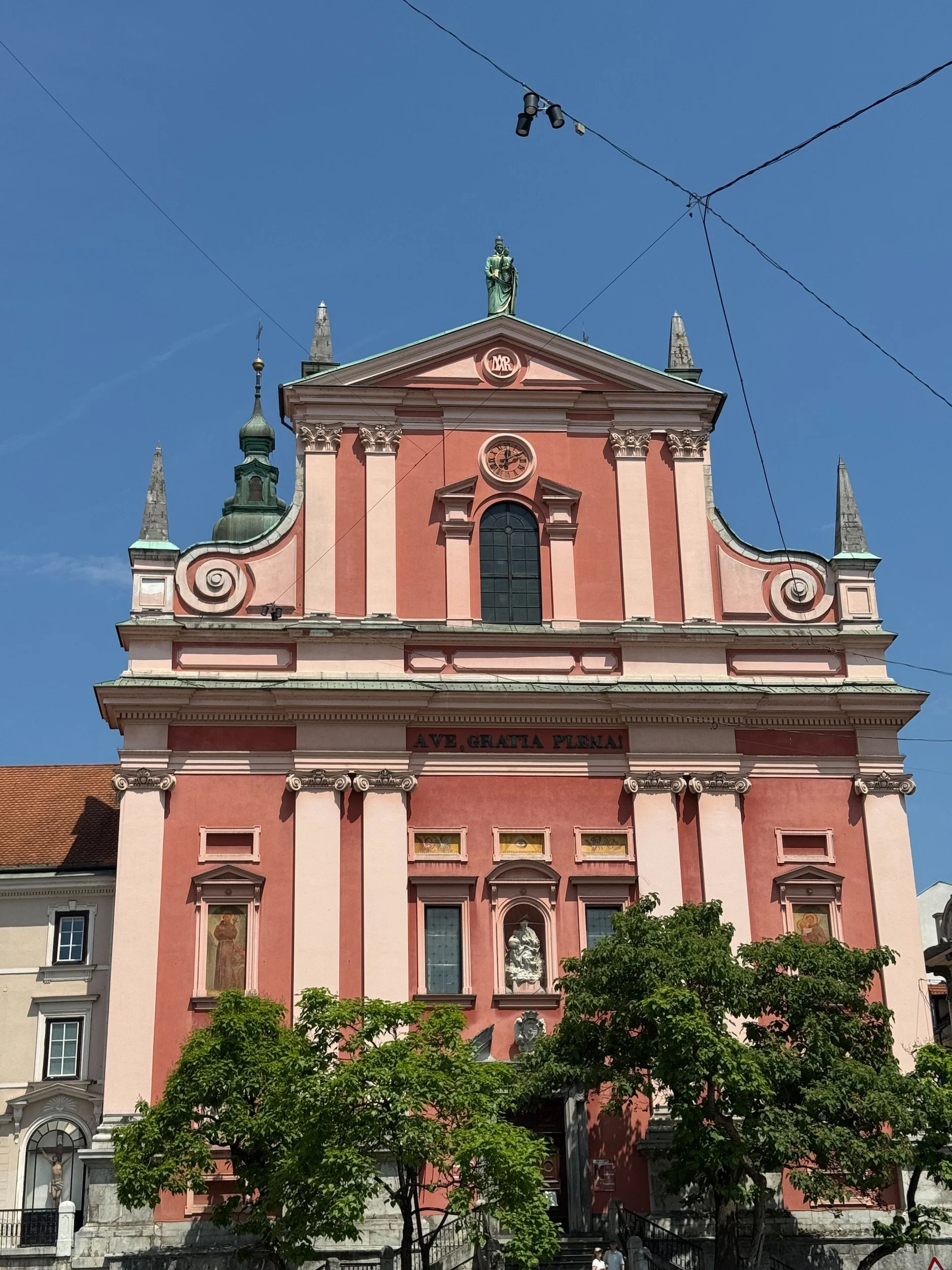
Ljubljana, Slovenia’s capital, is one of those cities that immediately feels easy to like. Even if your Slovenia trip is mostly focused on hiking and nature, Ljubljana is worth including. It is compact enough to explore mostly on foot, but lively enough to make you want to slow down, sit outside for coffee and spend time just wandering. Two nights felt like a good amount of time to get a good impression of the city.
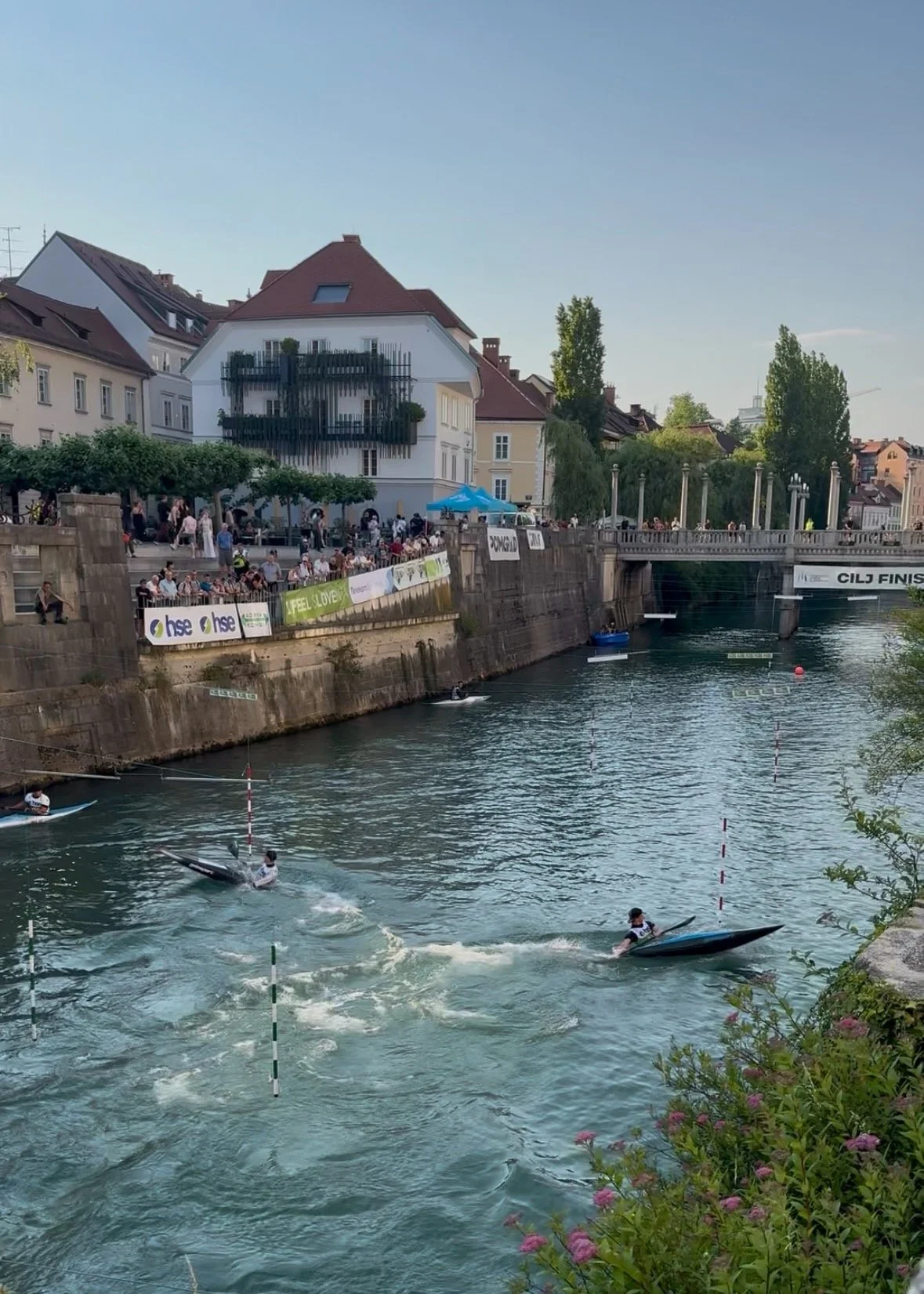
We stayed at Eagle’s Nest, which had parking and a convenient location just outside the centre. As we walked into the centre on our first evening, the city had such a nice atmosphere. People were outside enjoying the warm weather, a band was playing music on Cobblers' Bridge and the whole place felt relaxed yet lively. We had dinner at Julija, a cosy restaurant in the old town serving refined dishes with Slovenian and Mediterranean influences. The portions were not huge, but the food was excellent and the service friendly.
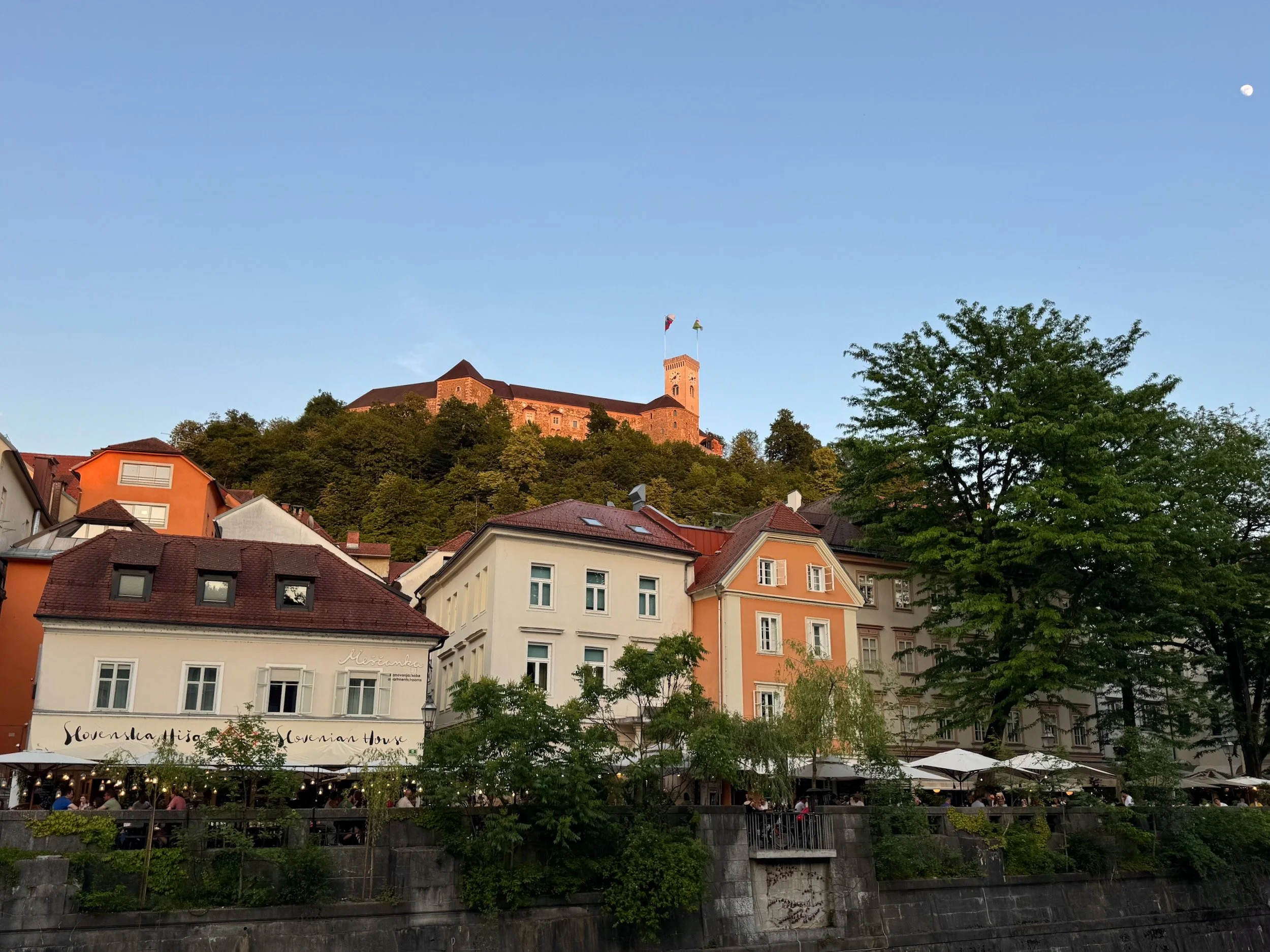
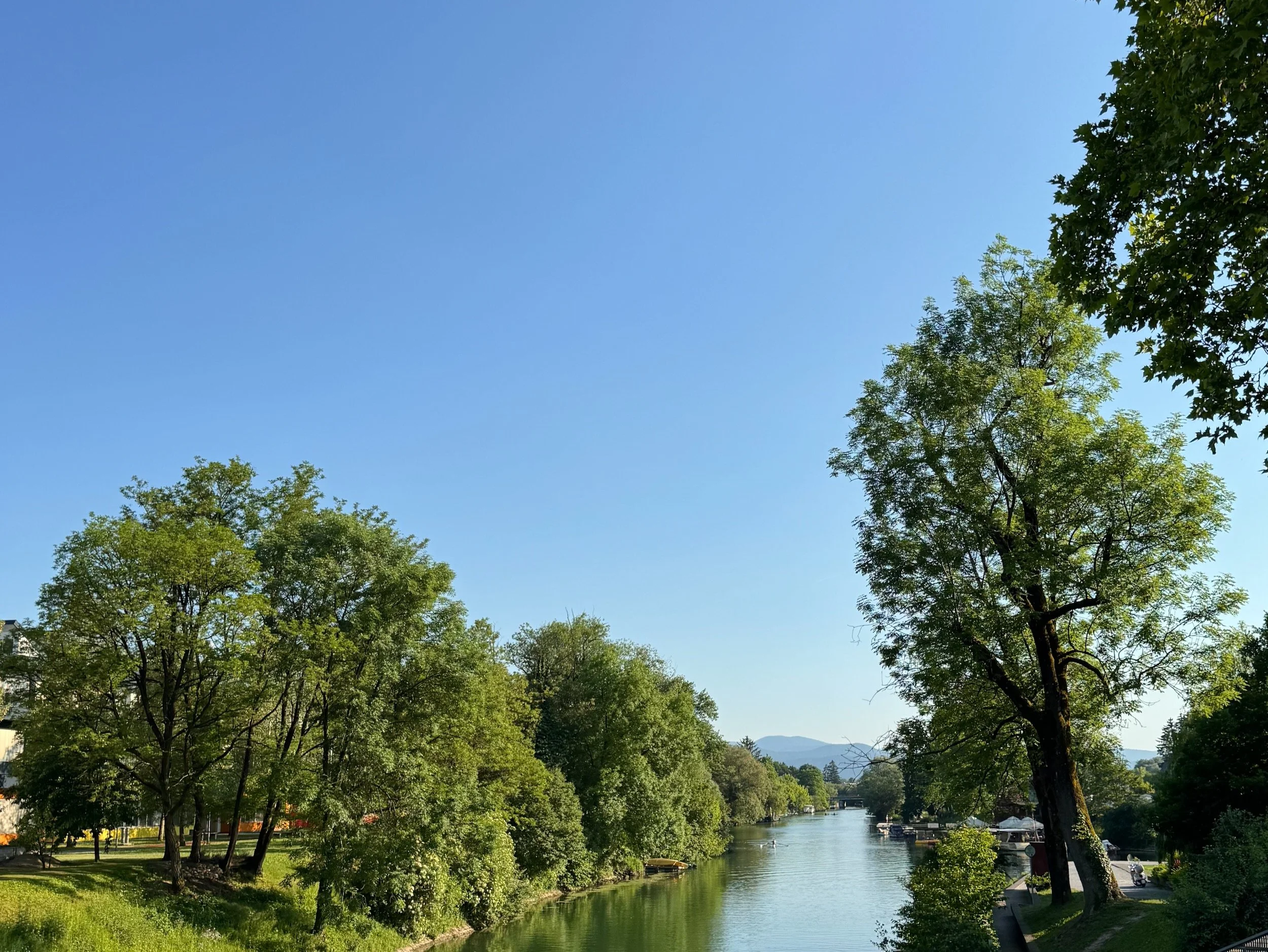
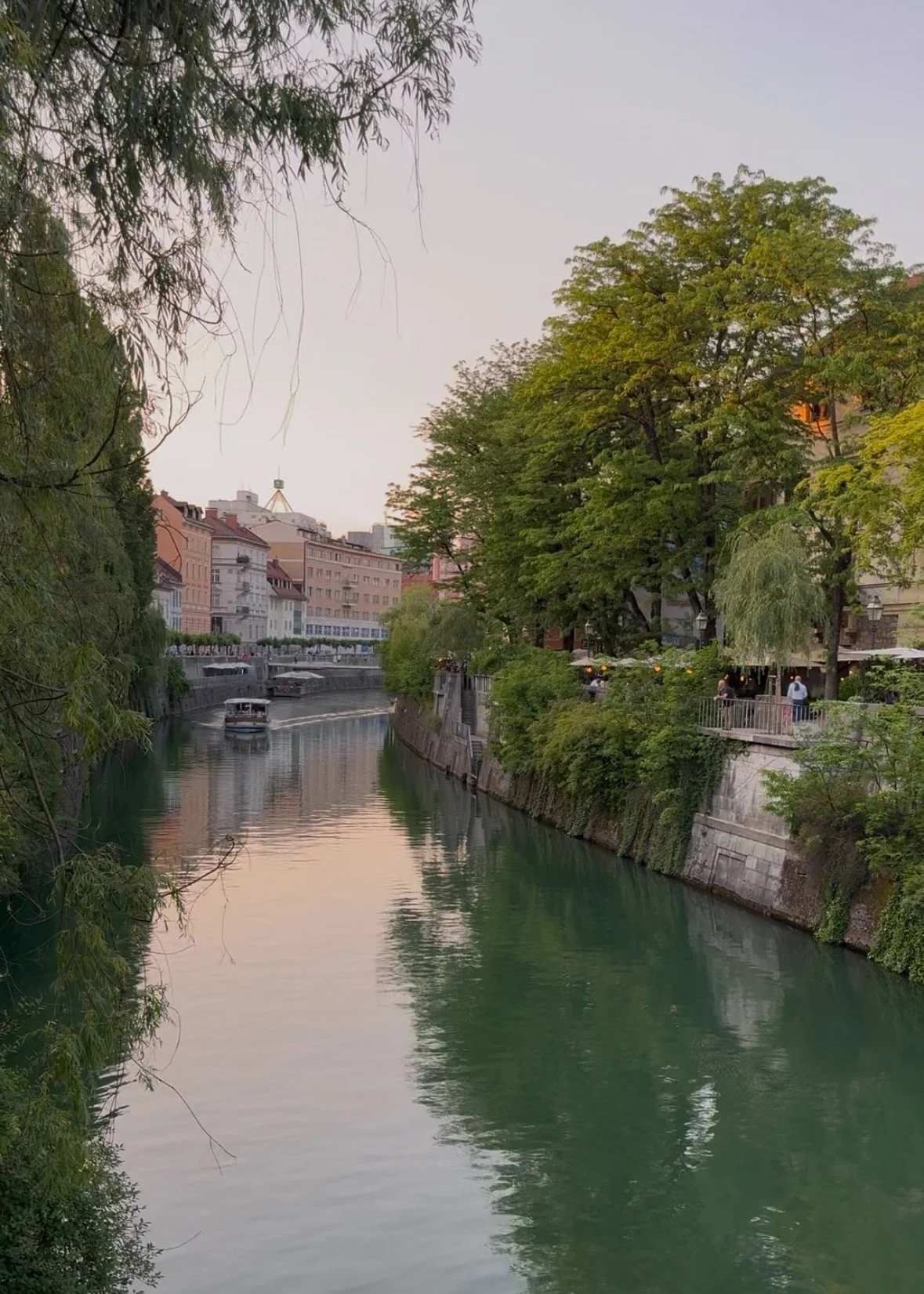
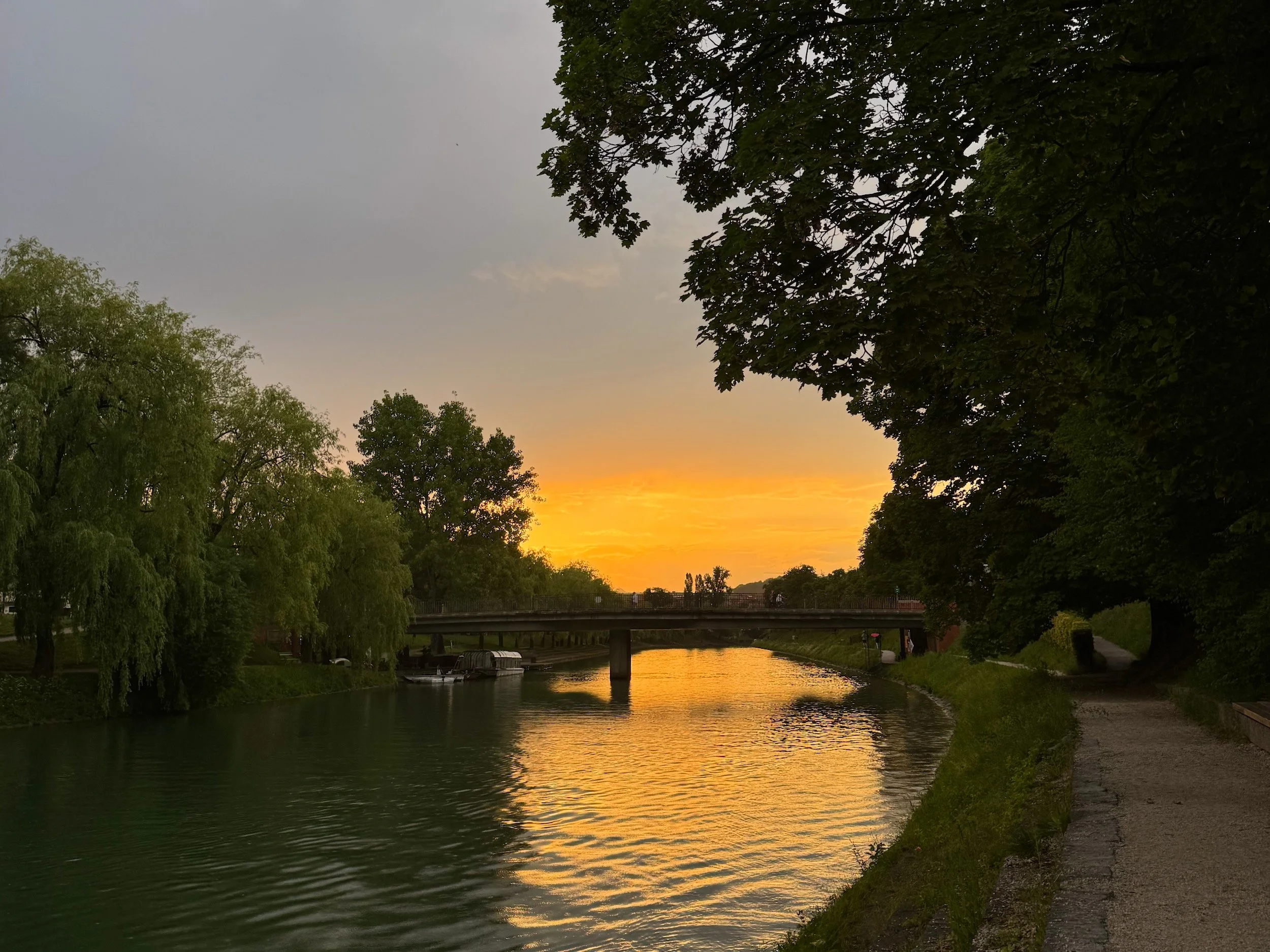
The old town stretches along the Ljubljanica River, with bridges, pastel-coloured buildings, outdoor cafés and views up towards Ljubljana Castle. Compared with many European capitals, it felt laid-back, clean and very manageable. You do not need a packed sightseeing plan here. We simply enjoyed walking through the historic centre, sampling local food, enjoying the atmosphere and following the river without too much of a plan.
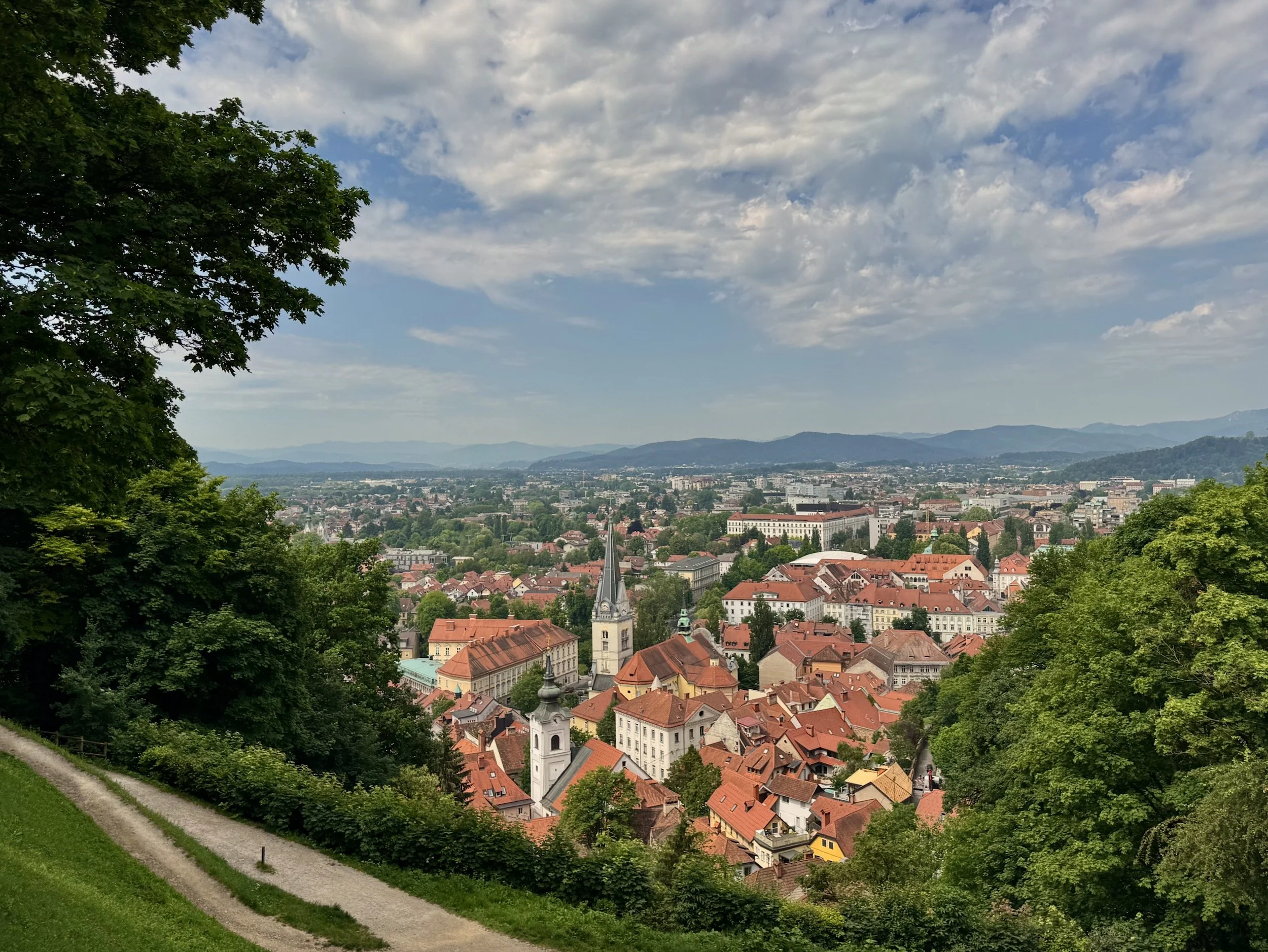
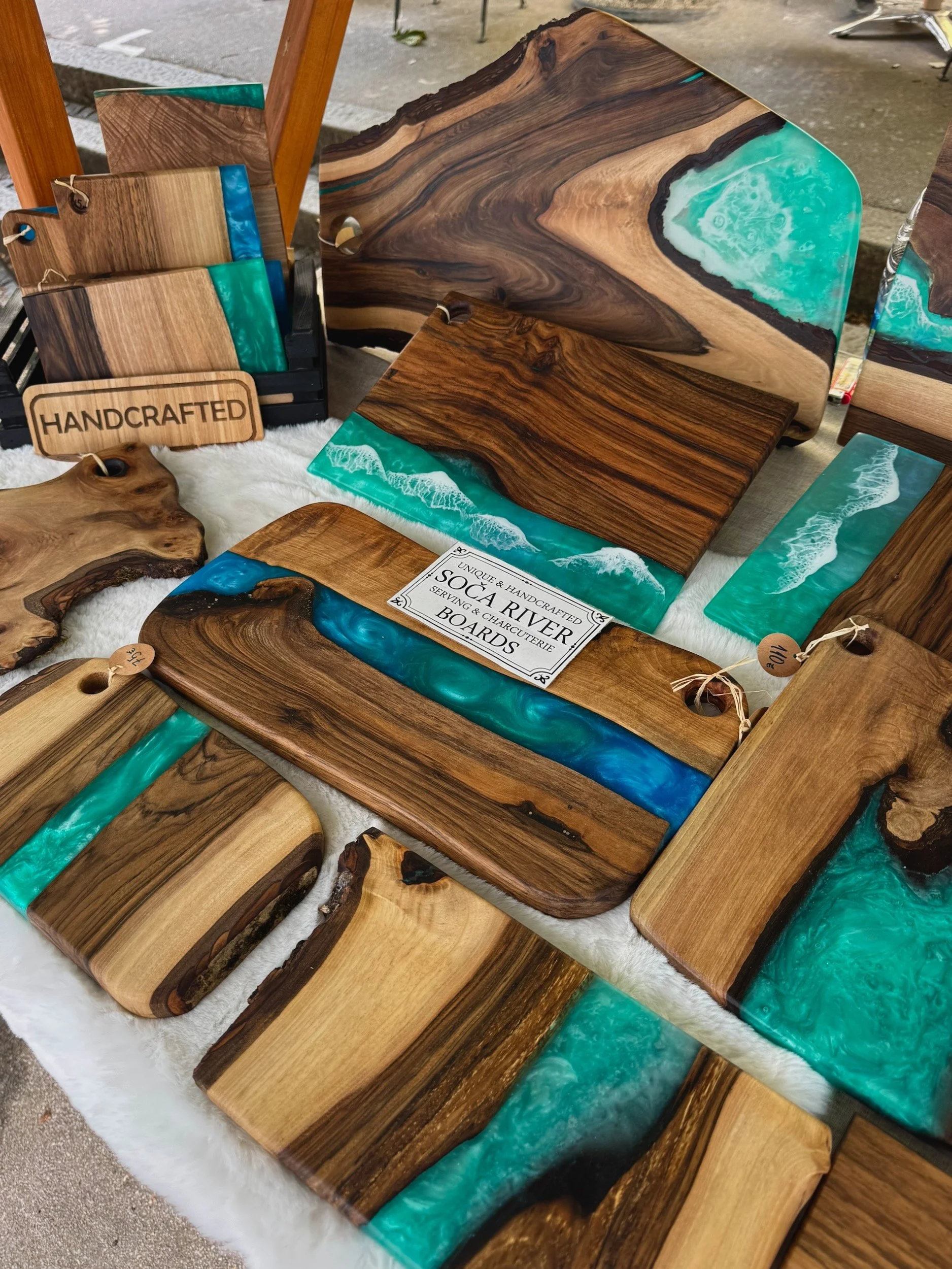
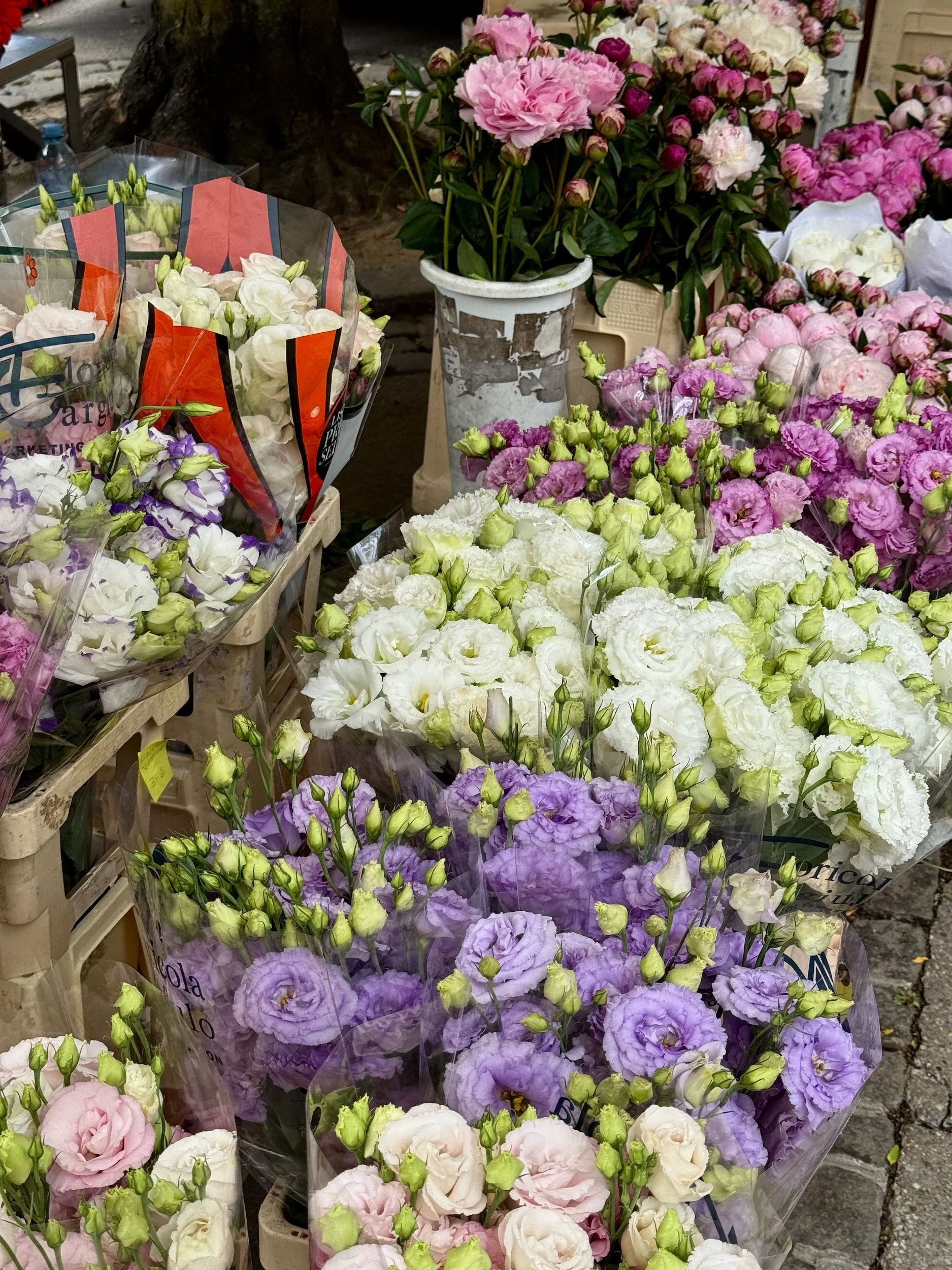
In the morning, we walked up to Ljubljana Castle for views across the city and surrounding area. On the way, we stopped at OSEM Bakery for pastries, while Črno Zrno is a great option for specialty coffee. If you would rather skip the short uphill walk, a small funicular connects Krek Square near the Central Market with the castle. After exploring the castle grounds, we headed back down towards the Central Market near the Triple Bridge. With open-air stalls and covered sections selling fresh produce, local cheese and baked goods, it is a nice place to grab a snack, buy a small souvenir or simply get a feel for everyday life in the city.
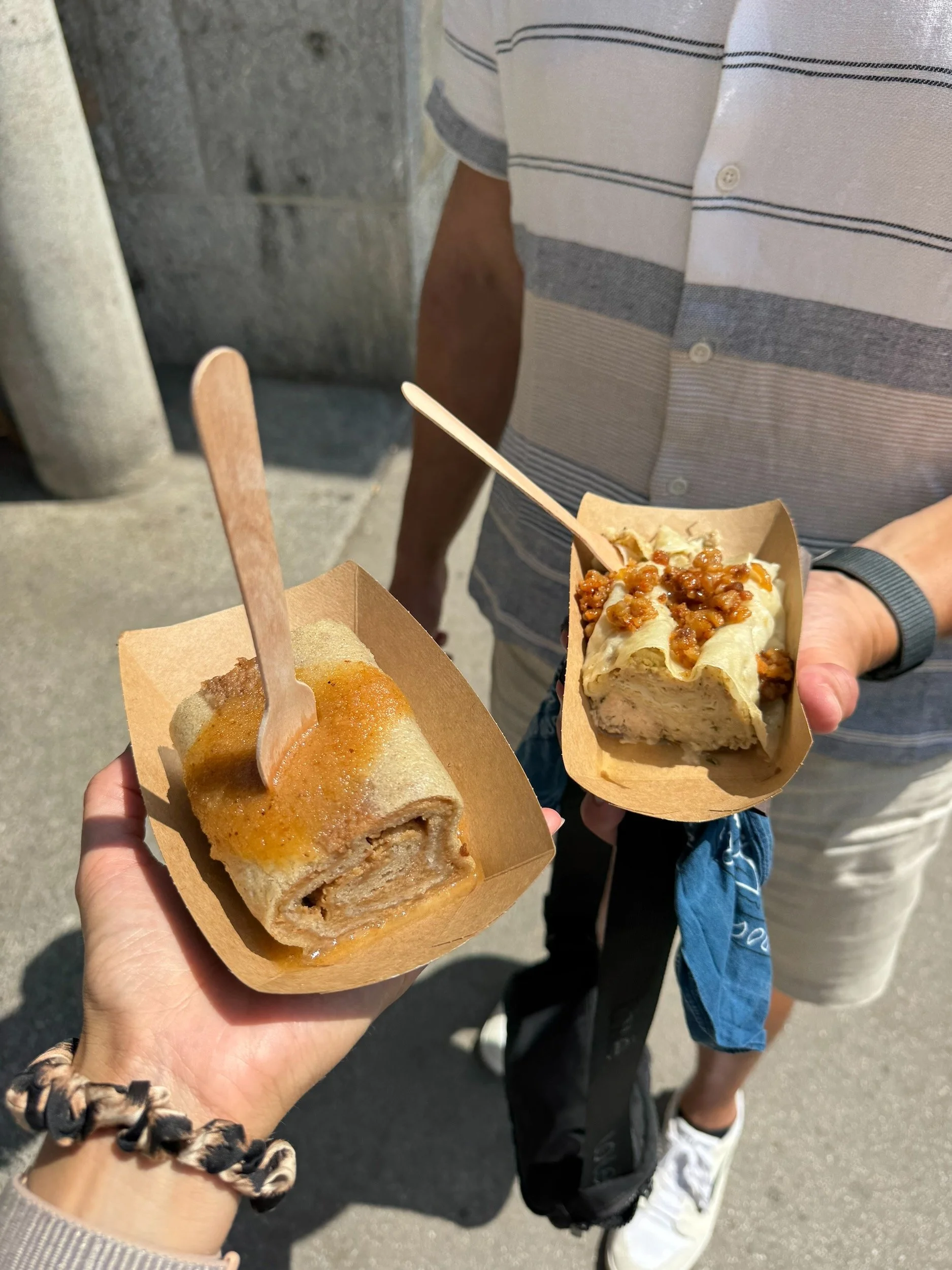
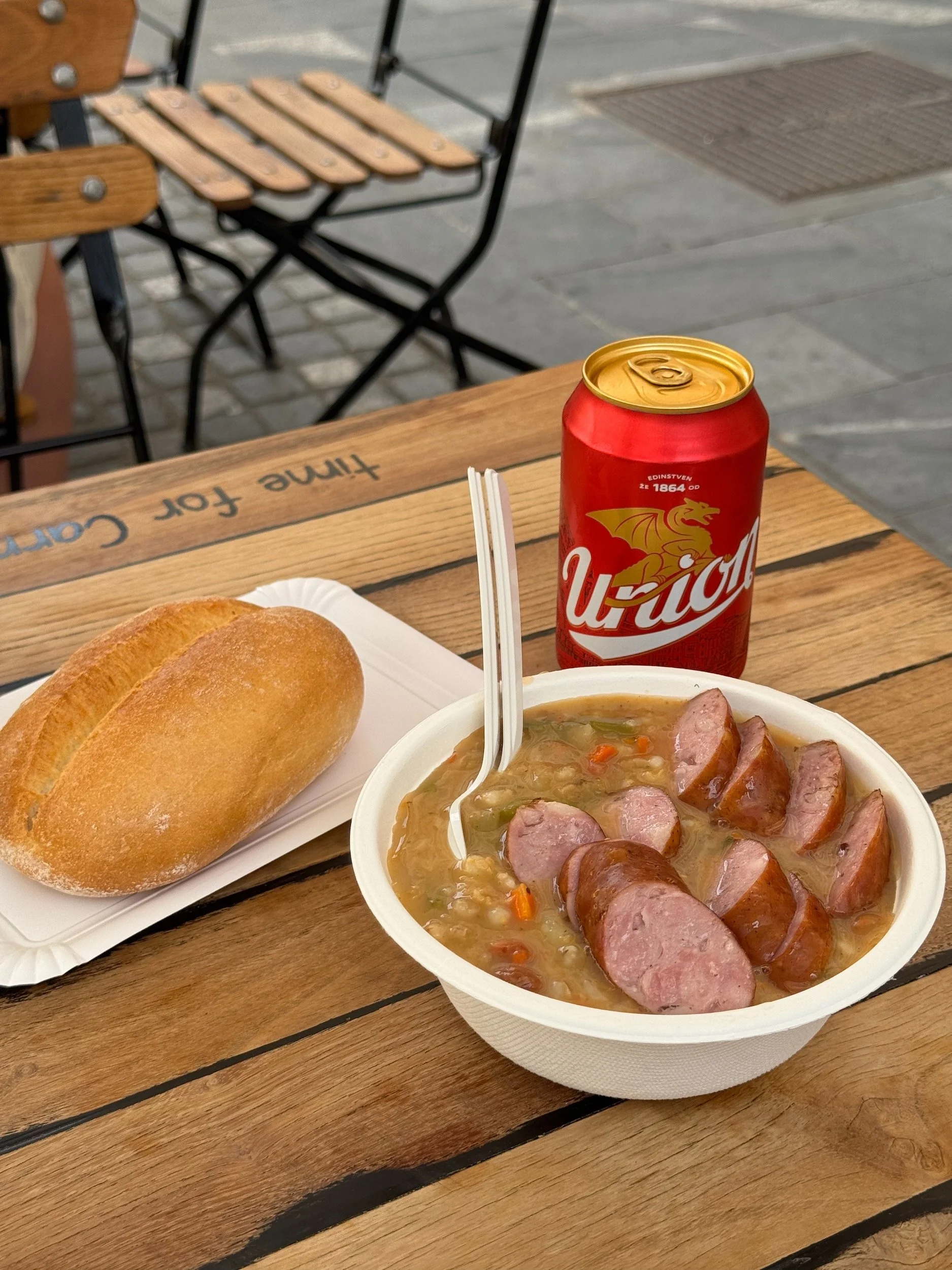
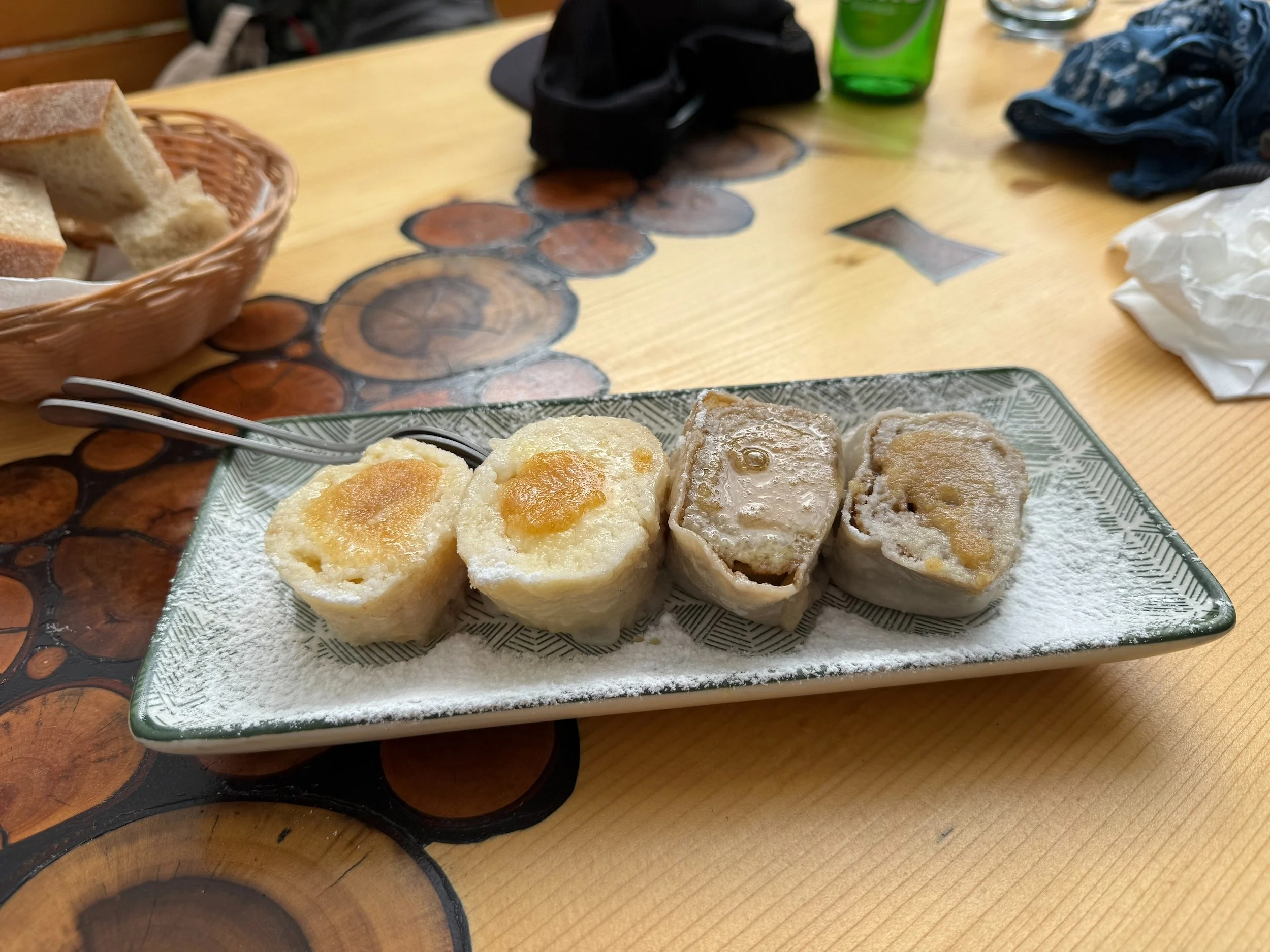
Ljubljana has a fantastic food scene. At Moji štruklji Slovenije, we tried traditional Slovenian dumplings, which were big, filling and really tasty. We also stopped at Klobasarna, a small traditional eatery known for Kranjska klobasa, the classic Carniolan sausage usually served with mustard, horseradish and bread — very delicious.
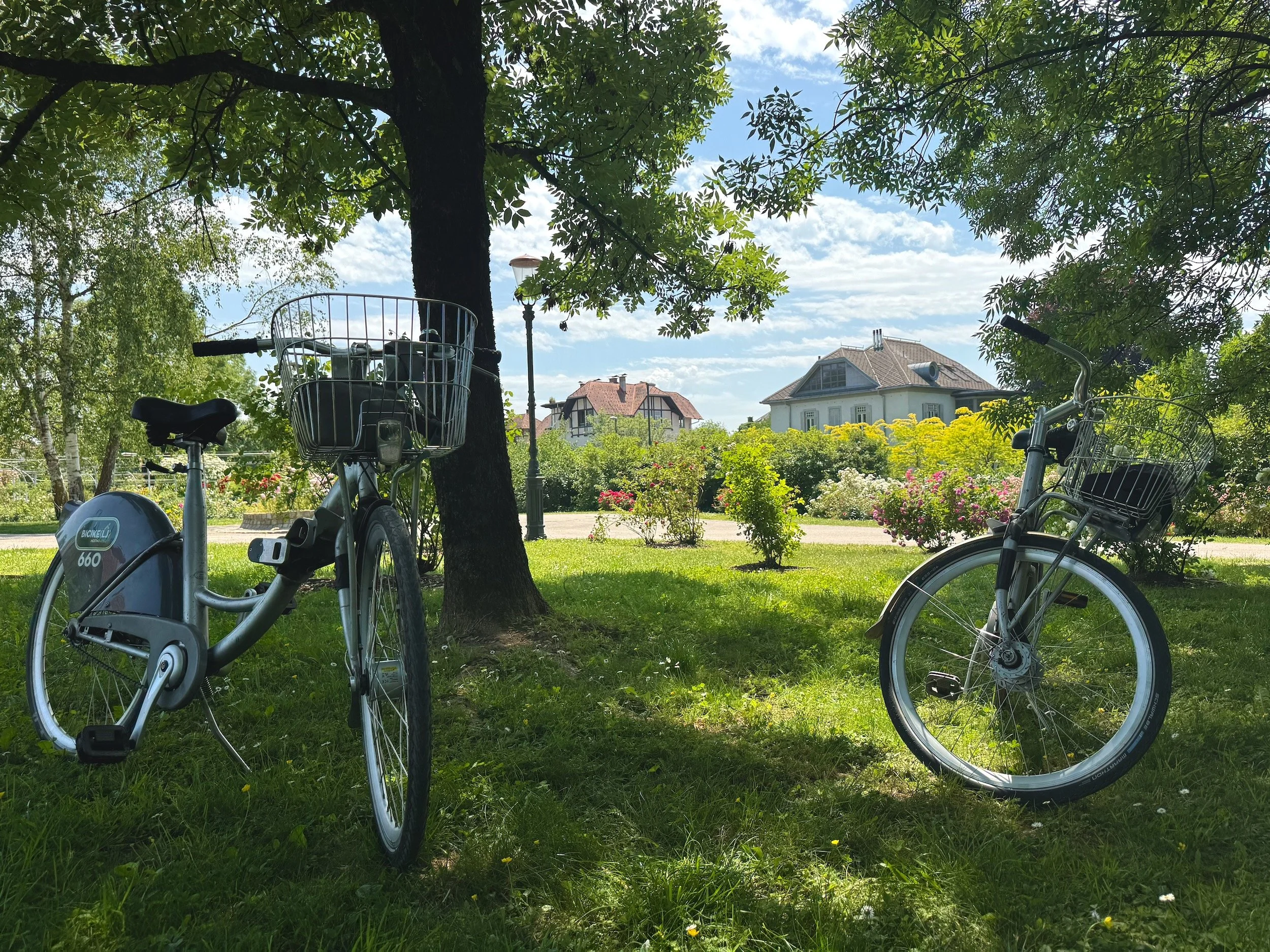
The city centre has been closed to regular car traffic, which is part of why it feels so pleasant to explore on foot. There is also a public bike-sharing system called BicikeLJ, with stations across the city. The first hour of each ride is free, you just need to register first for a small fee and download the app. This was an easy and convenient way to get around, explore Tivoli Park and see a bit more of the city in a short time.
Ljubljana is also a good place to get a first sense of Slovenia’s mix of influences: Central European architecture, Balkan and Yugoslav history, Italian touches and a modern outdoorsy culture. Slovenia became independent from Yugoslavia in 1991, joined the EU in 2004 and later became part of both the eurozone and Schengen Area, which makes travel easy if you are arriving from other EU countries. Generally, the city felt quite international and it was easy to communicate in English.
Ljubljana
How long to stay: 2 nights
Best for: a relaxed city break, cafés, riverside walks, coffee, food and easy sightseeing
Good to know: if you are travelling by car, choose accommodation with parking or check parking options in advance, as you will not need the car much once you are in the centre. BicikeLJ can also be useful for short rides across the city, especially if there is a station near where you are staying.
Food: Ljubljana has one of the best food scenes of this route. To name a few spots, we liked Julija and Dežela Okusov for dinner, OSEM Bakery and YAUYA Patisserie for pastries, Mala Pražarna and Črno Zrno for coffee and Moji štruklji Slovenije or Klobasarna for quick traditional food.
Accommodation: Eagle’s Nest Ljubljana, City Hotel Ljubljana or Vila Emona for central location and good reviews.
Velika Planina and the Logar Valley | Day 5-7
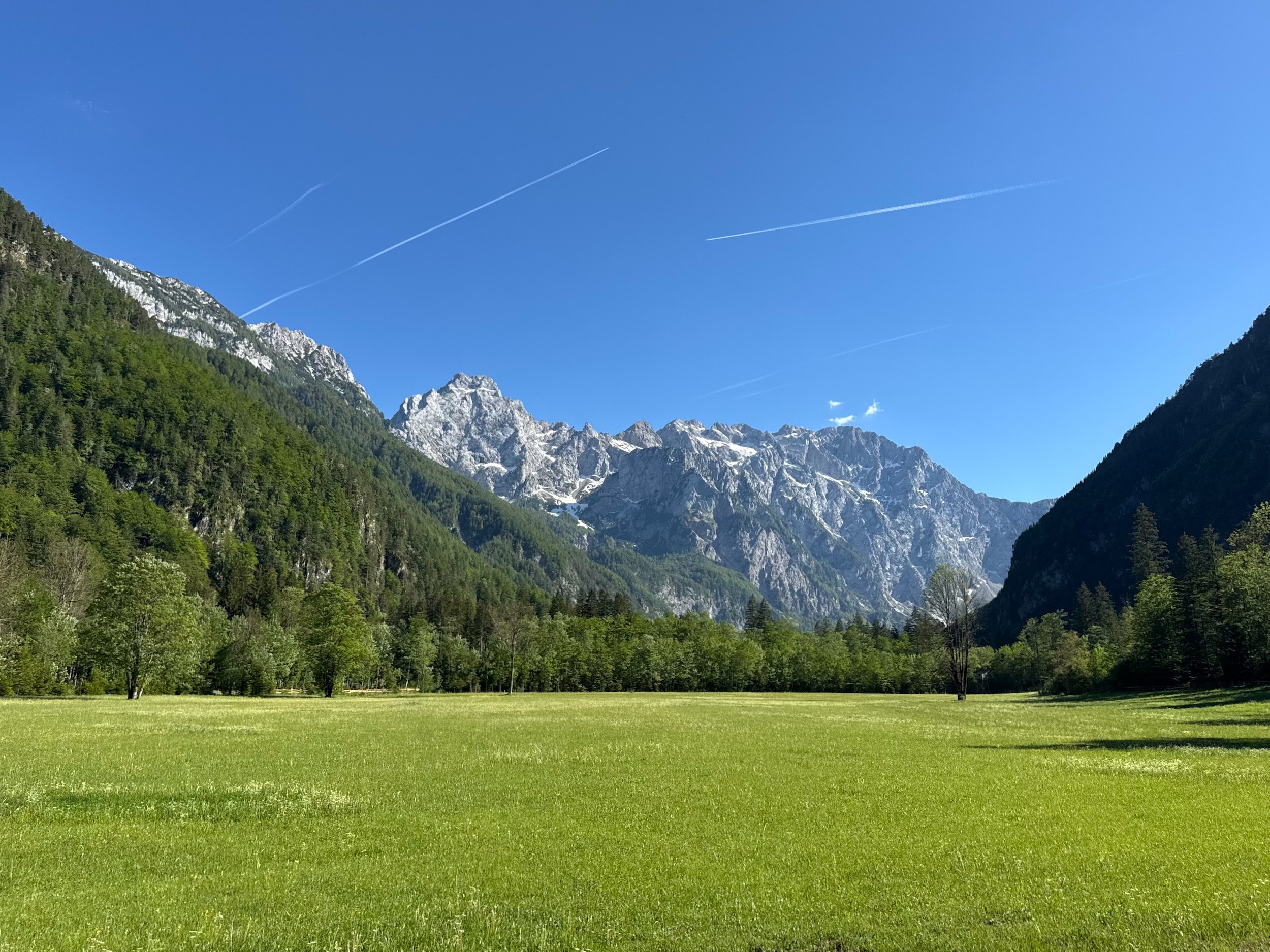
After Ljubljana, we drove north towards the Kamnik-Savinja Alps. We originally did not plan on including Logar Valley in our itinerary since it is a bit out of the way, but after doing some deeper research, we decided to include it after all. As it turned out, this was one of the highlights of our Slovenia trip since it felt so intimate, authentic and secluded.
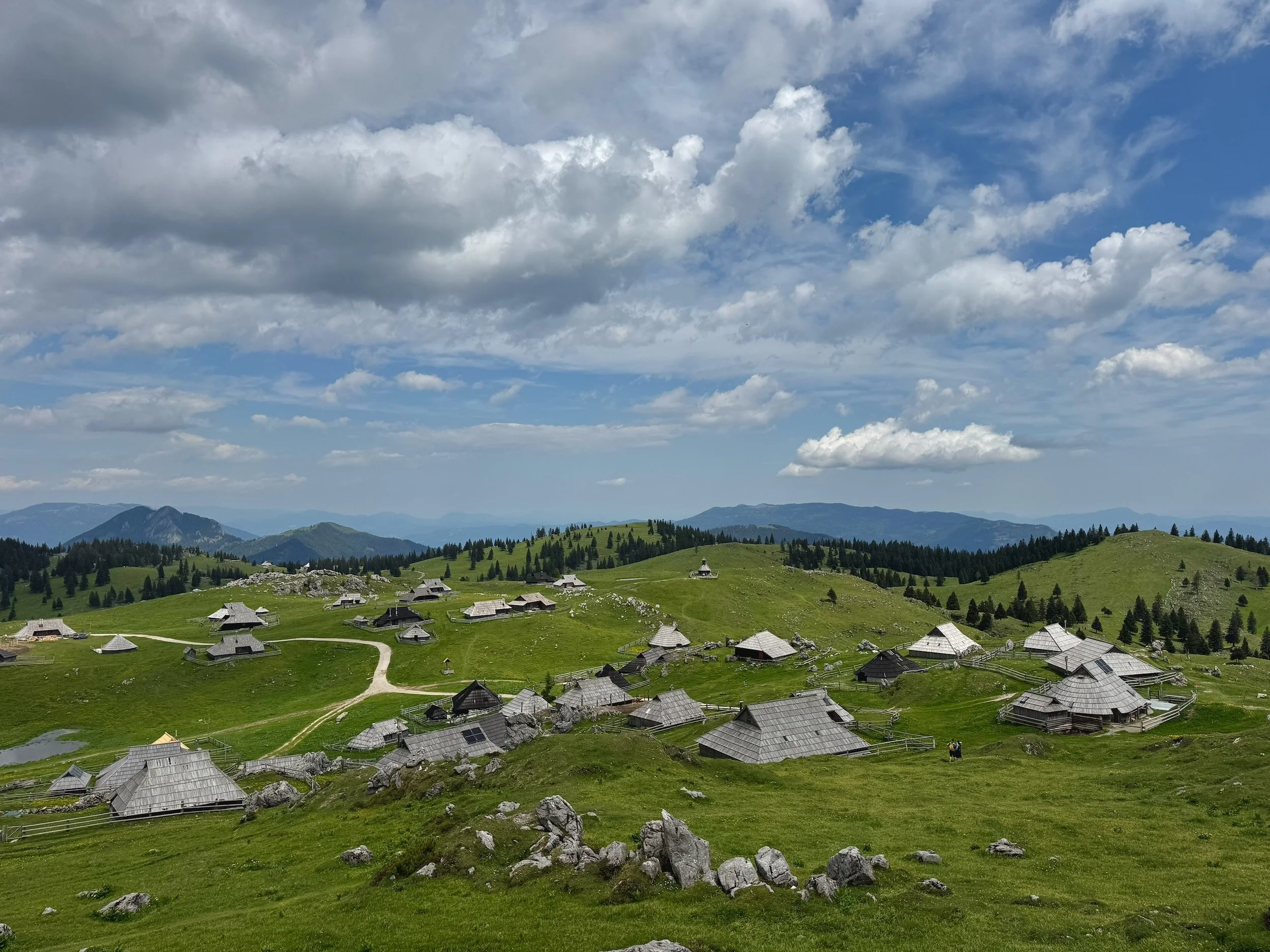
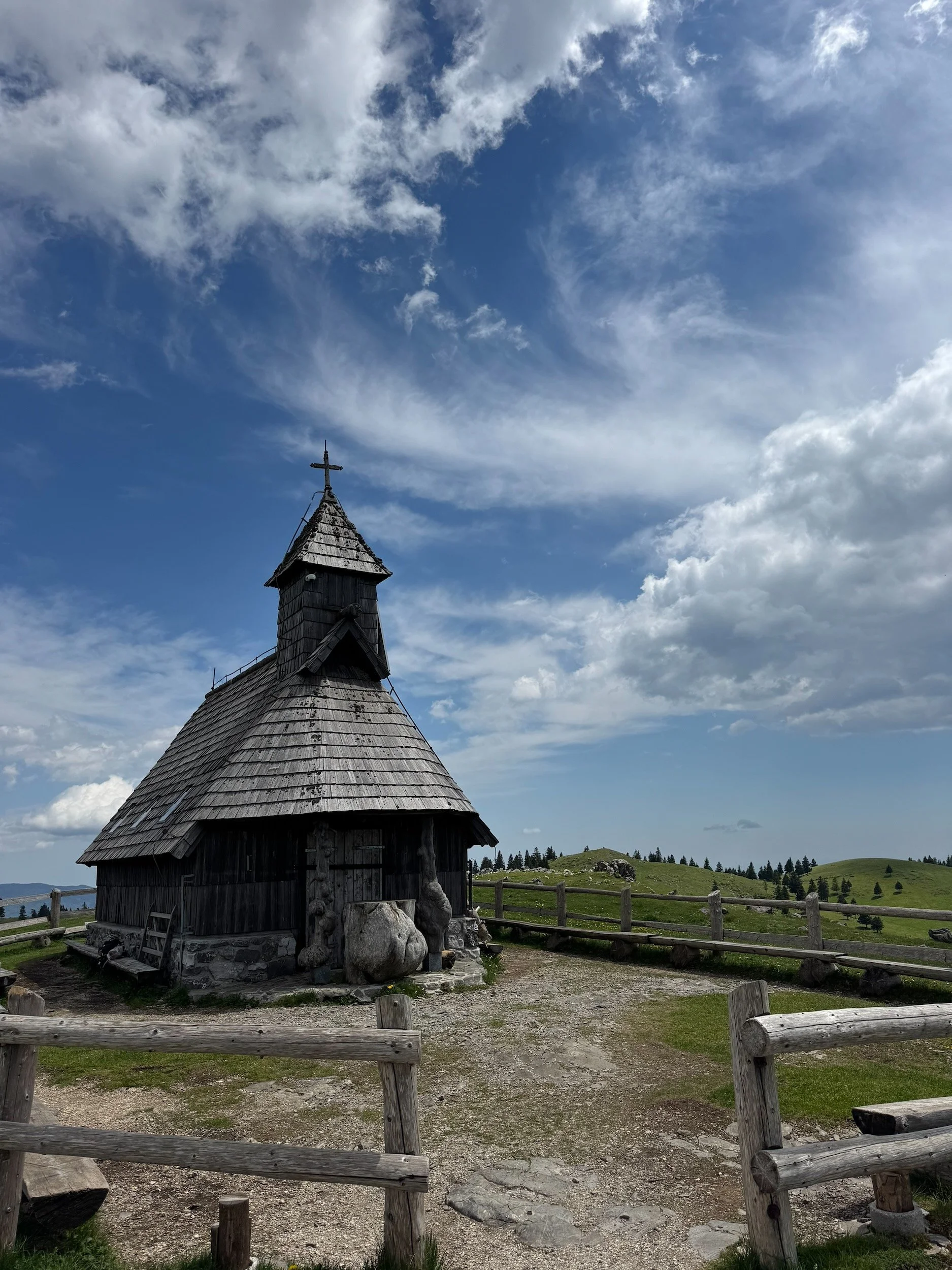
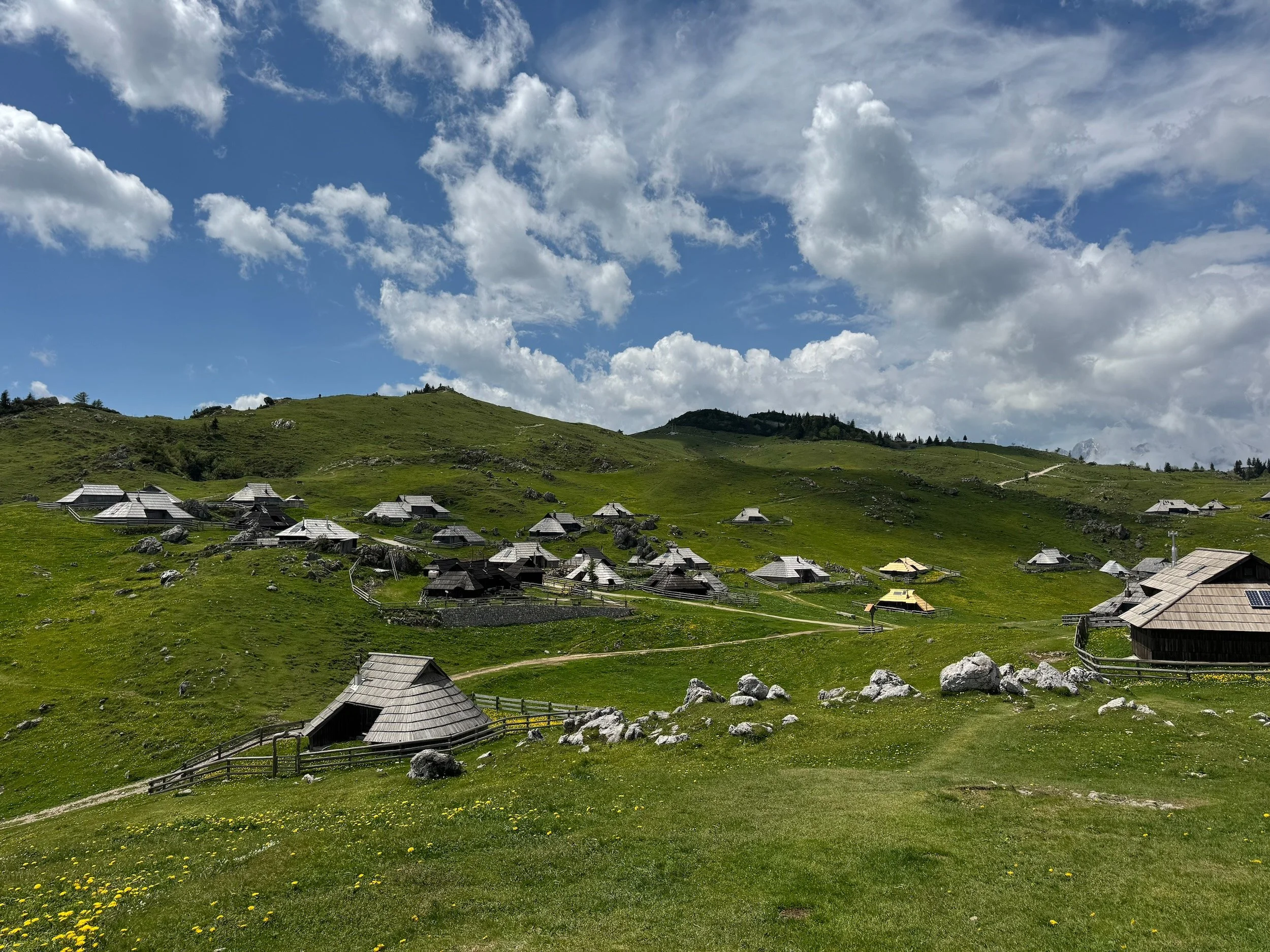
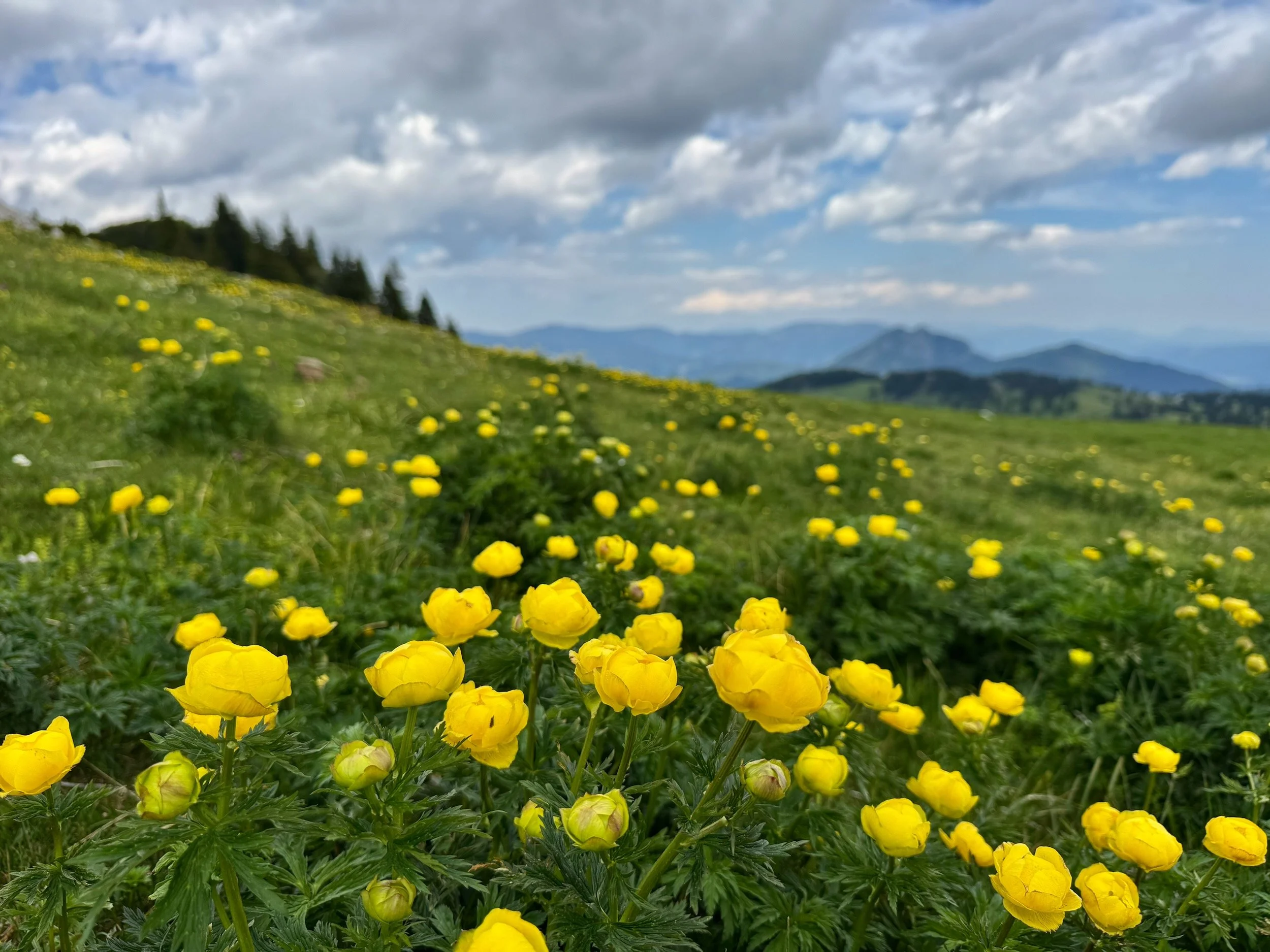
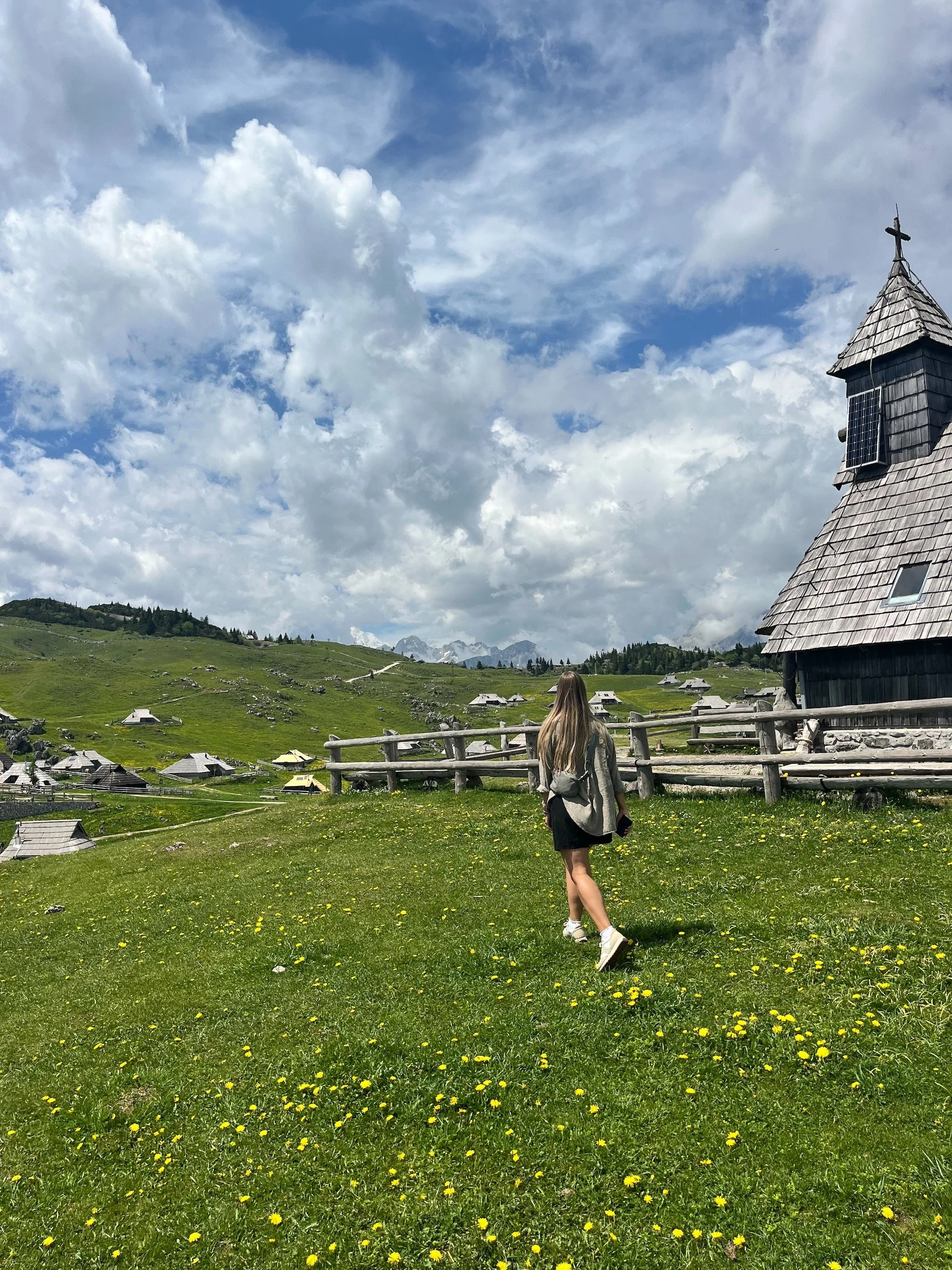
On the way, we stopped at Velika Planina, home to one of the largest herdsmen settlements in Europe. This mountain plateau is known for its traditional shepherd huts, open lush pastures and connection to Slovenia’s alpine traditions. It works well as a half-day stop between Ljubljana and Logar Valley, especially in clear weather.
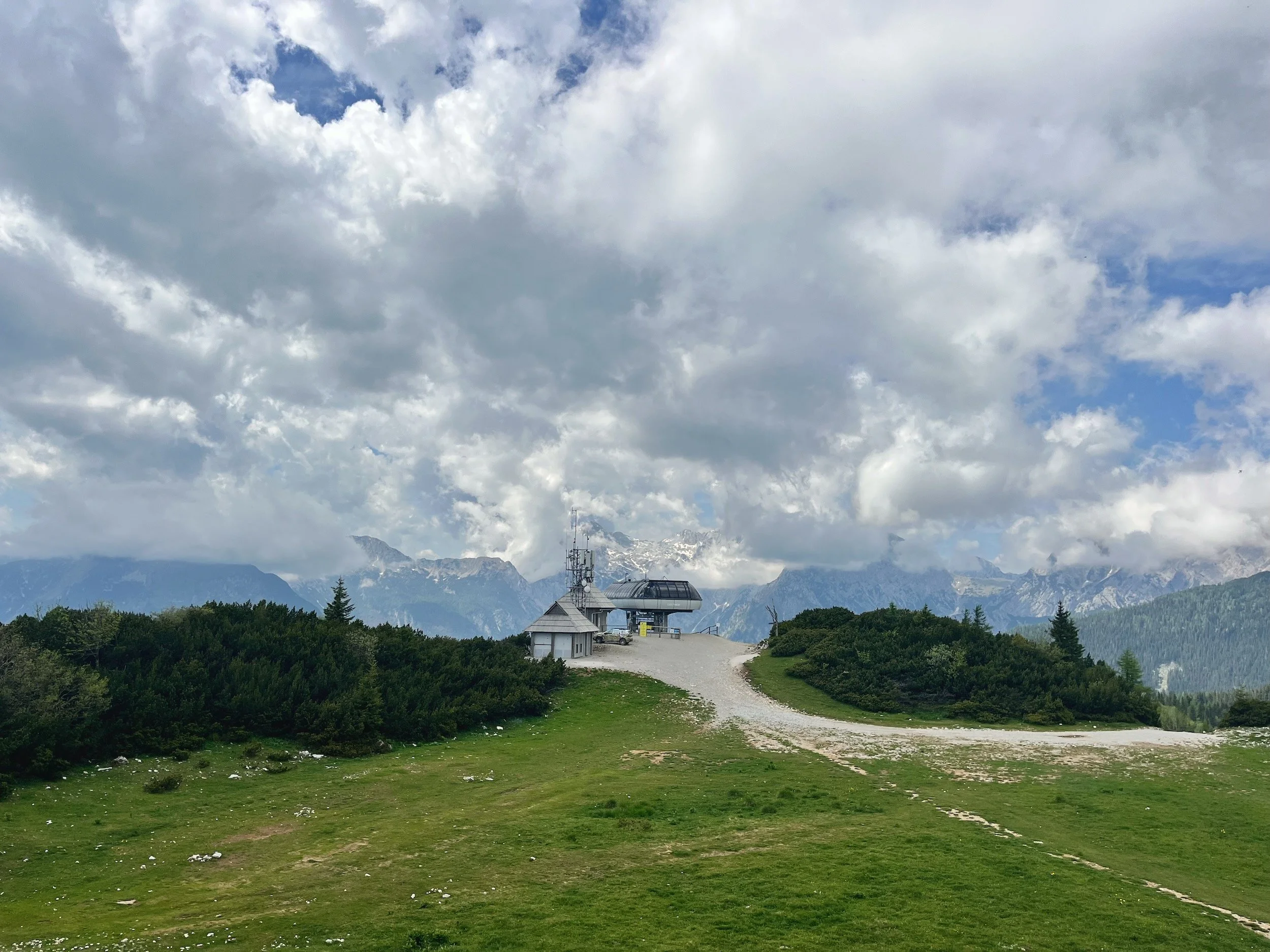
From the Kamniška Bistrica Valley, a cable car takes you to the plateau. From the upper station, you can continue by chairlift or walk uphill for around 30-45 minutes. If you take the chairlift, allow roughly an hour for a relaxed walk around the central shepherds’ settlement. For a longer route, the marked Footsteps of the Shepherds educational trail takes about two hours.
Logar Valley
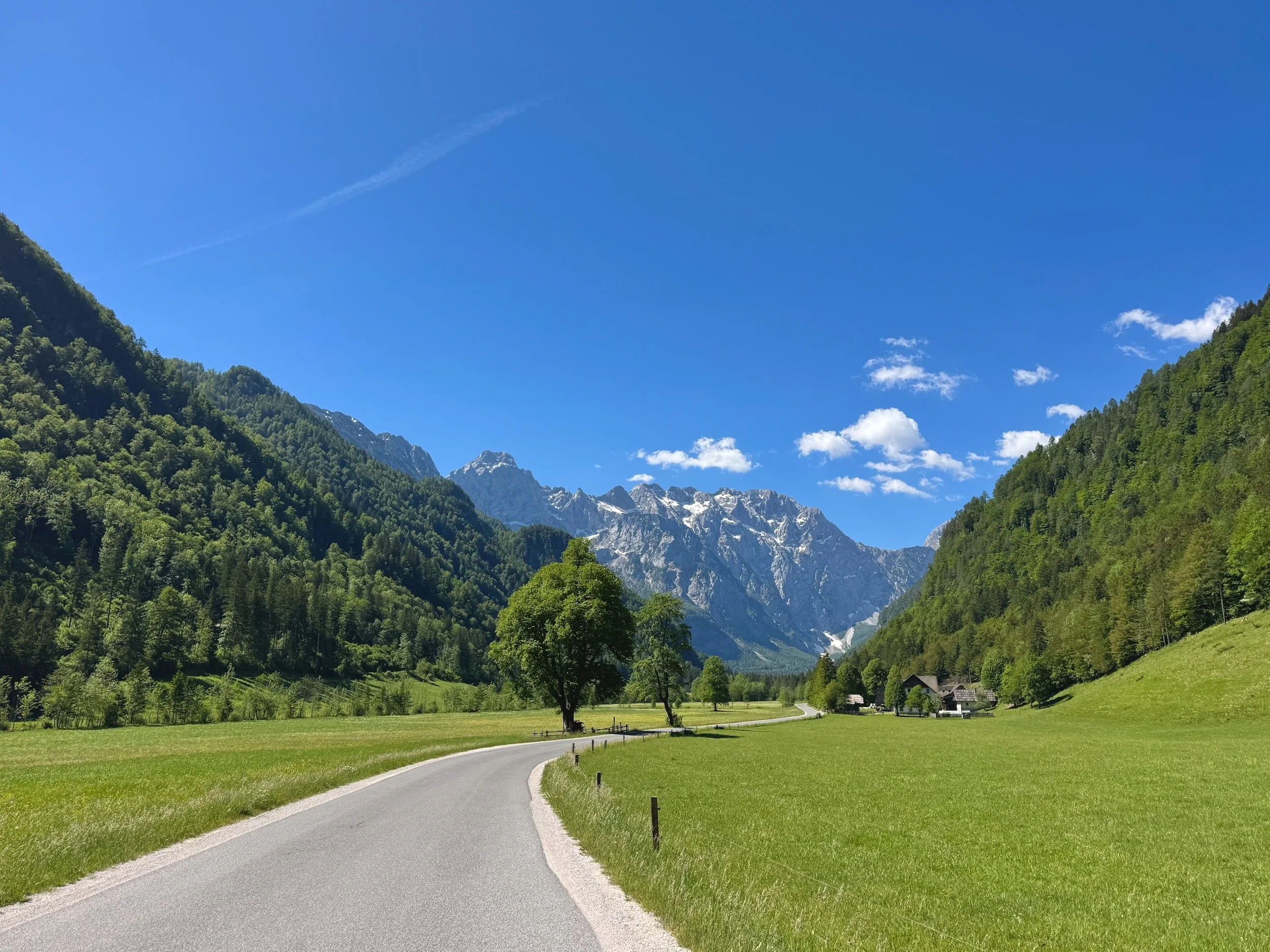
The Logar Valley in the Solčava region is often described as one of the most beautiful alpine glacial valleys in Europe. The route leads into a long green valley framed by steep mountains, forests, farms and open meadows. What we liked most was that Logar Valley did not feel overrun at all. Compared with more famous alpine areas in Europe, it still had a quieter atmosphere, shaped more by farms, guesthouses and mountain life than by heavy tourism. It is not a place where you need to rush between attractions. The nicest way to experience it is to stay nearby, walk parts of the valley, enjoy the views, have a simple local meal and let the pace slow down.
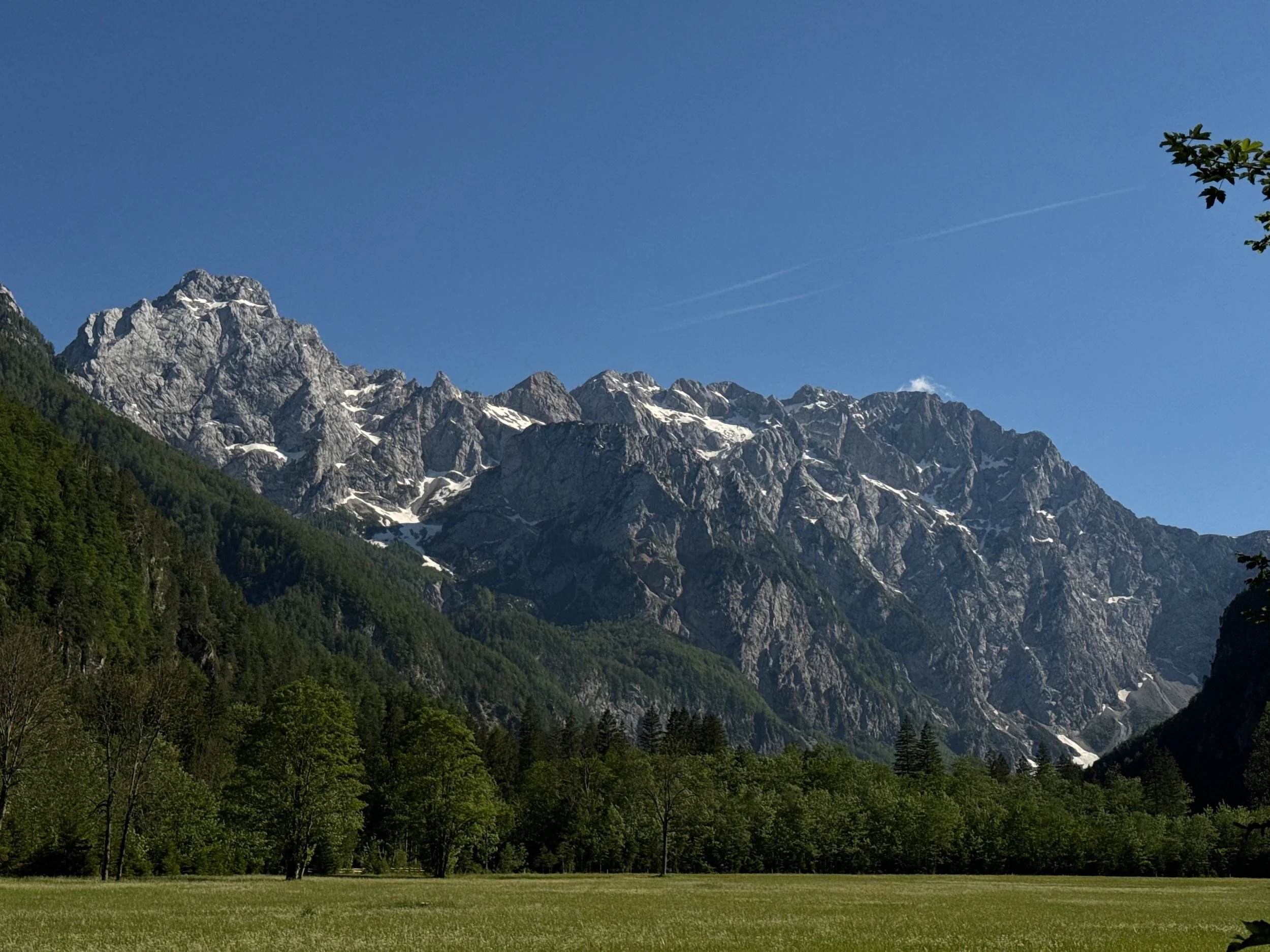
The classic “must-do” hike is the short trail to Rinka Waterfall. There is parking at the end of the valley next to a kiosk, where we stopped for some refreshing drinks afterwards. Rinka is one of Slovenia’s highest free-falling waterfalls, dropping in a 90-metre arc beneath the Eagle’s Nest lookout and snack bar.
We continued beyond the waterfall towards Okrešelj and Frischaufov dom na Okrešlju. The original hut was destroyed by fire and its replacement was still under construction during our visit. Considerable snow also remained higher up, so we eventually decided to turn around. Even with that change of plan, it was a beautiful hike of over three hours, with roughly 600 m of elevation gain and an incredible bird’s-eye view over the valley.
For a longer but still undemanding way to explore the valley, the seven-kilometre Logar Valley Trail follows forests and meadows and passes several natural and cultural sights before reaching Rinka Waterfall. The full trail takes around two to three hours one way, but it can be joined at several points and walked in shorter sections.
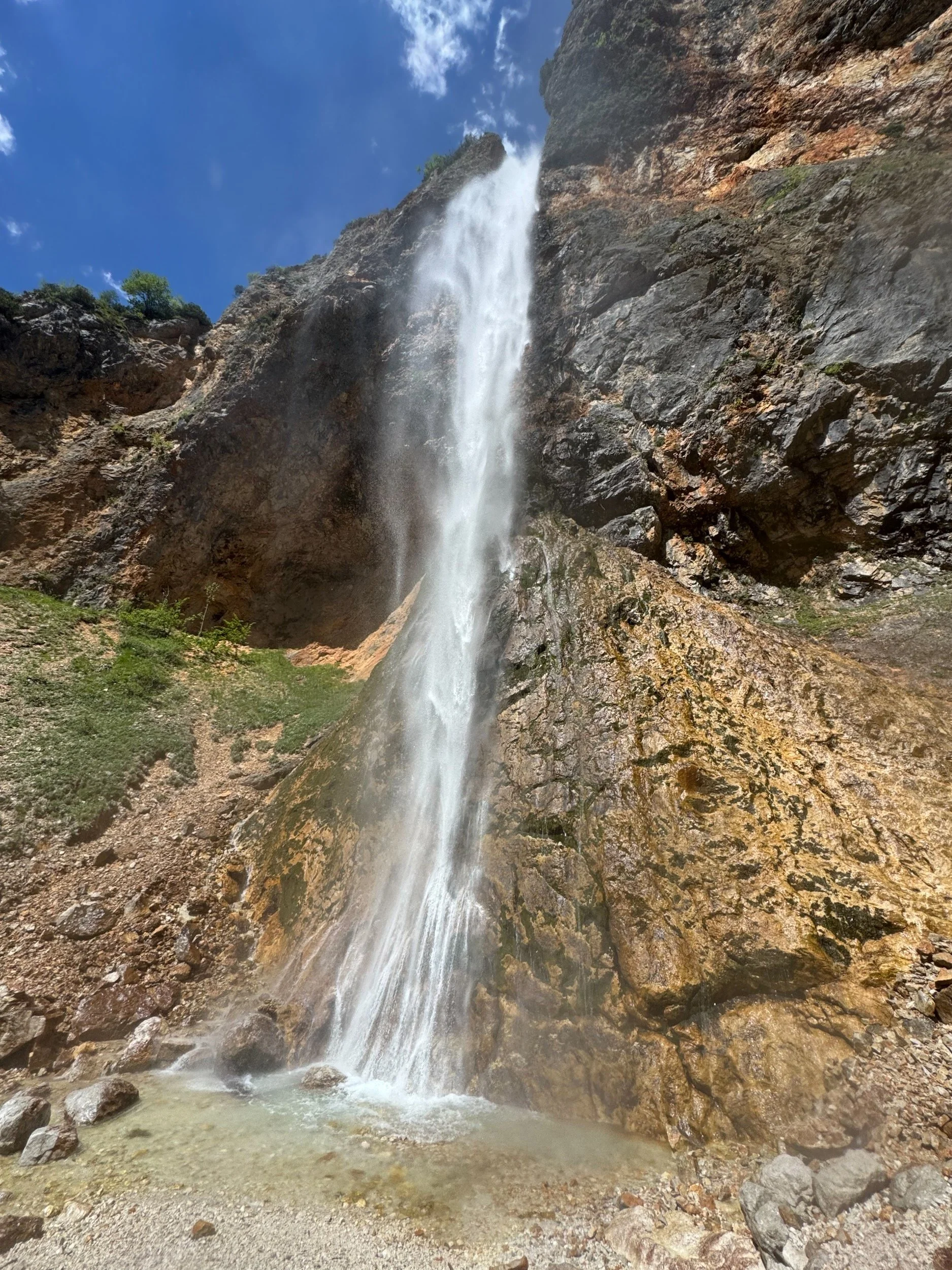
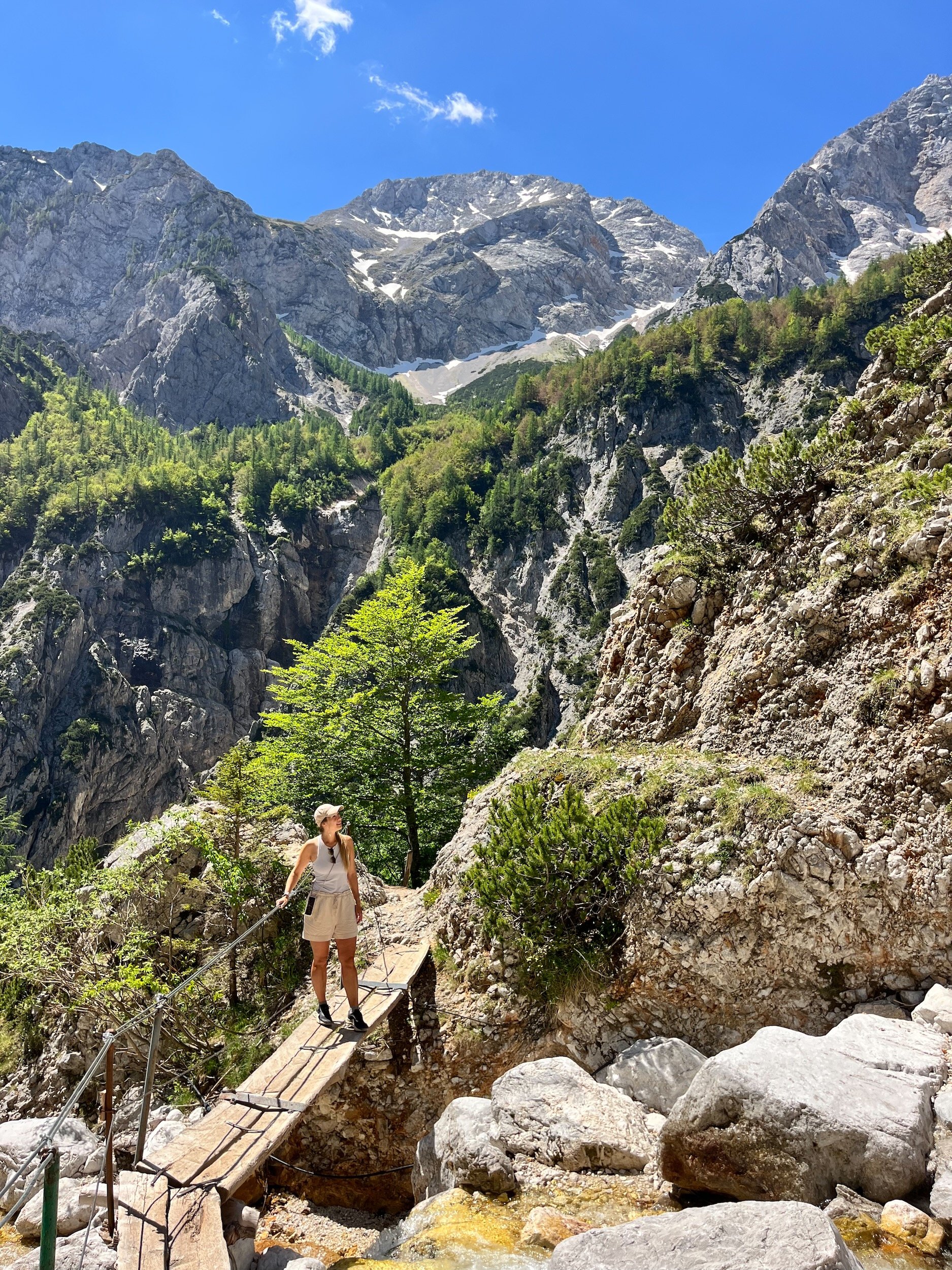
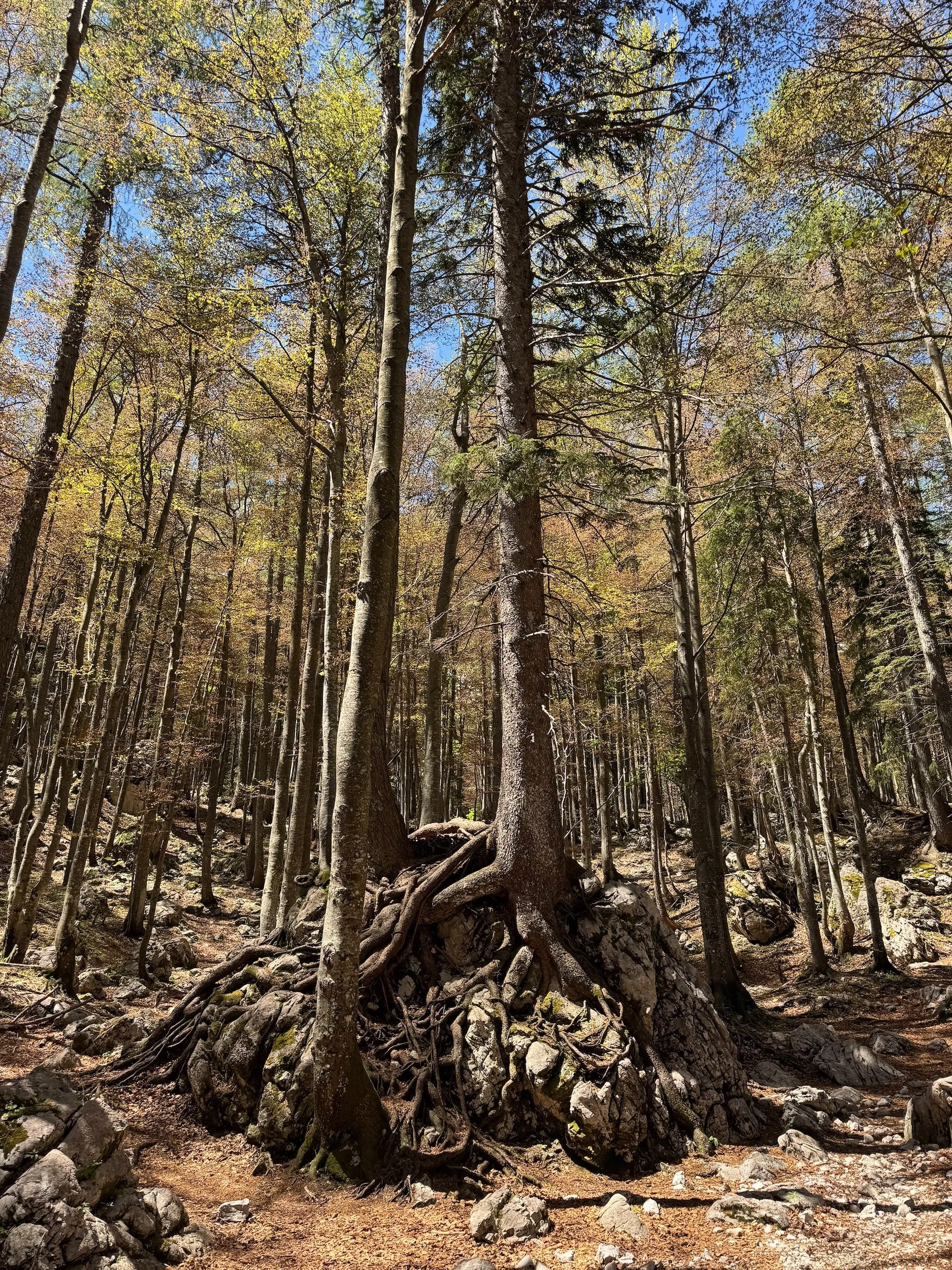
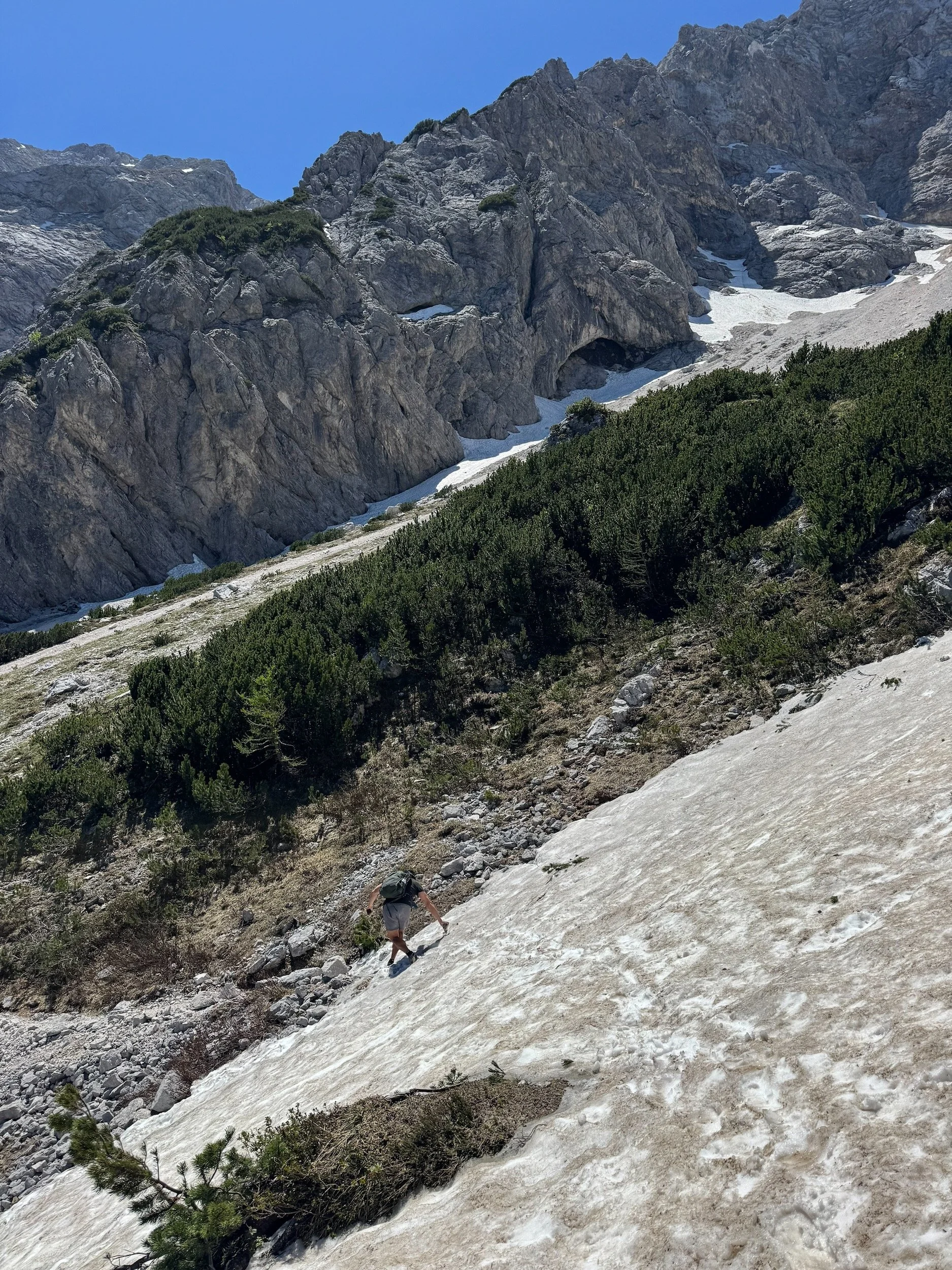
Mountain views all around!
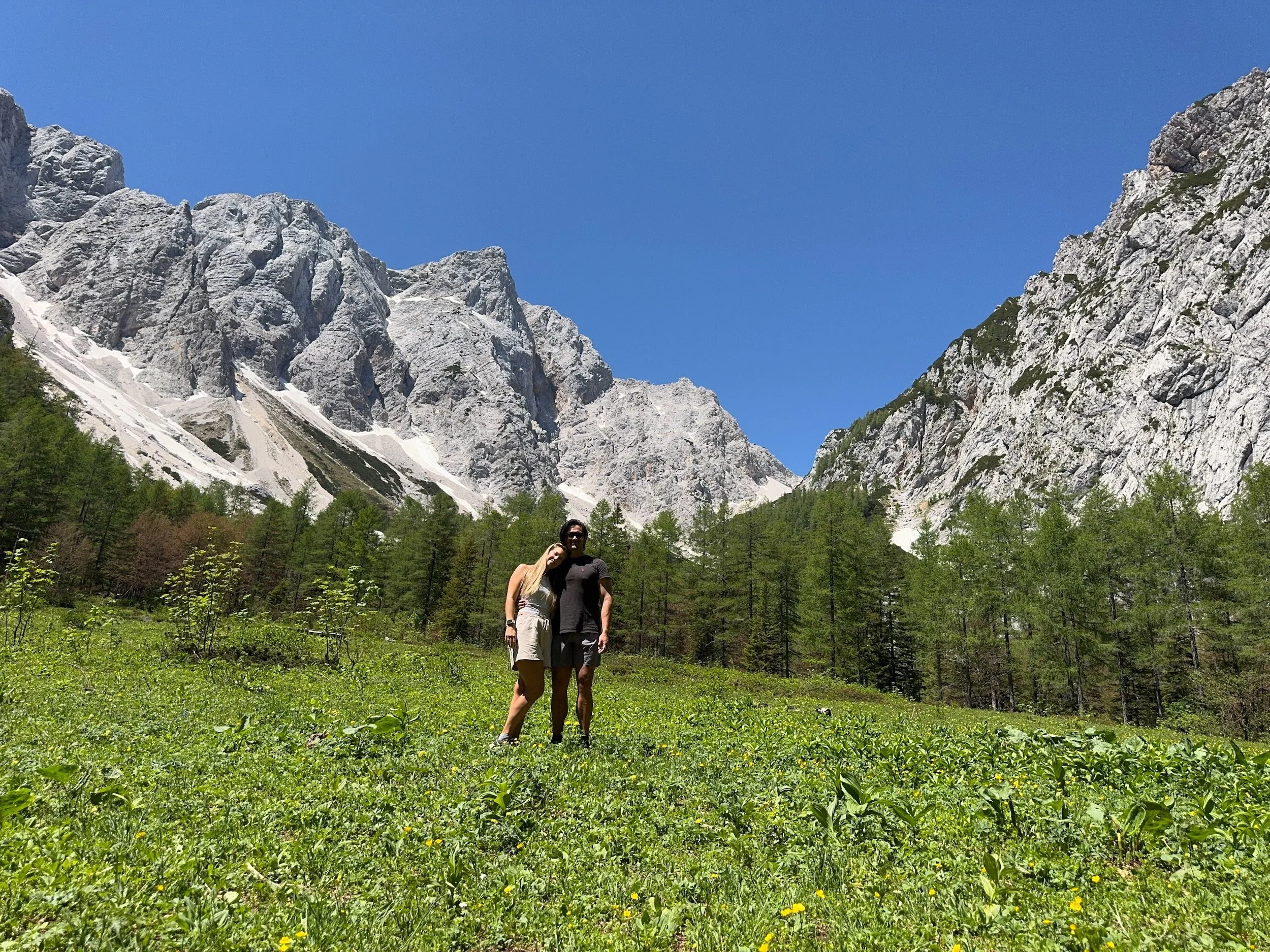
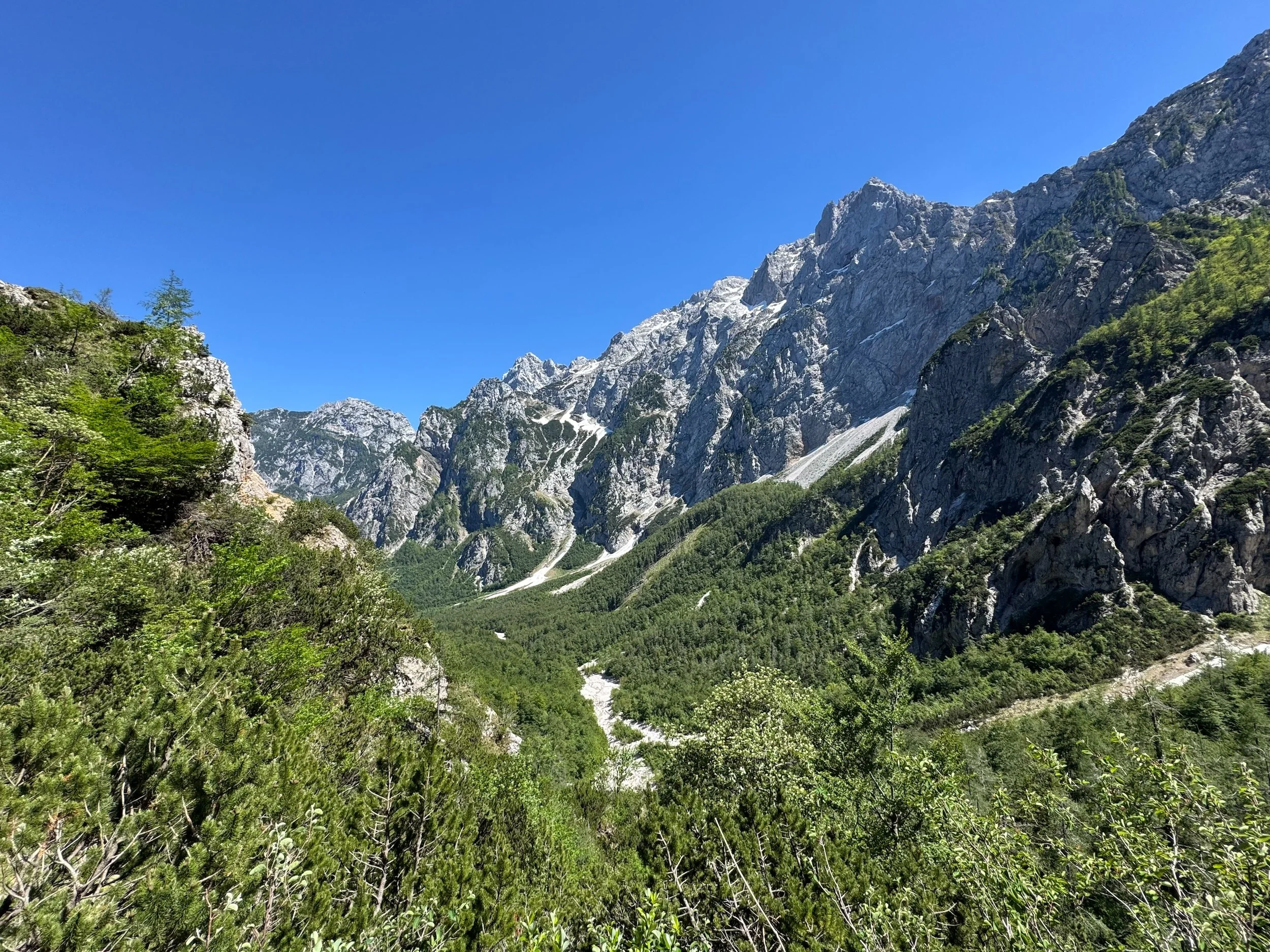
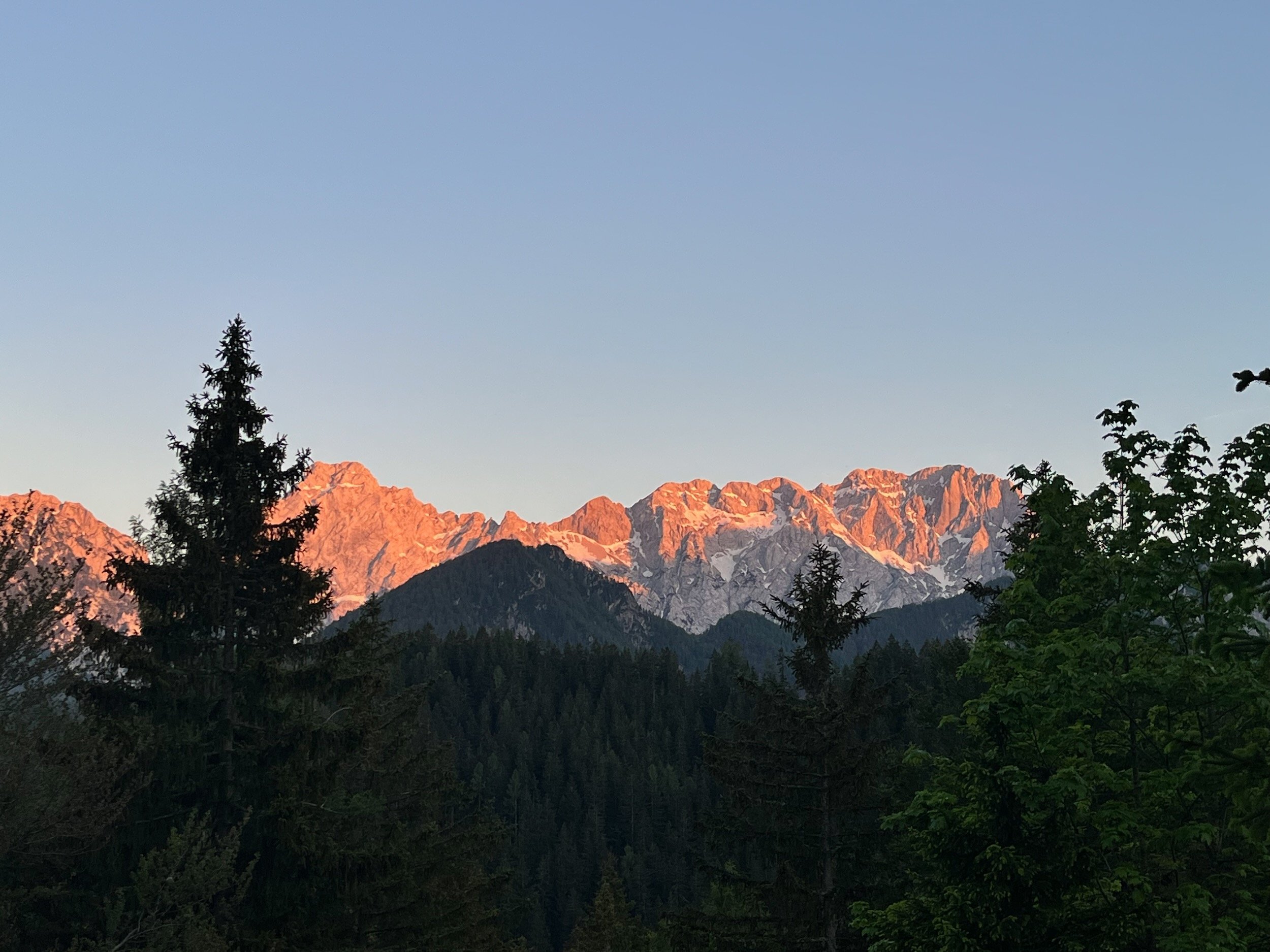
Our guesthouse was located along one section of the Solčava Panoramic Road, which meant we naturally experienced part of this scenic mountain route during our stay. If your itinerary allows, it is worth setting aside a few hours to follow the main 21 km circuit, which climbs higher into the mountains and winds between highland farms, alpine slopes and 12 marked stops, including viewpoints and local farms. The road is mostly paved, with only a short gravel section. Travellers with more time can extend the drive towards Matkov Kot and Bukovnik, bringing the complete network to 37 km.
One night would technically work, but a two-night stay allows the valley to feel peaceful rather than rushed. We had enough time to arrive without hurrying, explore the valley properly and enjoy the quieter mountain atmosphere before continuing onwards.
Velika Planina & Logar Valley
How long to stay: 2 nights in or near Logar Valley, with Velika Planina as a half-day stop from Ljubljana.
Best for: quiet alpine scenery, traditional mountain landscapes, valley walks, alpine hikes, waterfalls and panoramic roads
Good to know: Velika Planina is very weather-dependent, so it is most worthwhile on a clear day. For Logar Valley, book ahead if you want to stay inside or close to the valley, as accommodation is limited. Access to Logar Valley by motor vehicle is subject to an entrance fee, while visitors arriving on foot or by bicycle can enter free of charge.
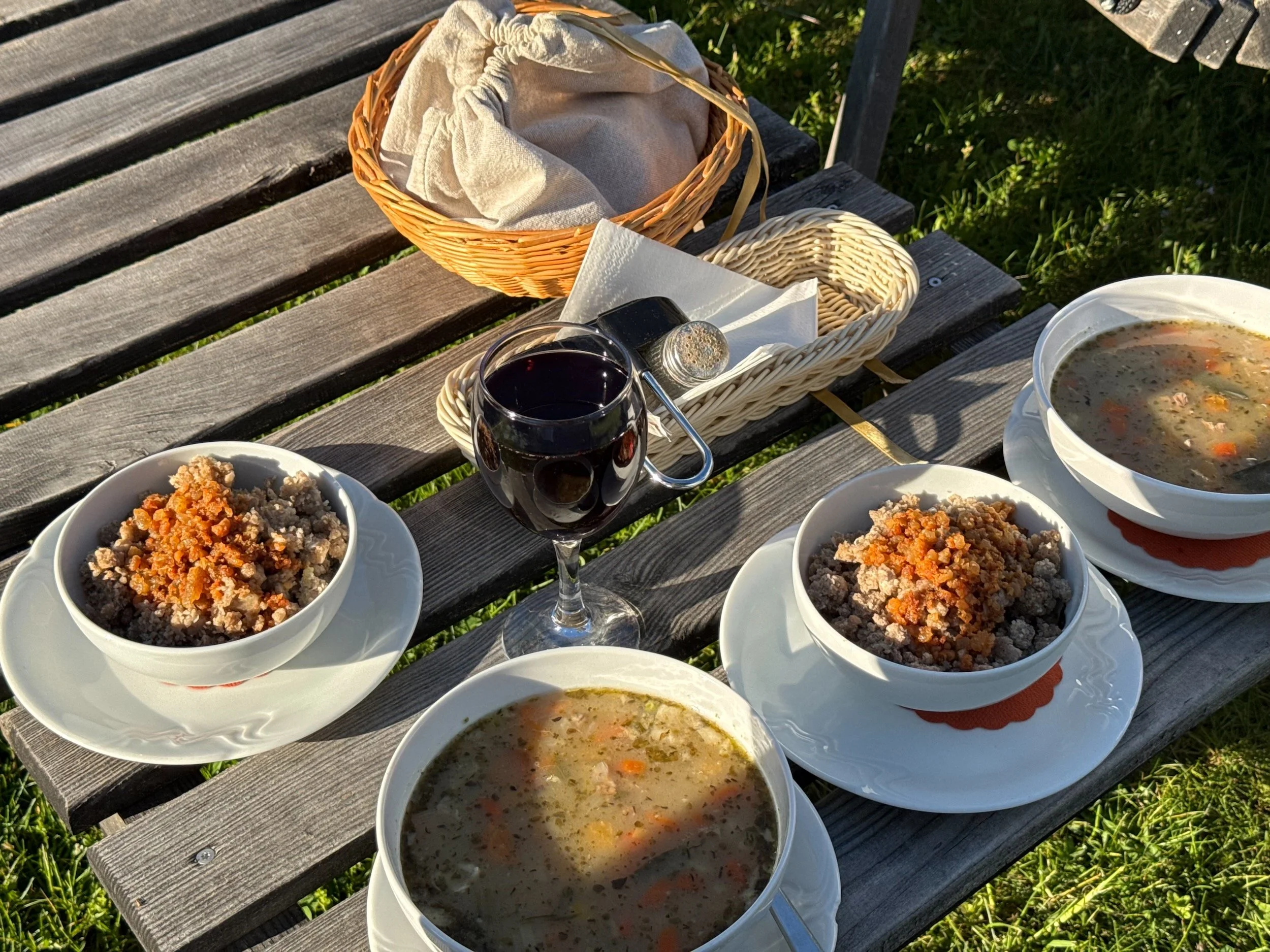
Food: Logar Valley is best for simple, hearty mountain cooking served at guesthouses, tourist farms and huts. Expect soups, stews and regional dishes rather than a large restaurant scene. Places to eat inside the valley are limited, so check opening hours and consider arranging dinner with your accommodation.
Where we stayed: We stayed at Guesthouse Planinski Dom Majerhold, a small family-run place on a hill near the entrance to Logar Valley. The location was peaceful, the views were beautiful and both dinner and breakfast were very good. There are also guesthouses inside the valley.
Good to know
On the way to the Bled and Bohinj area, we briefly passed through Austria on a winding mountain road before crossing back into Slovenia. We barely made it through the mountain pass before a bike race, so it’s good to check your route for road closures, especially in the summer months.
Planšarsko Jezero | Day 7
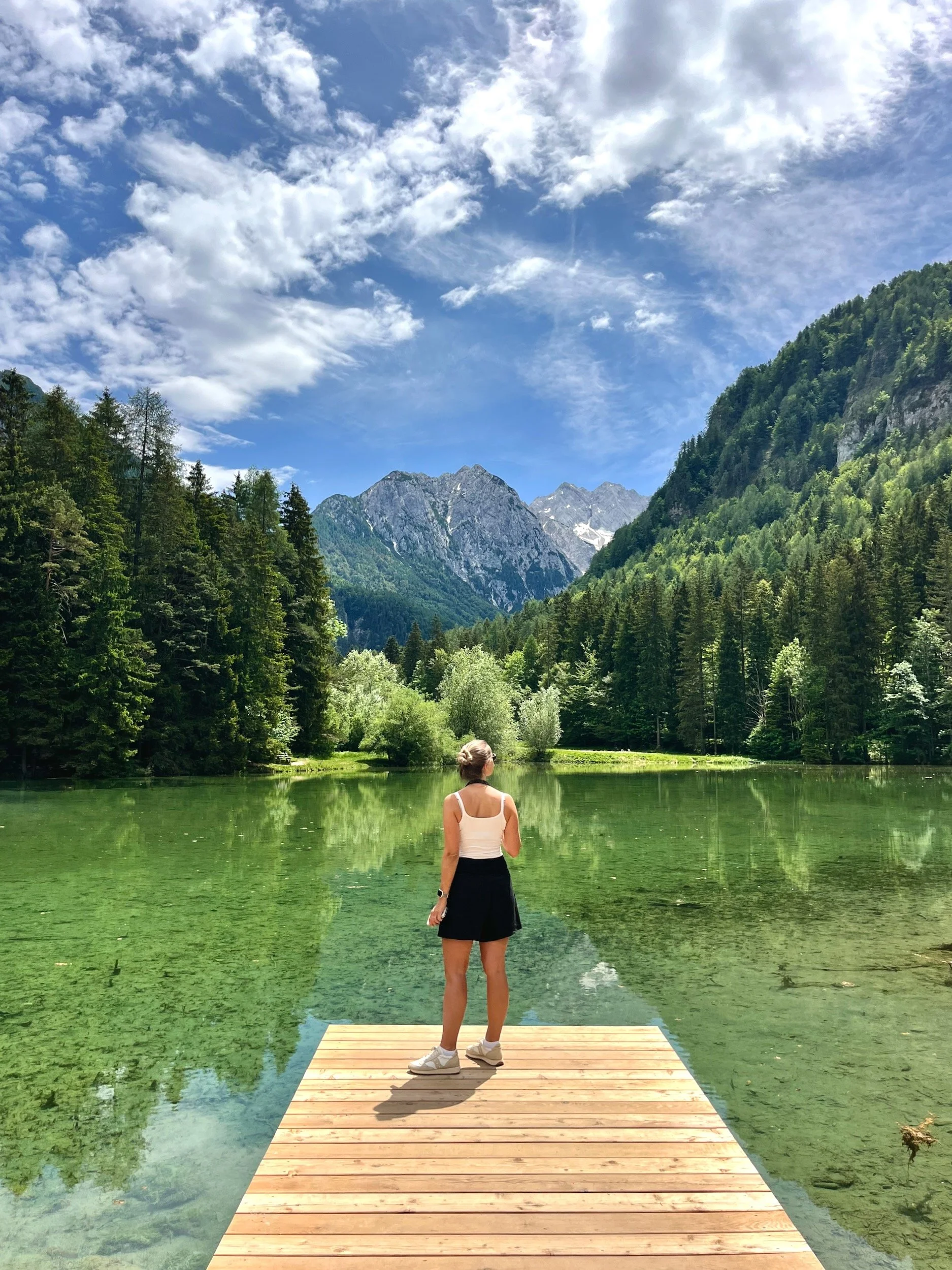
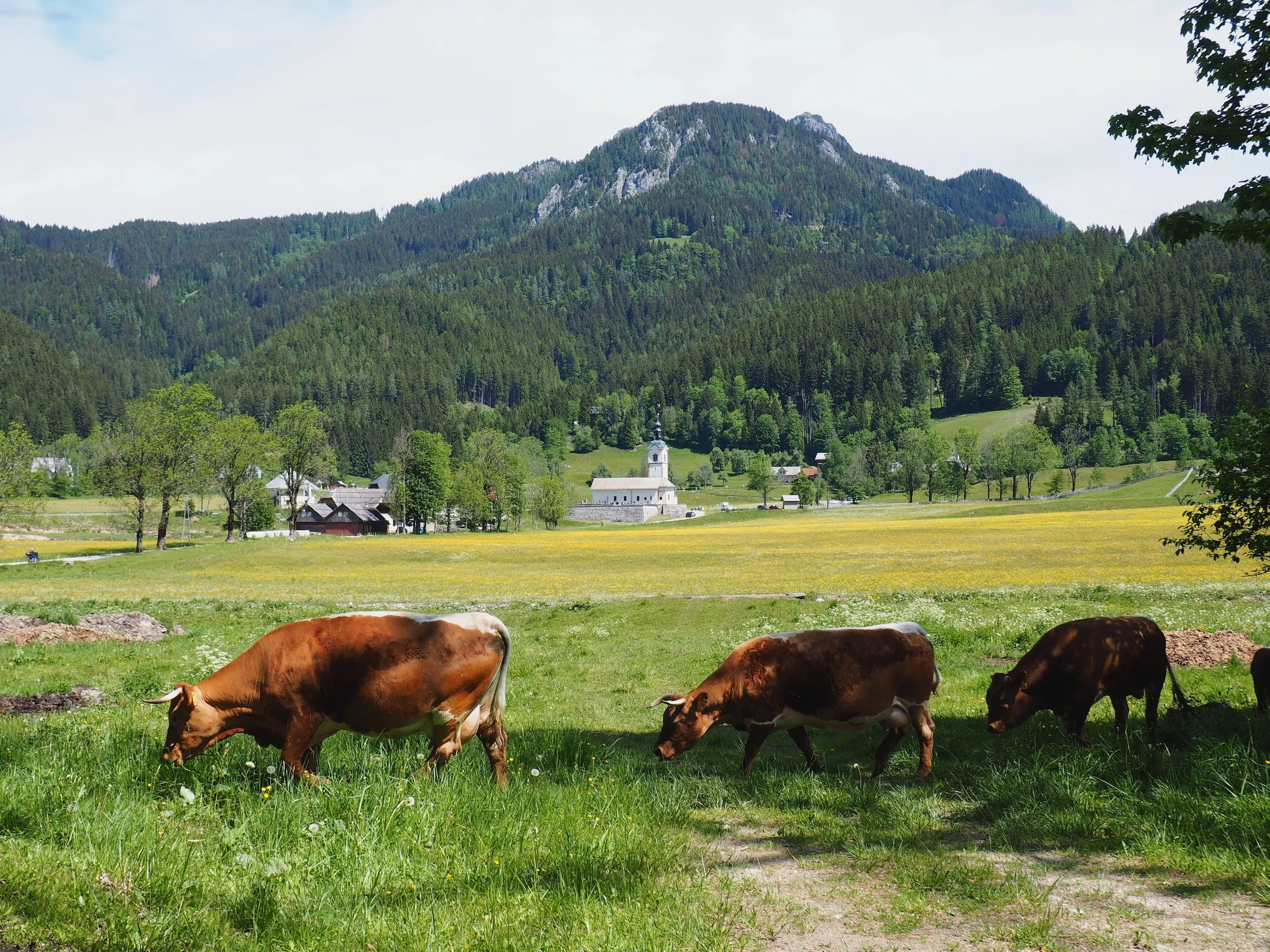
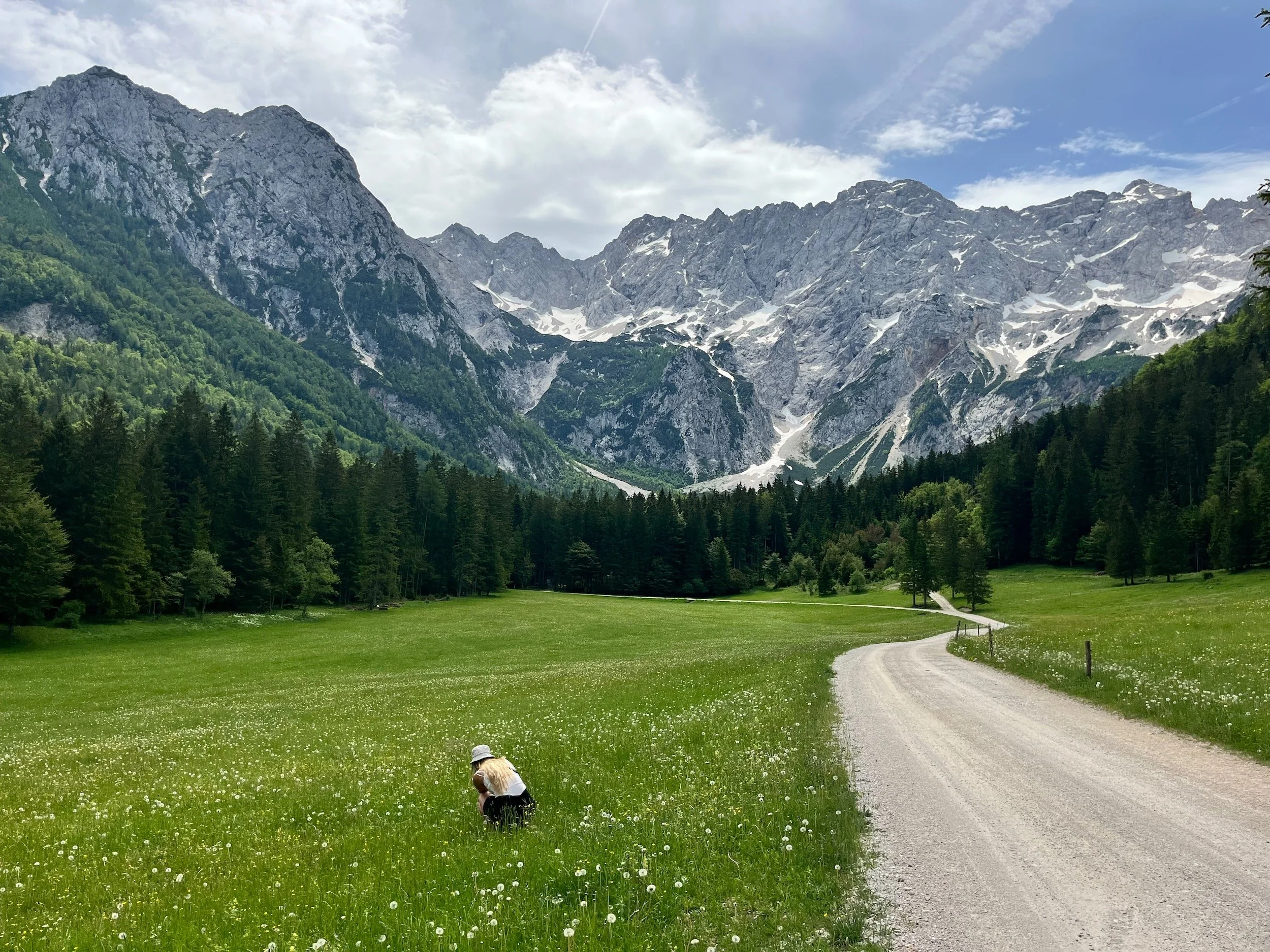
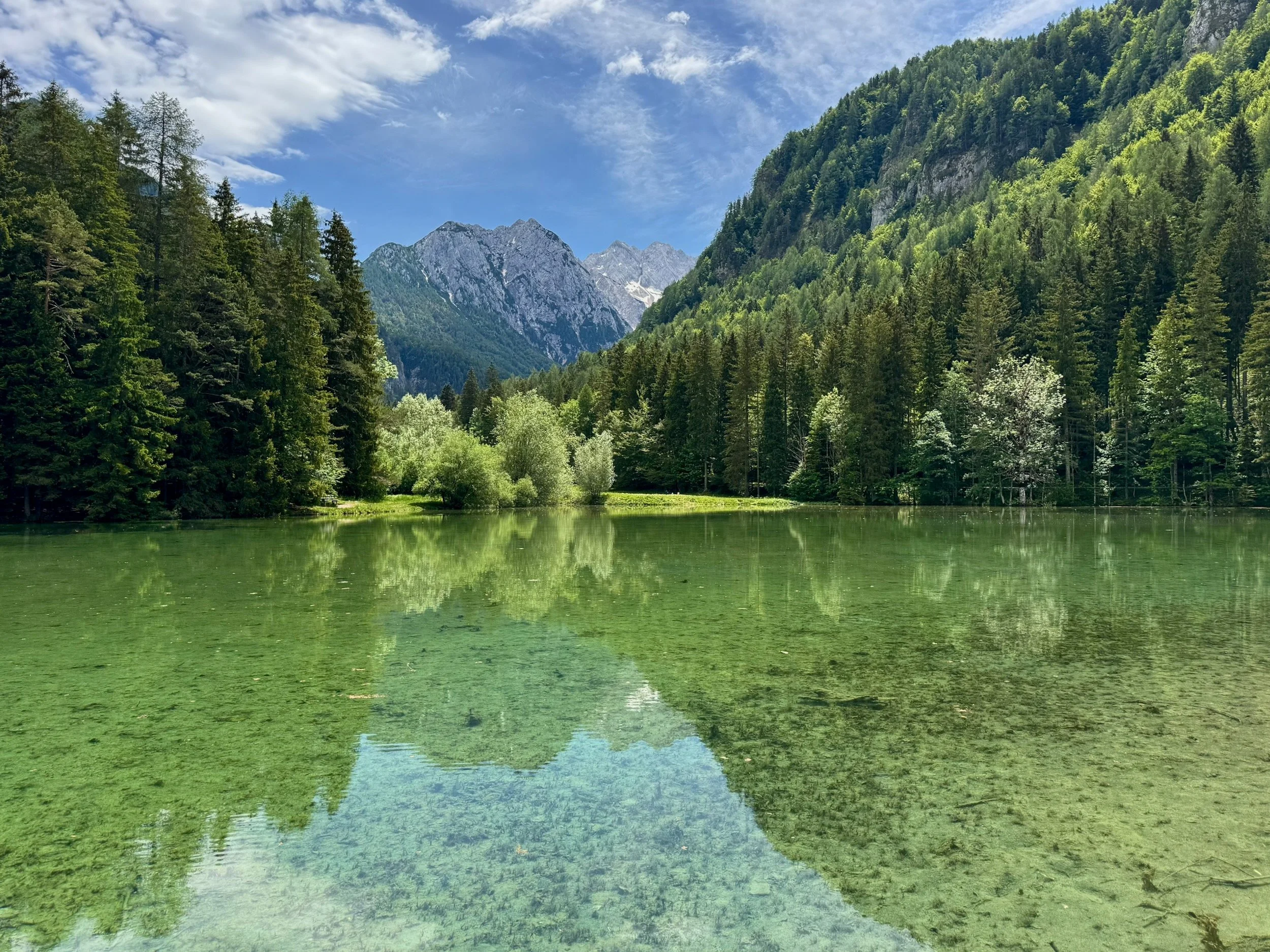
Along the drive, we stopped at Planšarsko Jezero near Jezersko and walked around the small lake towards the Ravenska Kočna Valley viewpoint. It makes a good break between regions to stretch your legs or have lunch at the nearby restaurant. The area felt quiet and open, with mountain views and cows grazing in green meadows. Compared with the more enclosed feel of Logar Valley, the landscape here was softer and more pastoral.
Lake Bled and Lake Bohinj | Day 7-10
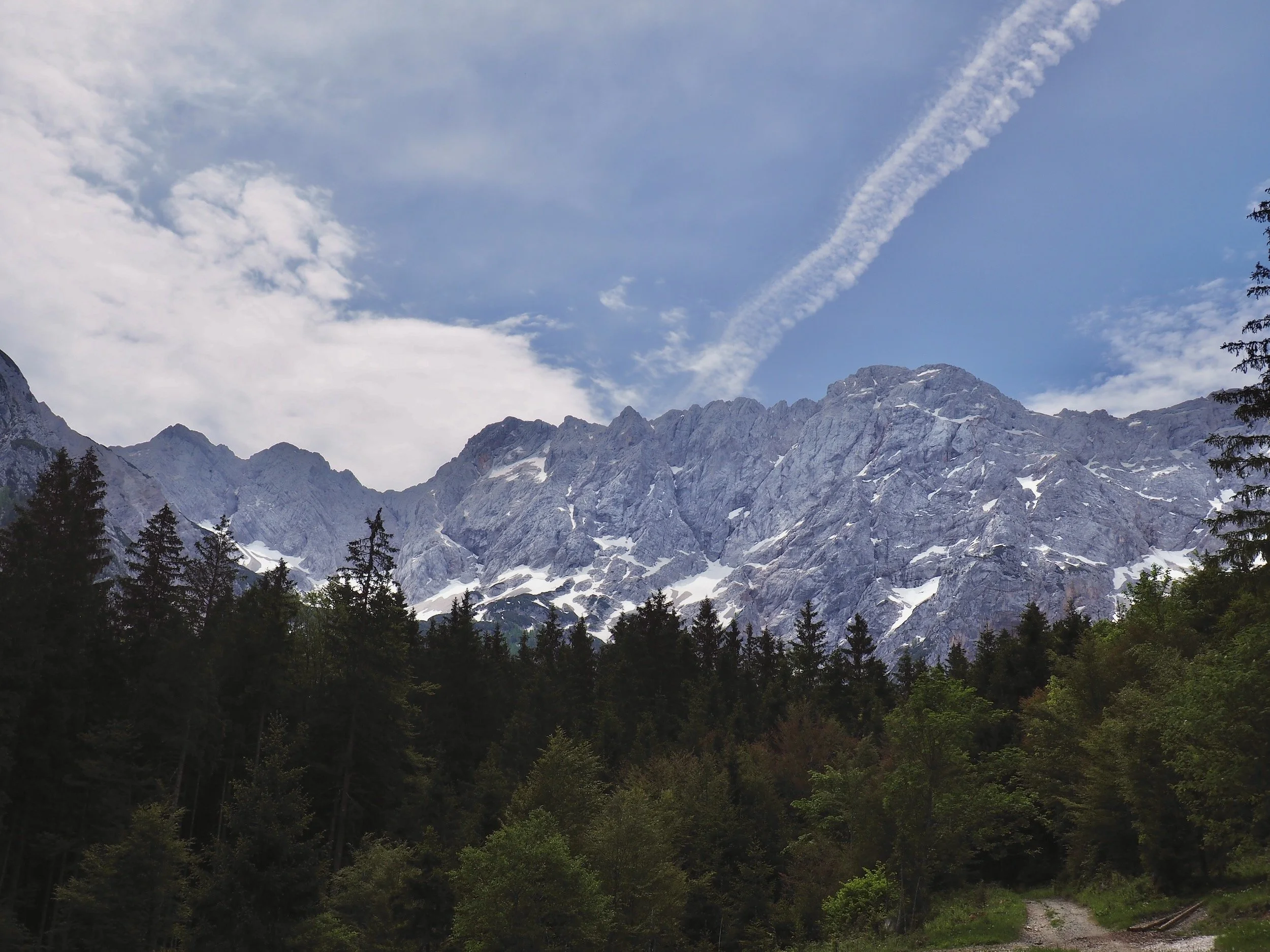
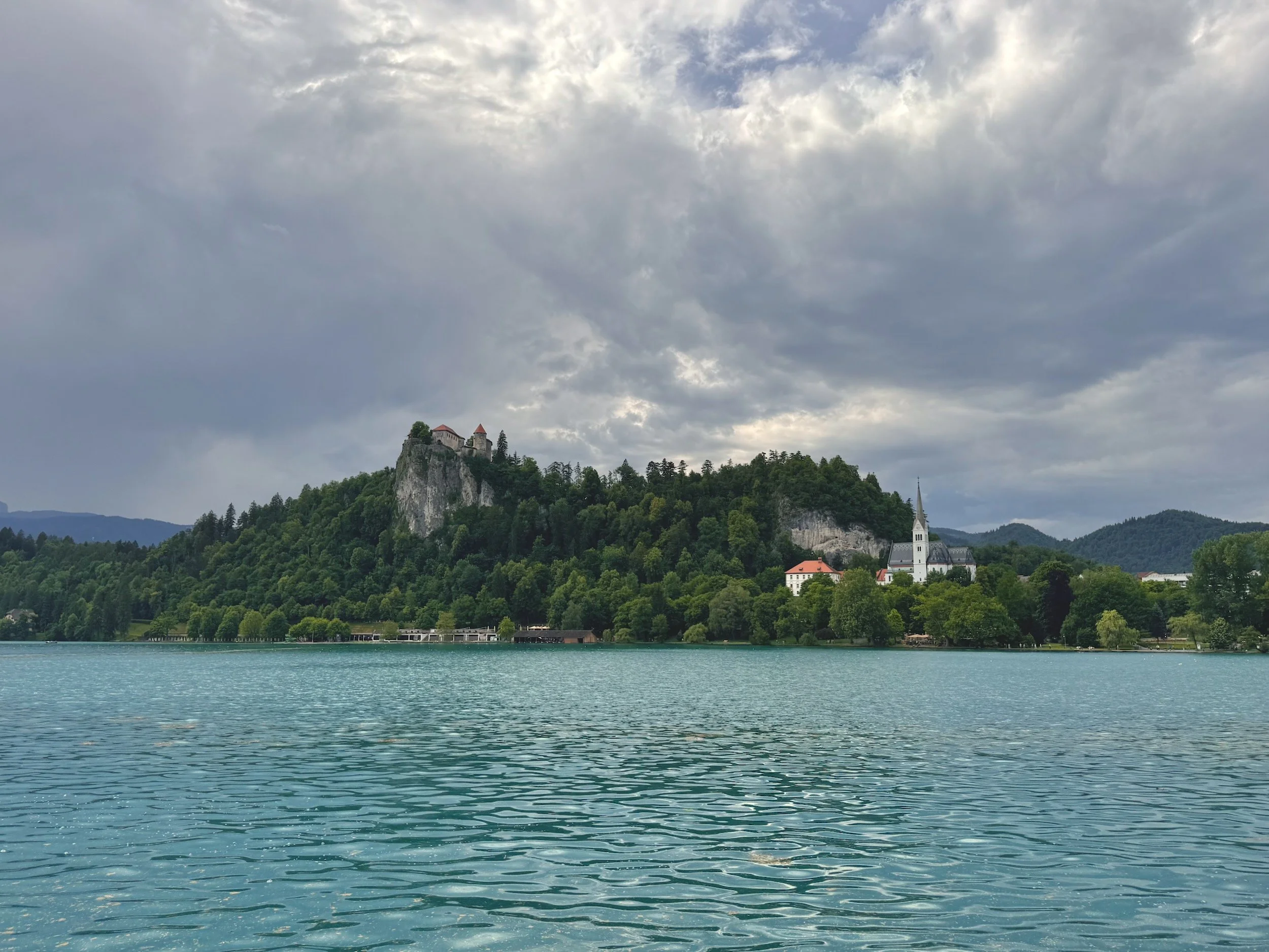
A Slovenia itinerary would not feel complete without a stop at the iconic Lake Bled. With its fairytale church on a small island, medieval castle perched on a cliff above the water and mountain backdrop, it is one of the most recognisable views in the country. It is beautiful, easy to enjoy and absolutely worth including on a first trip, even if it is also one of the places where you will certainly notice tourism more. Depending on the time of day and season, you should also expect more traffic around Bled than in quieter parts of the country.
A walk around the lake or along the promenade is lovely, especially earlier in the day. For the classic elevated view, you can hike up to Ojstrica or continue towards Mala Osojnica. Bled Castle offers another perspective over the lake. For many travellers, half a day will be enough to experience the main sights without rushing.
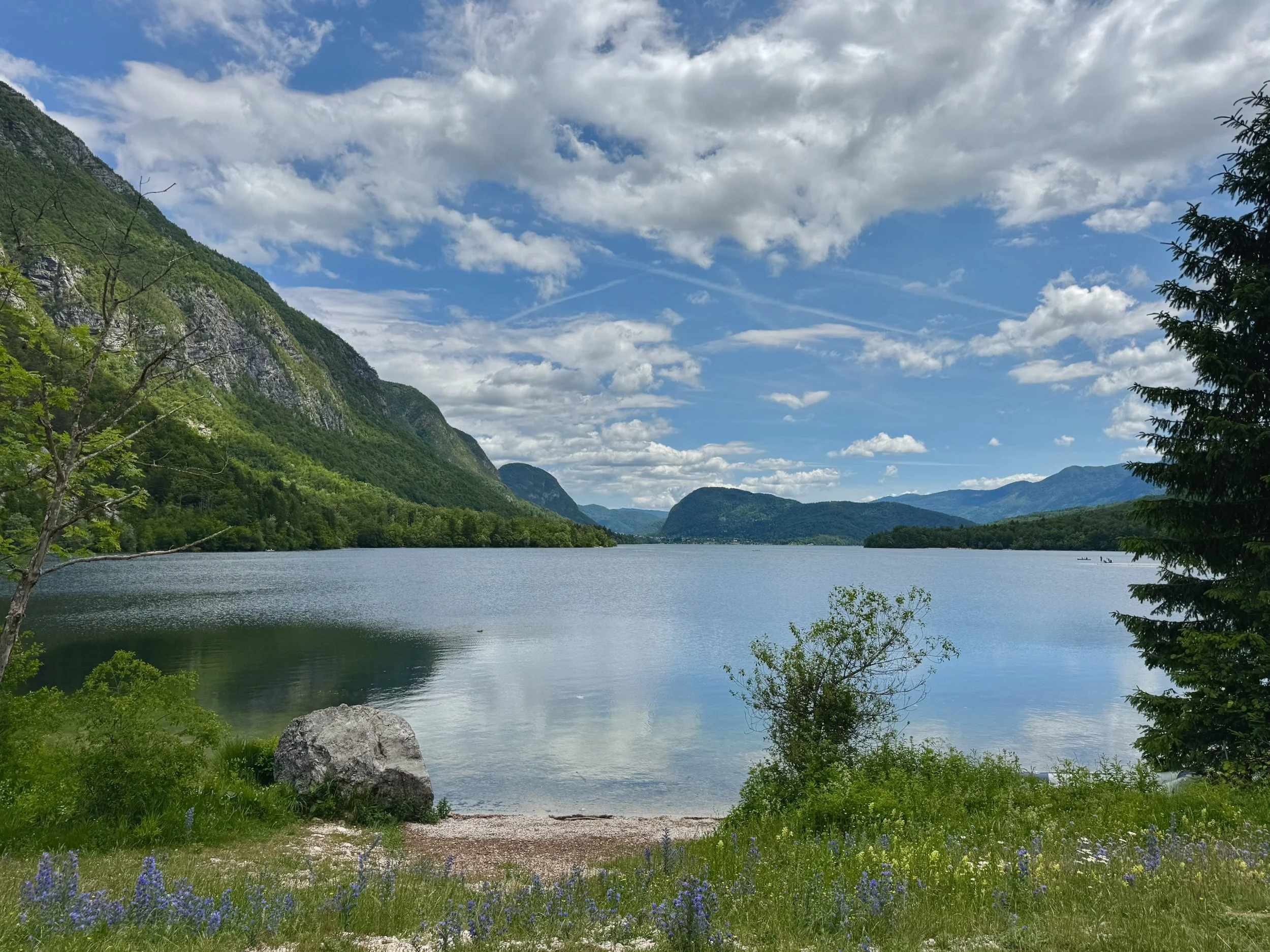
The easiest way to think about the two lakes is that Bled is the classic sightseeing stop, while Bohinj is the more spacious nature base. Bled is more polished and straightforward to explore, while Bohinj feels calmer, wilder and better suited to slower lake days, walks and mountain scenery. For a first visit, I would include both rather than choosing between them, but unless Bled itself is the main focus of your trip, I would give the larger share of your time to Bohinj. This leaves room for nearby gorges, waterfalls and trails into Triglav National Park, a longer hike or simply an unhurried day by the lake.
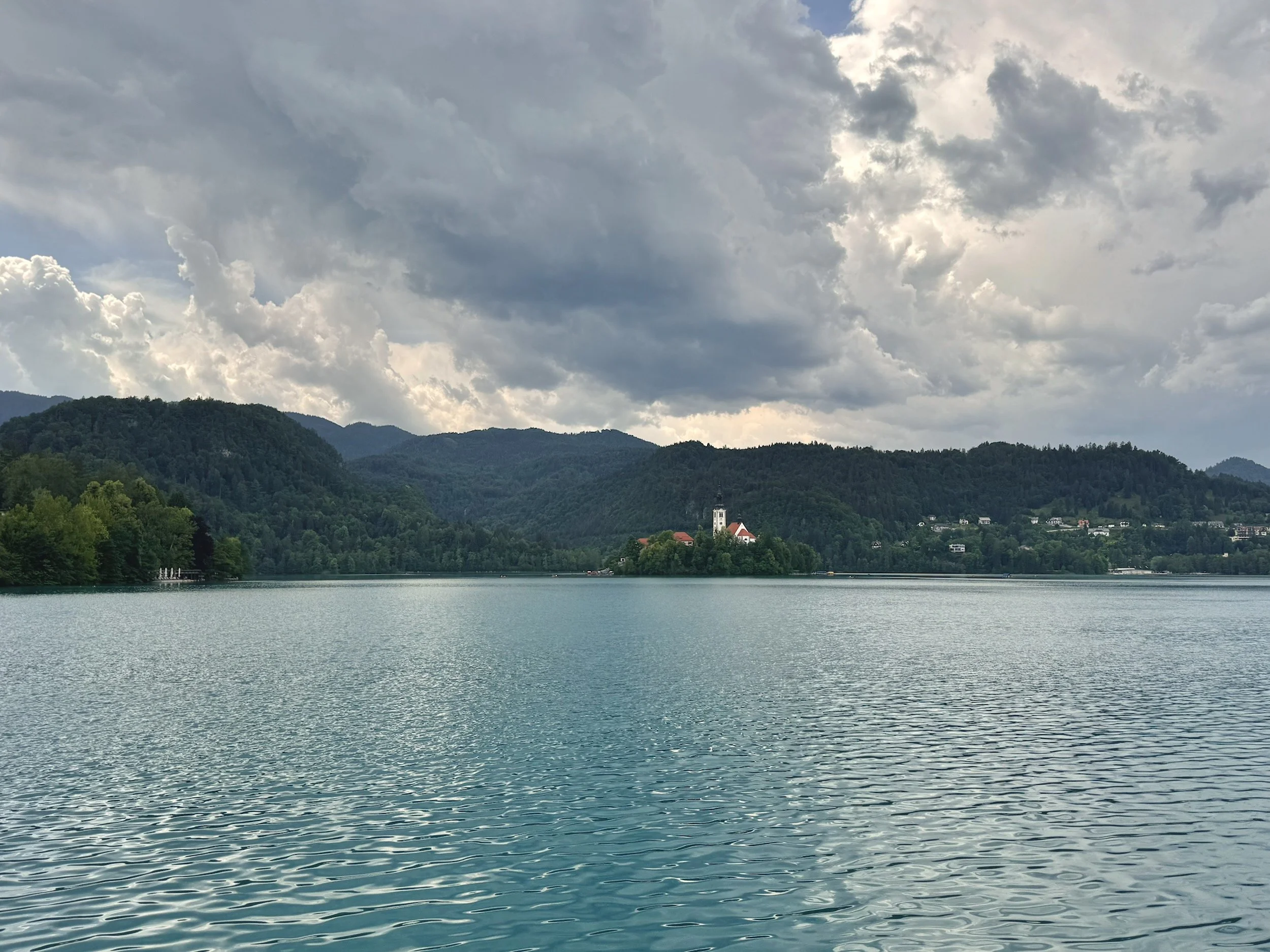
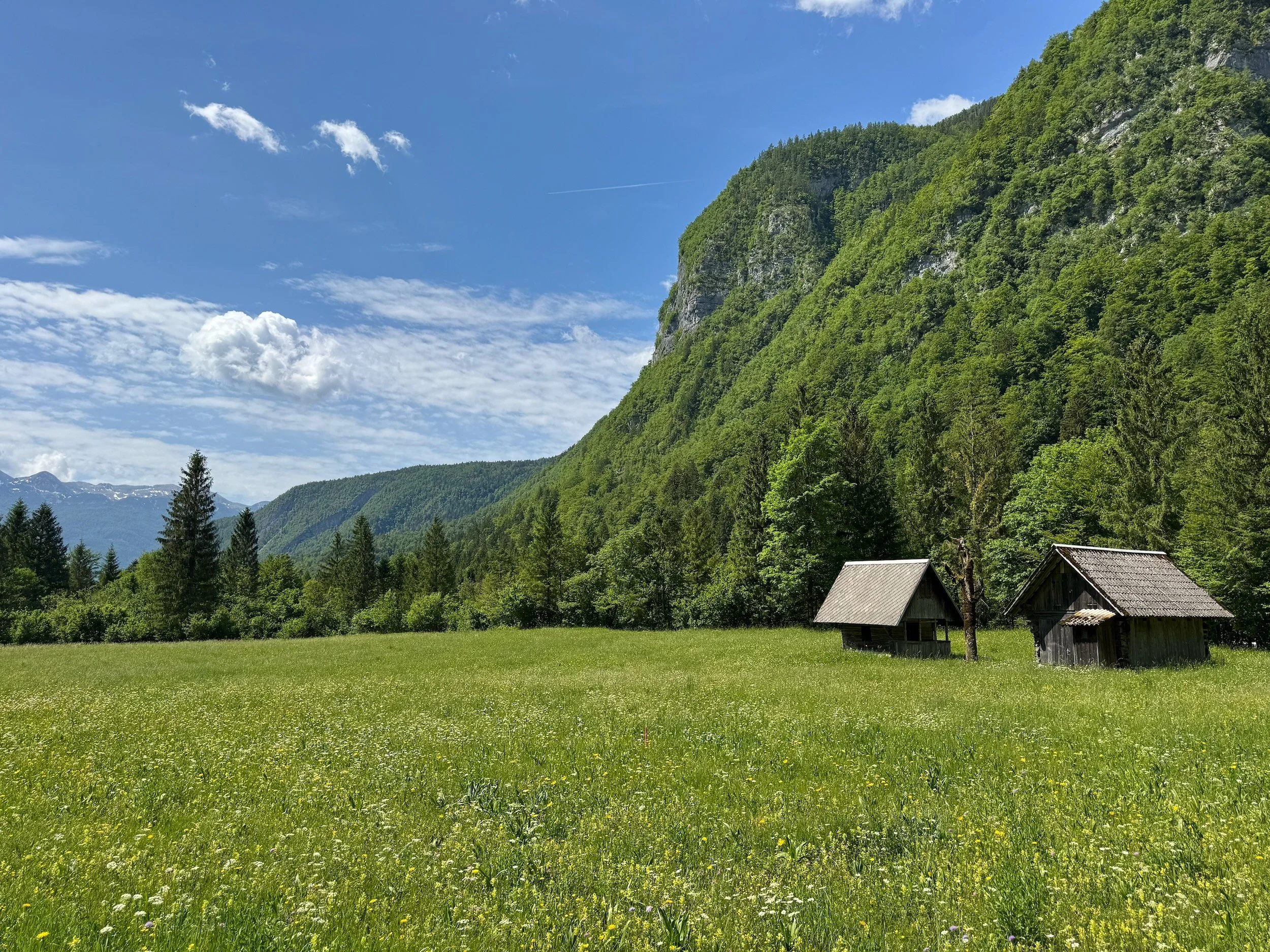
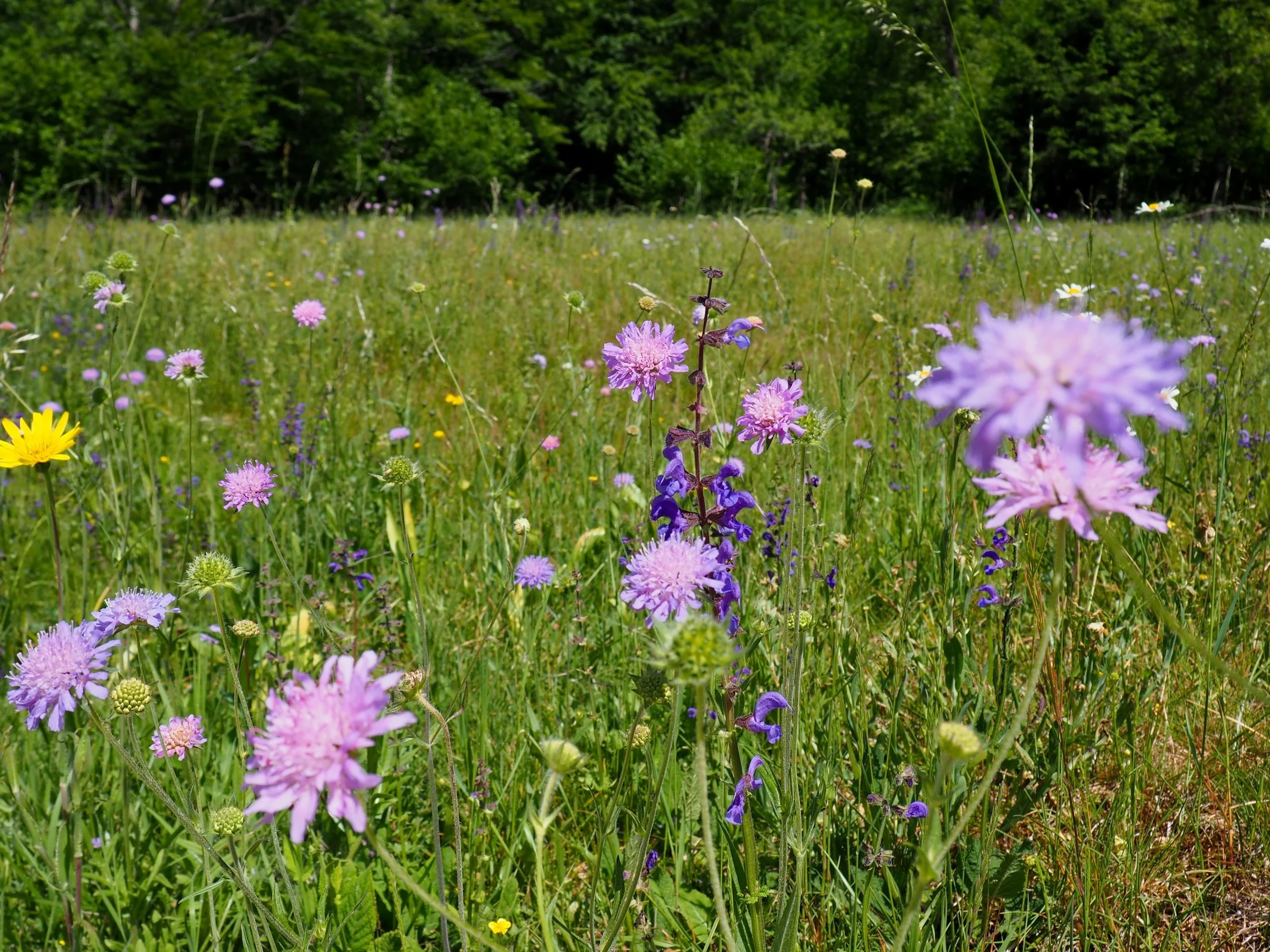
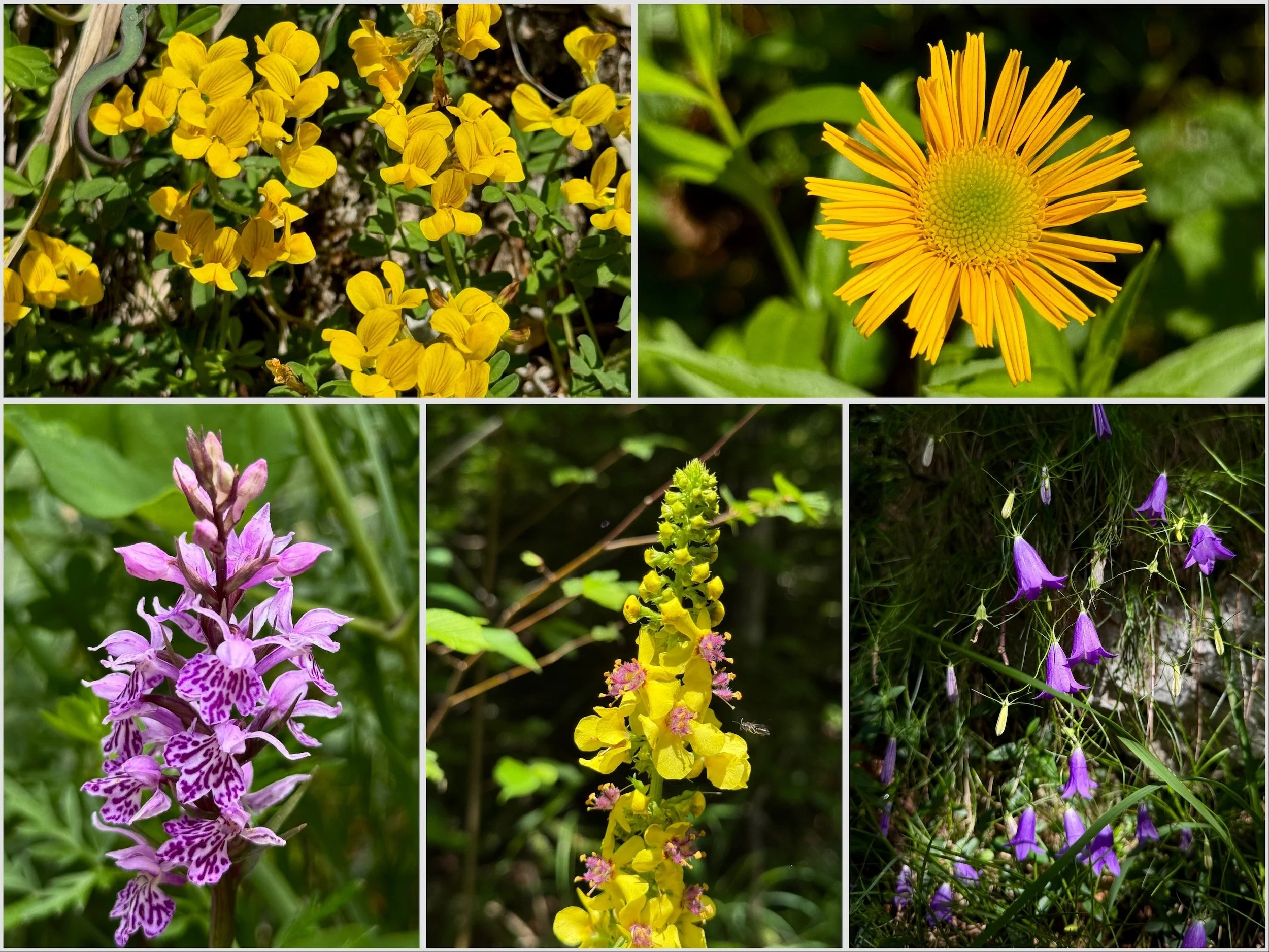
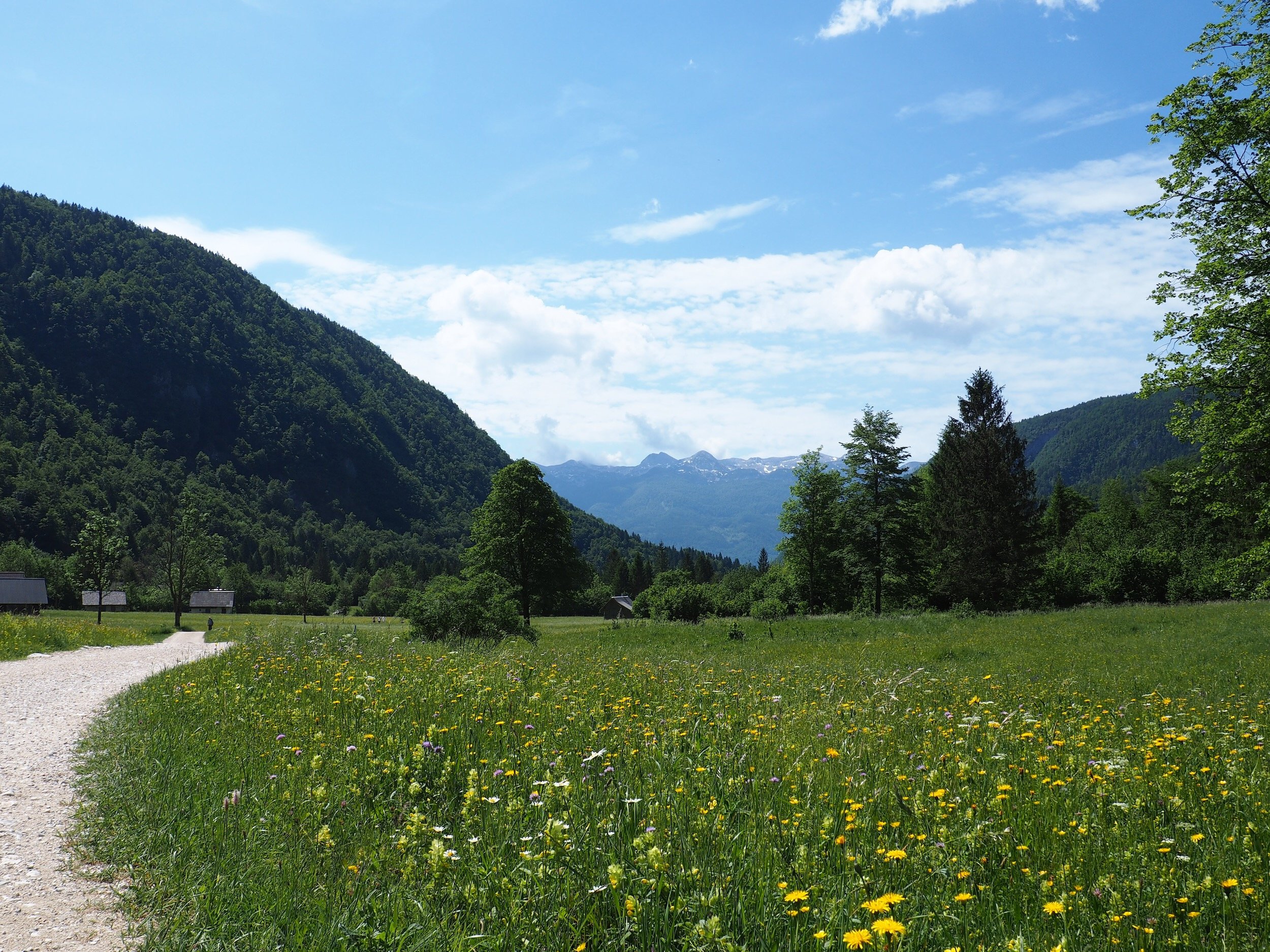
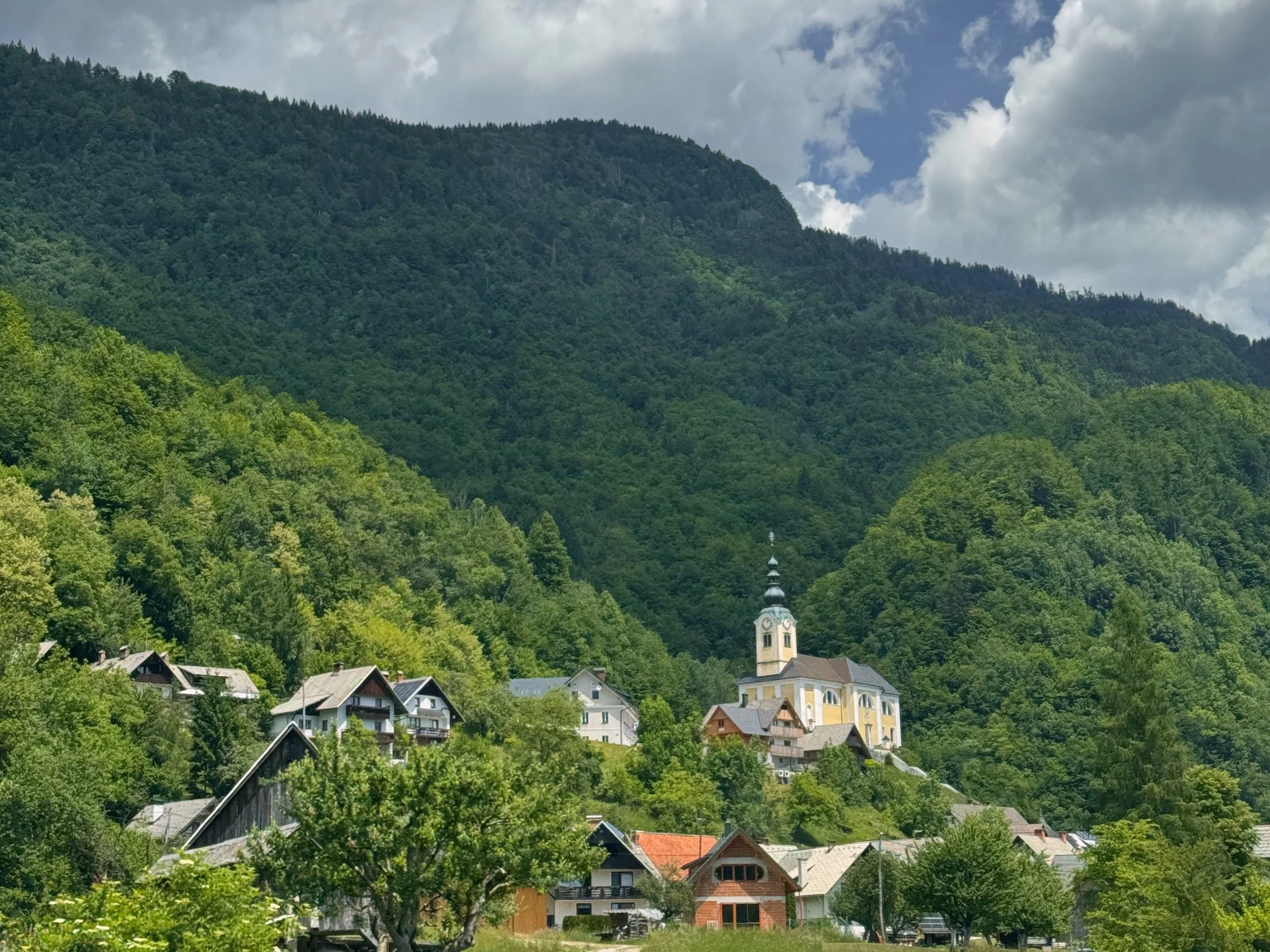
We based ourselves in a village right between Lake Bled and Lake Bohinj, with equal time in both directions. Even though we did not have the best weather during our stay, we still really enjoyed the area. You can walk along Lake Bohinj, Slovenia’s largest permanent natural lake, rent kayaks or SUPs, go for a swim in warmer weather or take the Vogel cable car for views over the lake and the Julian Alps. The area around Stara Fužina also makes a good base for walks, local food, village atmosphere and access to nearby trails.
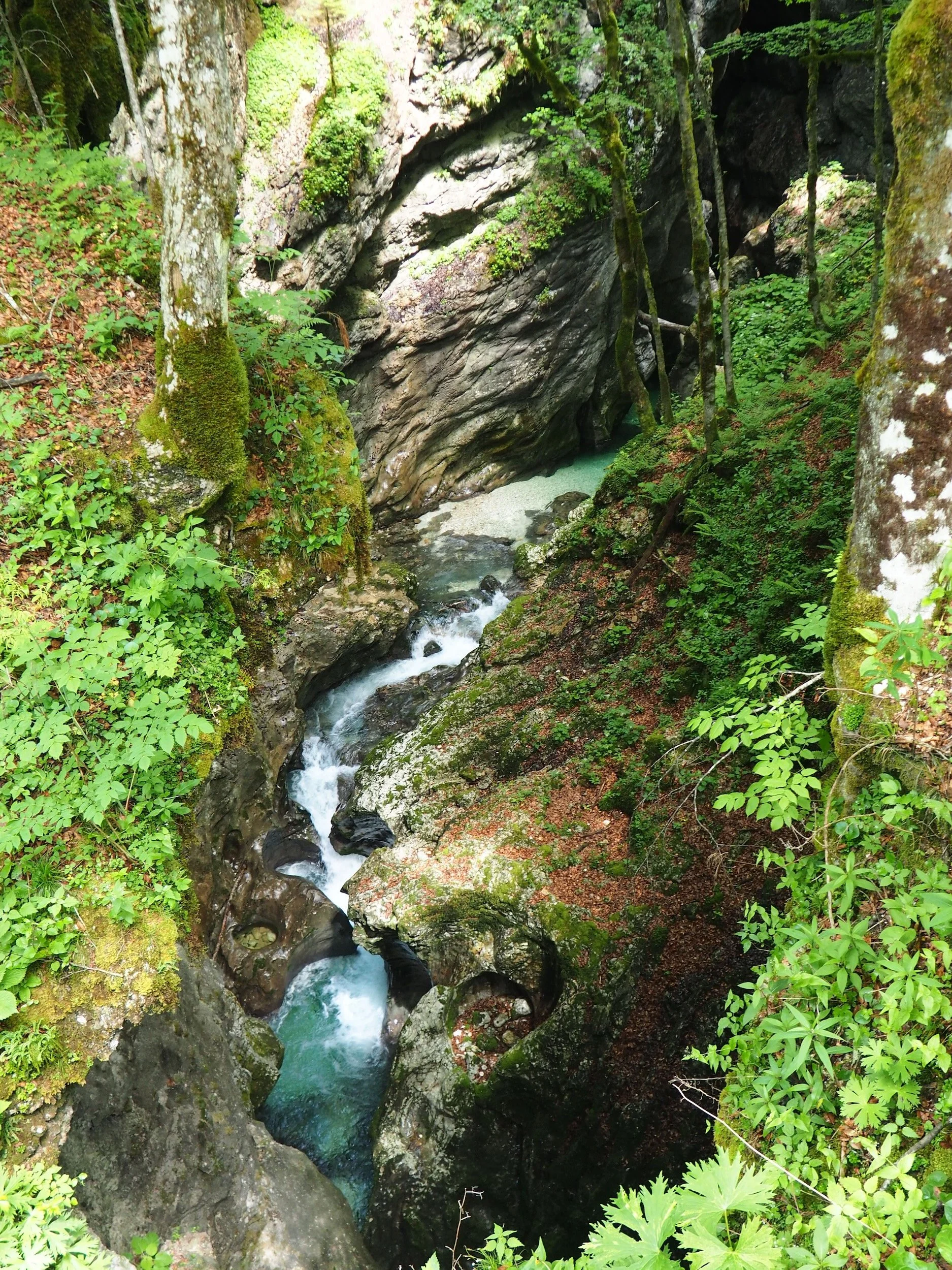
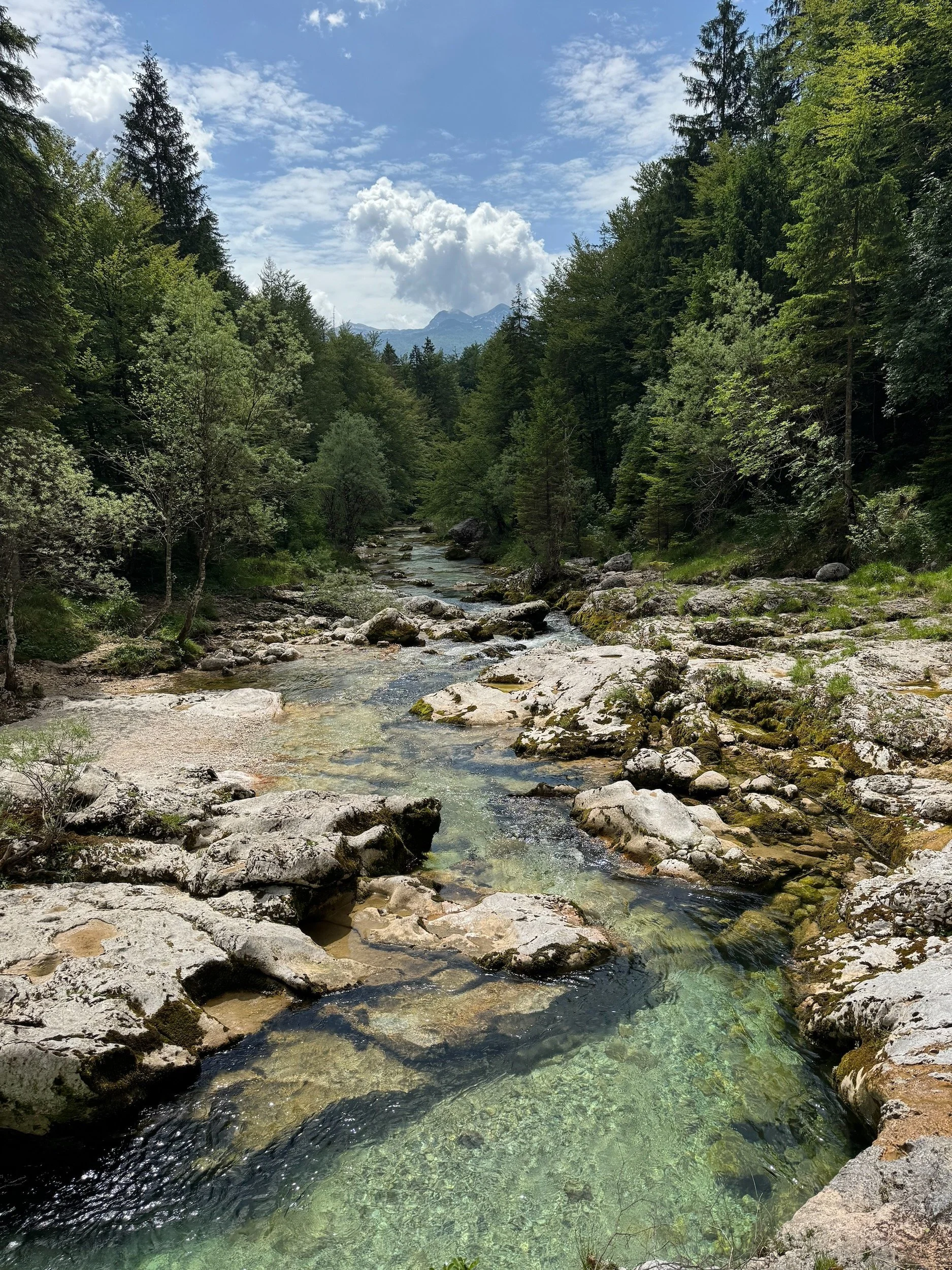
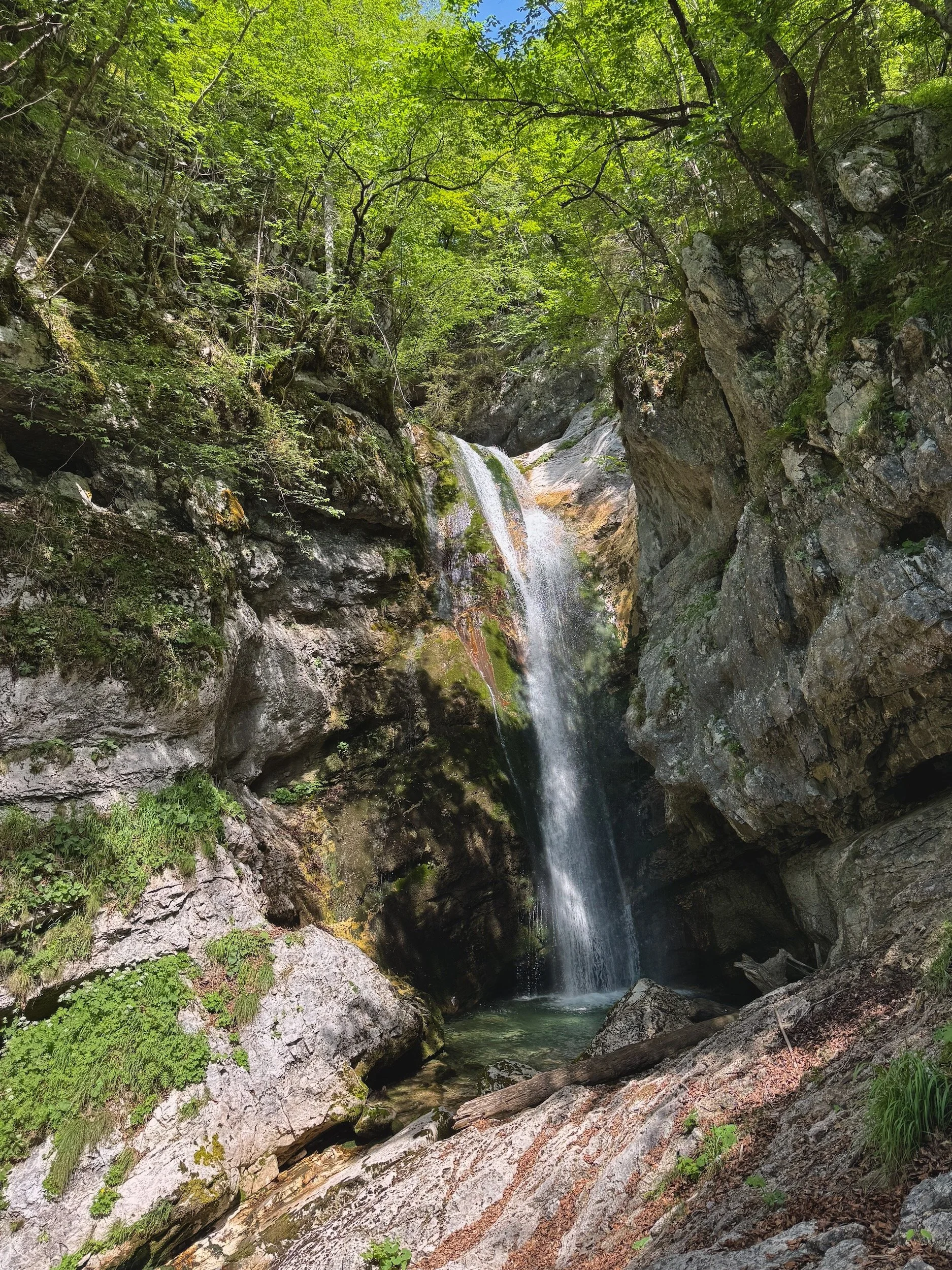
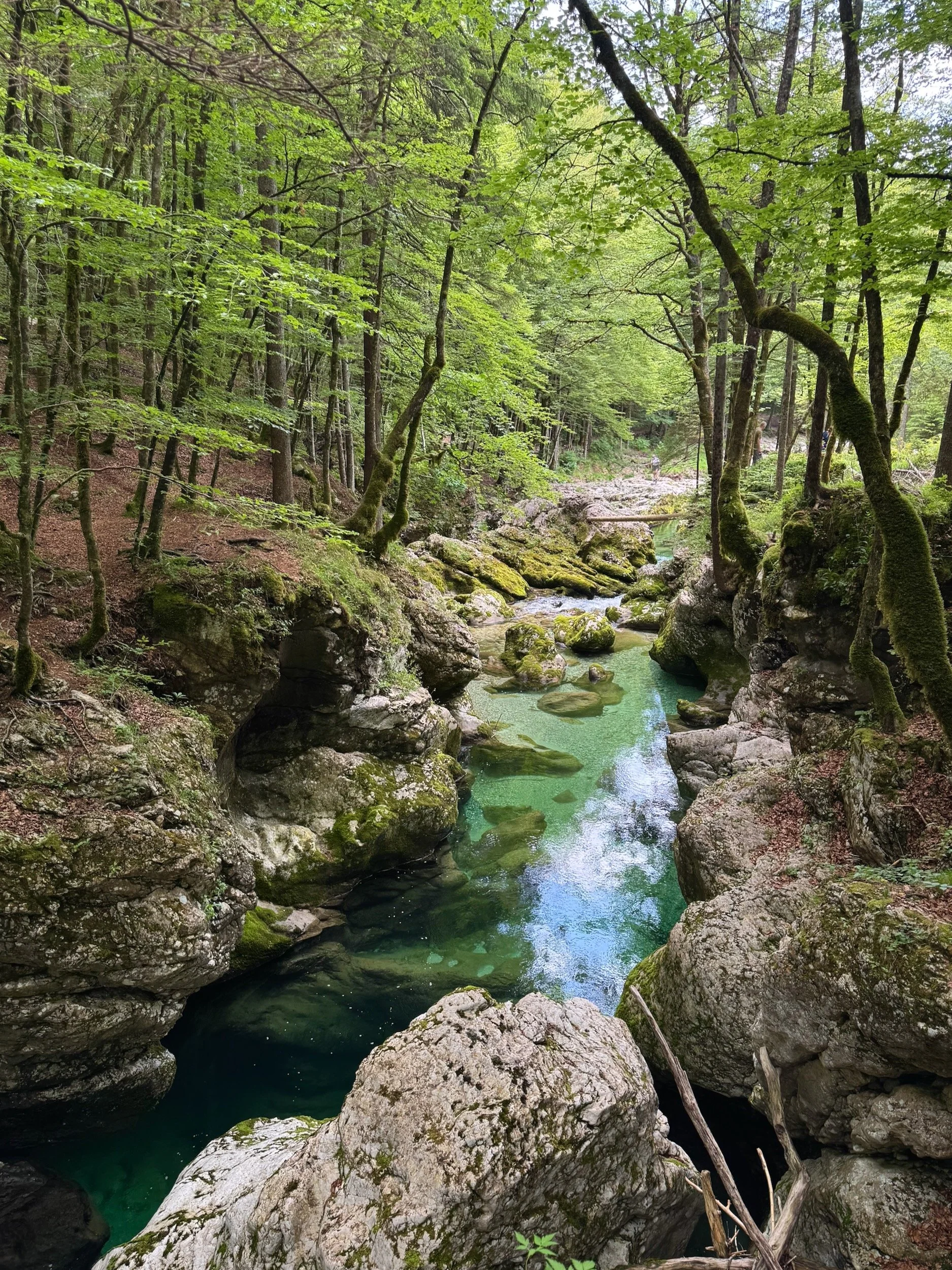
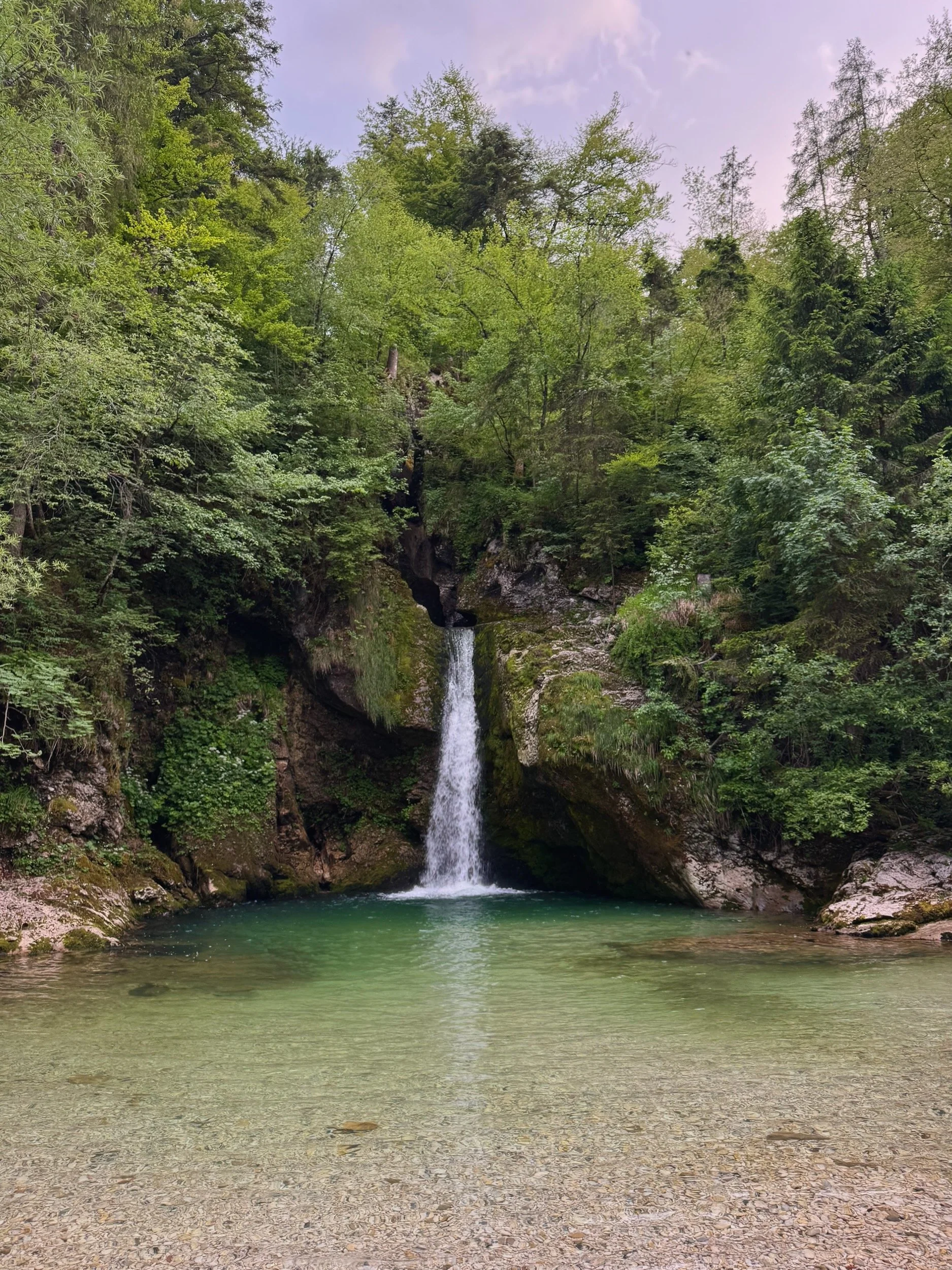
If you have time for one hike in the Bohinj area, I would recommend Mostnica Gorge. The trail starts at a parking lot near Stara Fužina and follows the clear Mostnica River through a narrow gorge and forested paths before opening into the scenic Voje Valley. From there, you can continue towards Mostnica Waterfall at the far end of the valley. Along the way there are a few huts that offer food and drinks. The current official entrance fee for Mostnica Gorge is 2-4 EUR.
The hike to Savica Waterfall is another popular option in the area, which we unfortunately did not have time for on this trip.
Good to know
If you stay at least two nights with a participating accommodation provider in Bohinj, ask about the Julian Alps: Bohinj Card. Depending on the version, it can include local buses, entry to Mostnica Gorge and Savica Waterfall, Bohinj museums and a panoramic boat trip. Some versions also include parking. It can be worthwhile if you plan to visit several paid attractions, but check the current seasonal benefits before buying.
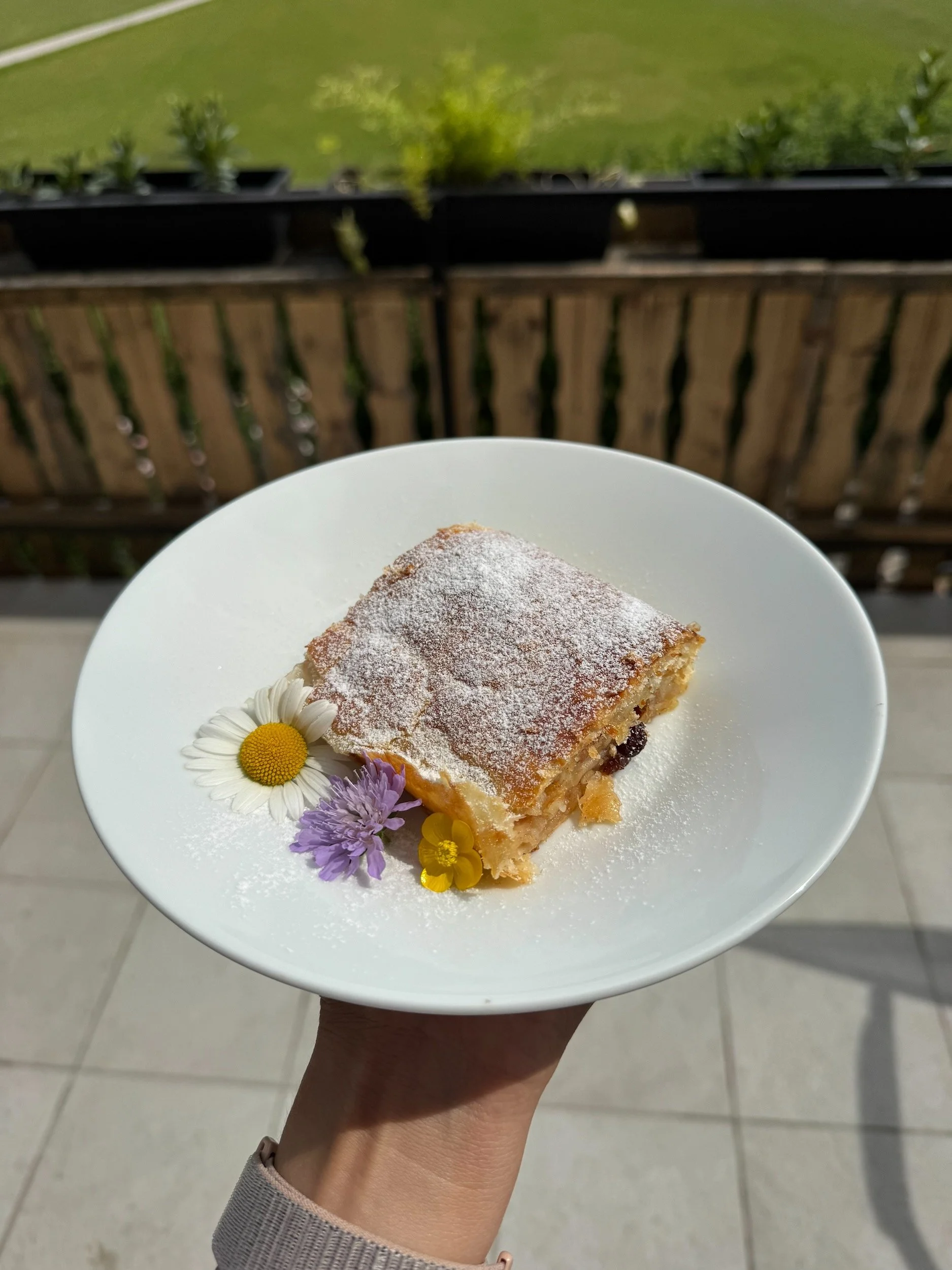
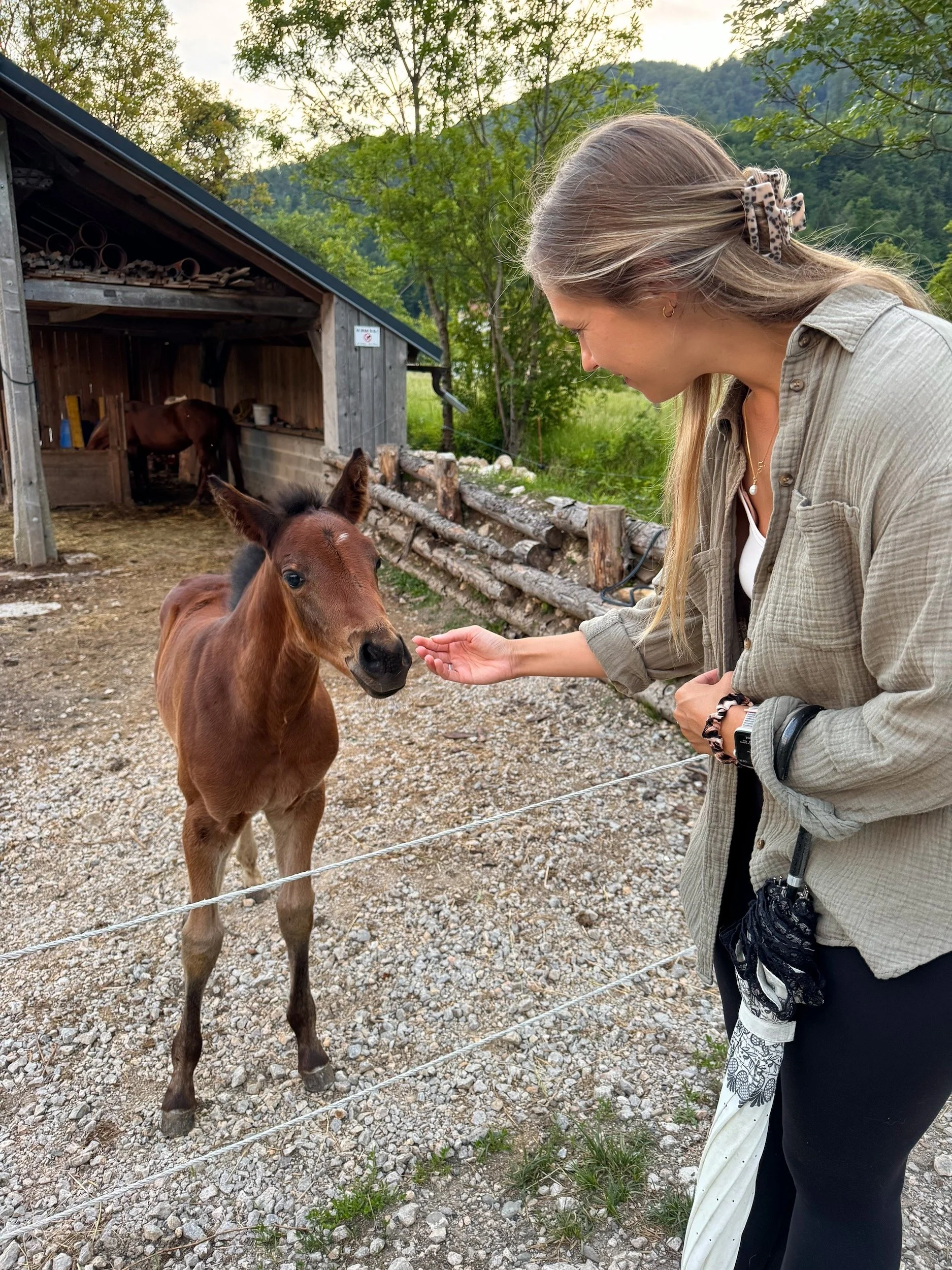
Our stay in the valley between Lake Bled and Lake Bohinj also felt special because of our accommodation, a holiday apartment. The hosts were incredibly welcoming: they surprised us with homemade apple strudel when we arrived, took us on a walk to a nearby waterfall and even invited us to a dinner of hand-caught trout. It was one of those personal experiences that made our time in the region even more memorable, despite not having the best luck with the weather. We could easily have spent more time in this part of Slovenia.
An interesting way to continue from Bohinj towards the Soča Valley is to take the motorail train from Bohinjska Bistrica to Most na Soči, which carries you and your car through the mountains. It saves you from driving part of the mountain route and turns the transfer into a small experience of its own. Reservations are not available, so check the timetable beforehand and arrive early rather than cutting it too close to departure. We chose to drive across the mountain pass instead and found that route very scenic as well.
Lake Bled & Lake Bohinj
How long to stay: 3 nights worked well for us, though you could add another night if you want more hiking time or better flexibility with the weather.
Best for: classic lake views, swimming, hiking, waterfalls, mountain scenery and a mix of famous sights and quieter nature.
Good to know: Bled is popular for a reason, but Bohinj feels calmer and more nature-focused. Staying between the two can be practical if you want to visit both without changing accommodation.
Food: Both Bled and Bohinj have plenty of places to eat, ranging from traditional inns and mountain huts to lakeside cafés and more contemporary restaurants. Local specialities include trout, Bohinj cheese, štruklji and hearty Slovenian dishes, while Bled is particularly known for its cream cake or kremšnita.
Where we stayed: We stayed in a guest apartment between Bled and Bohinj, which worked well for exploring both areas. But depending on your preferences, there are many beautiful hotels, apartments and guesthouses.
Soča Valley | Day 10-13
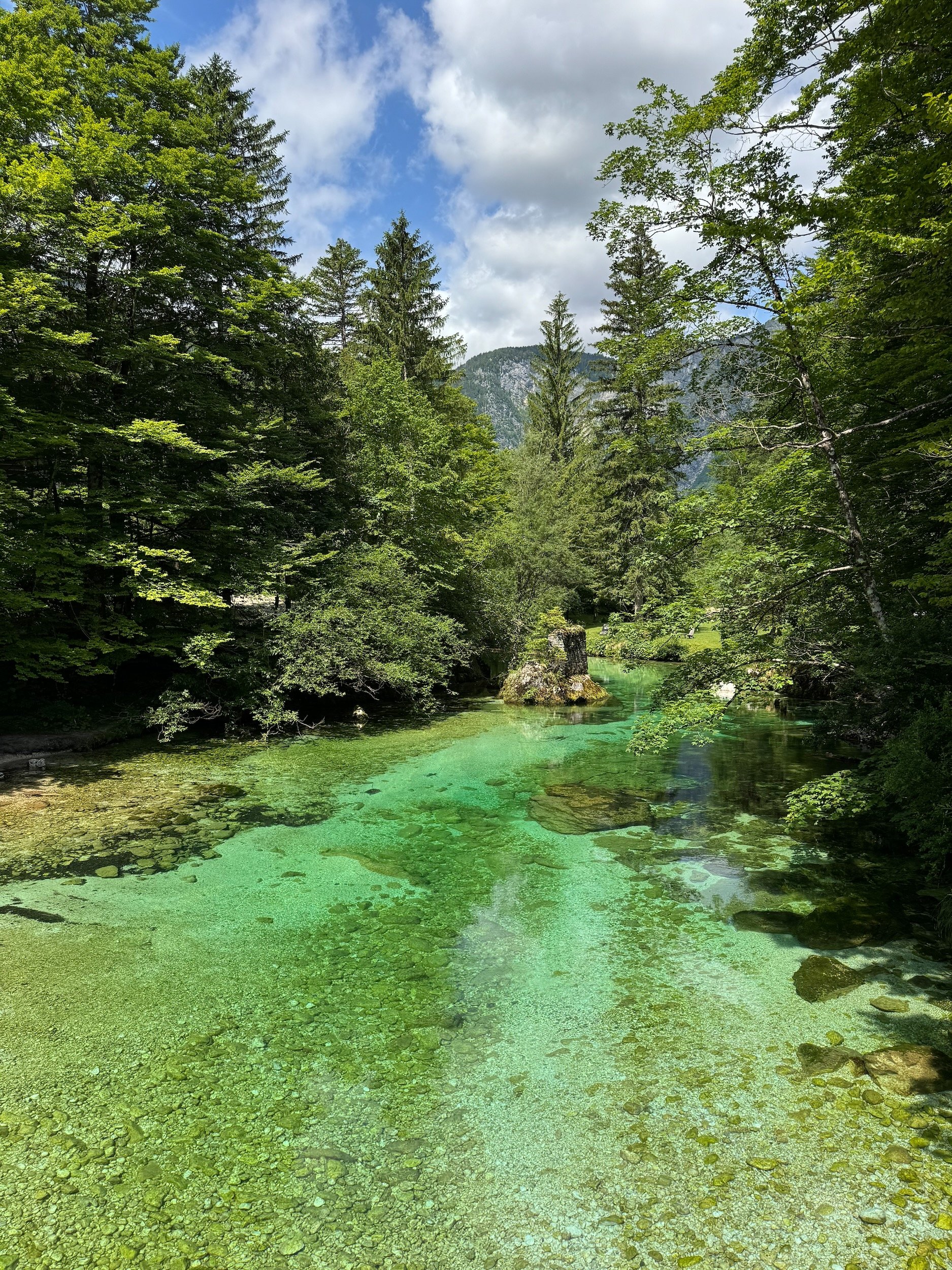
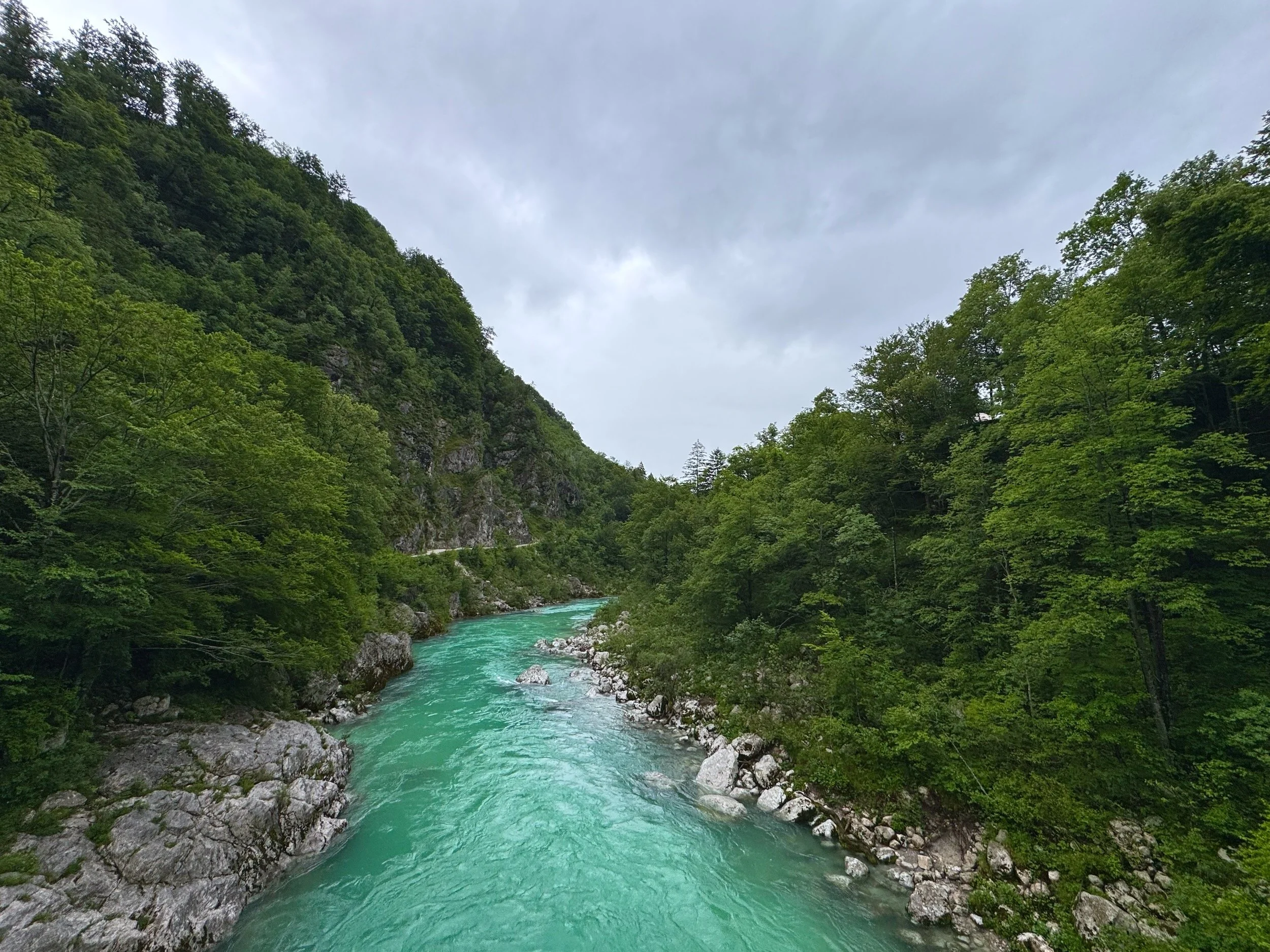
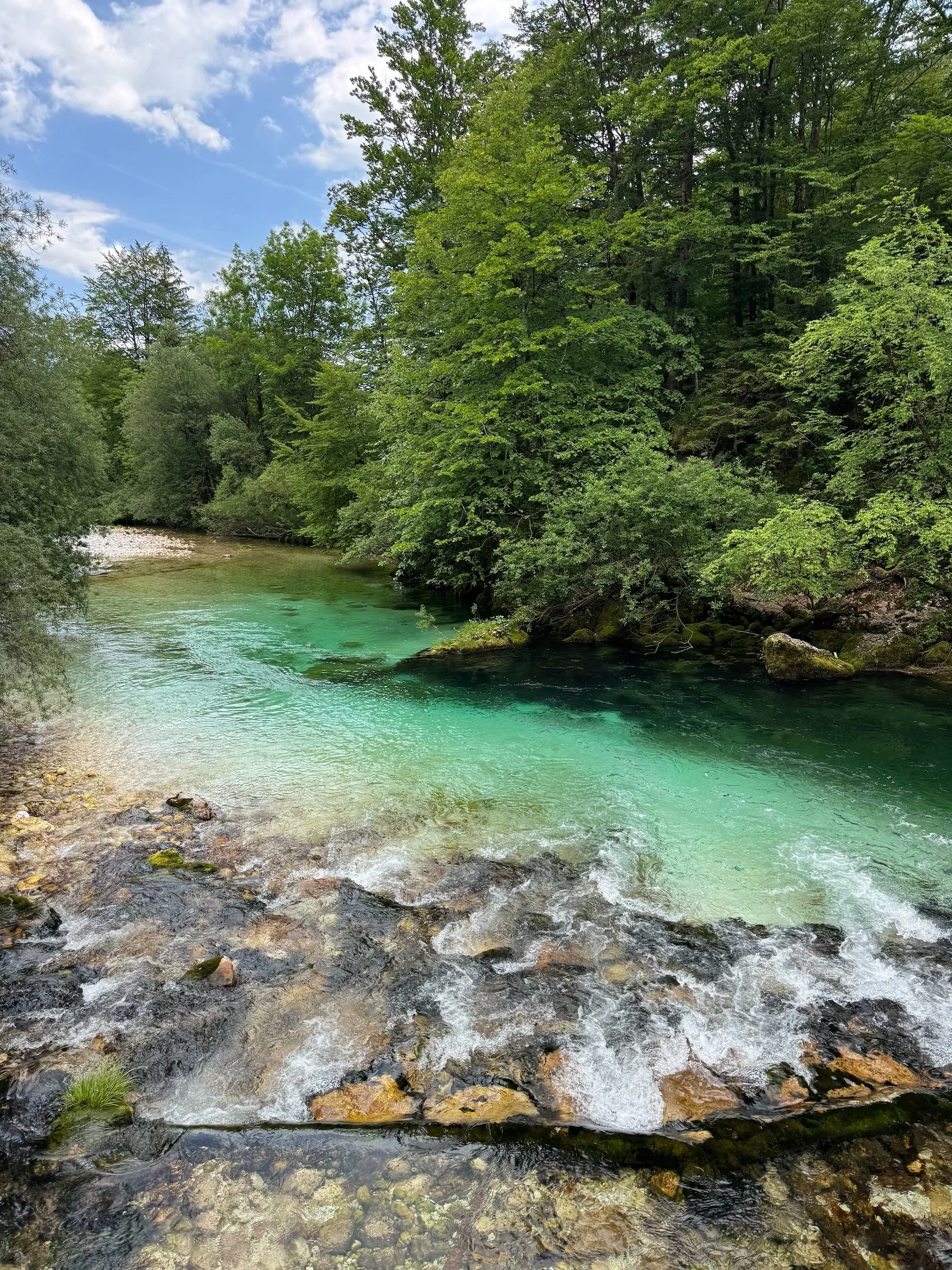
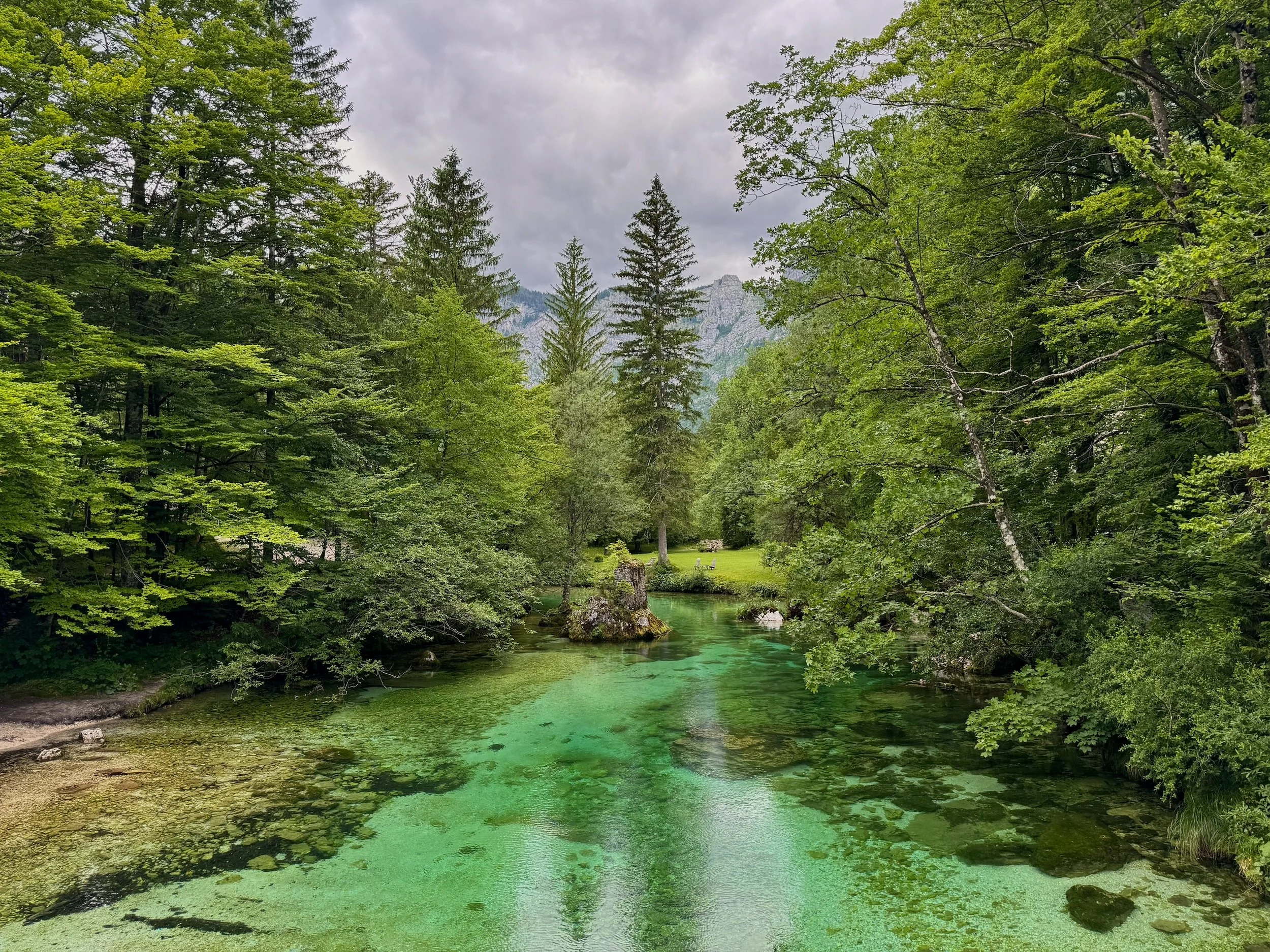
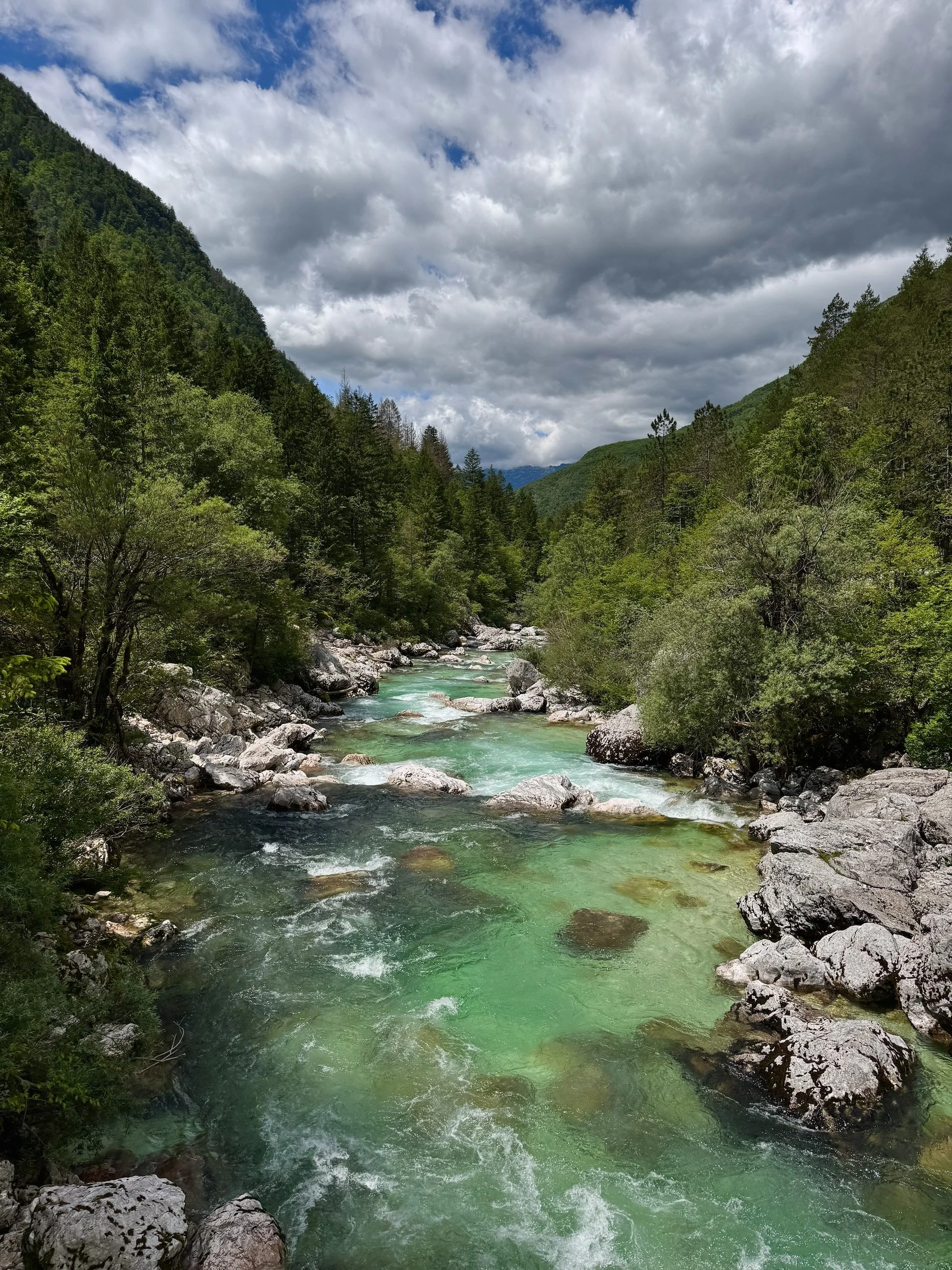
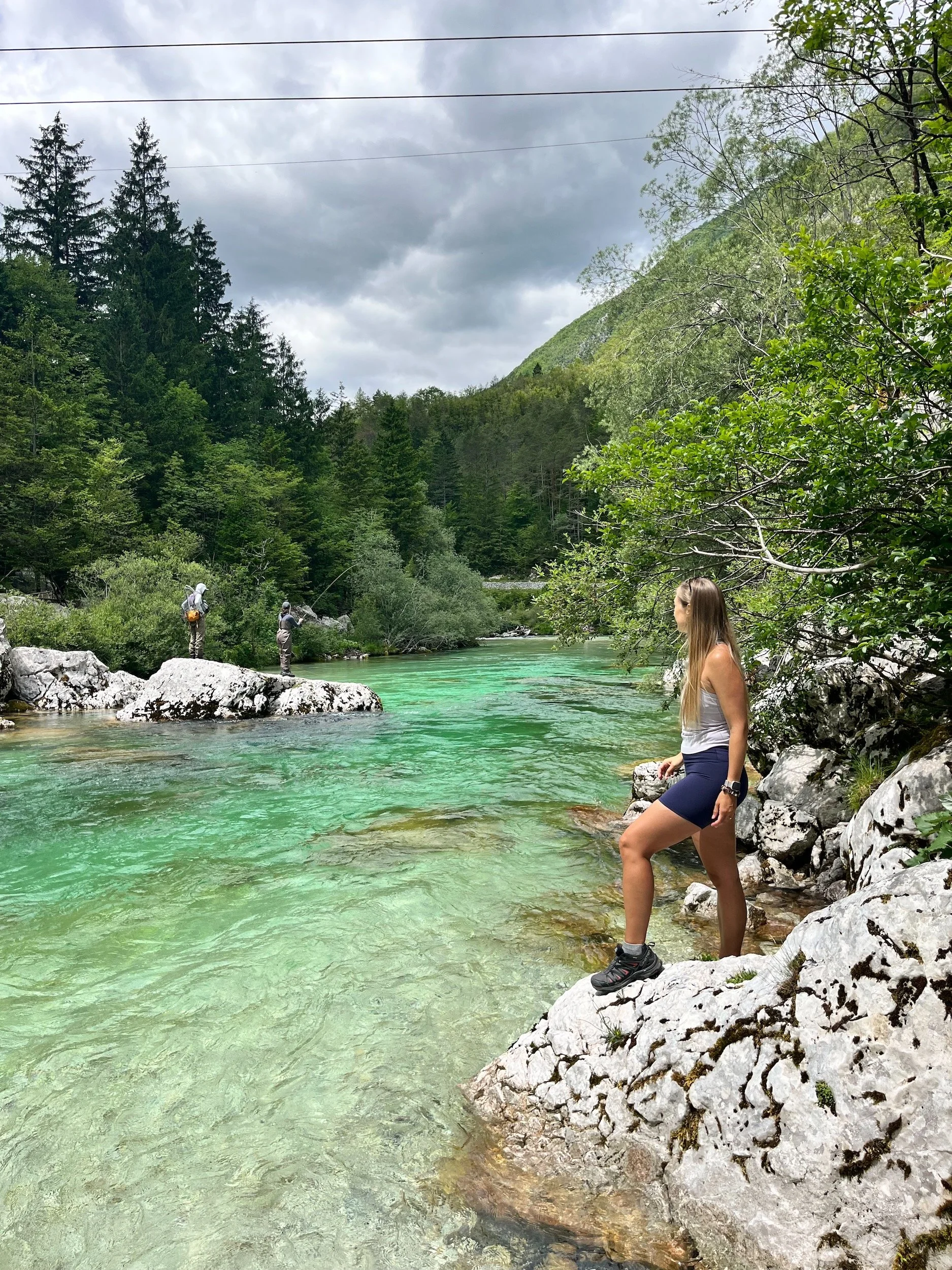
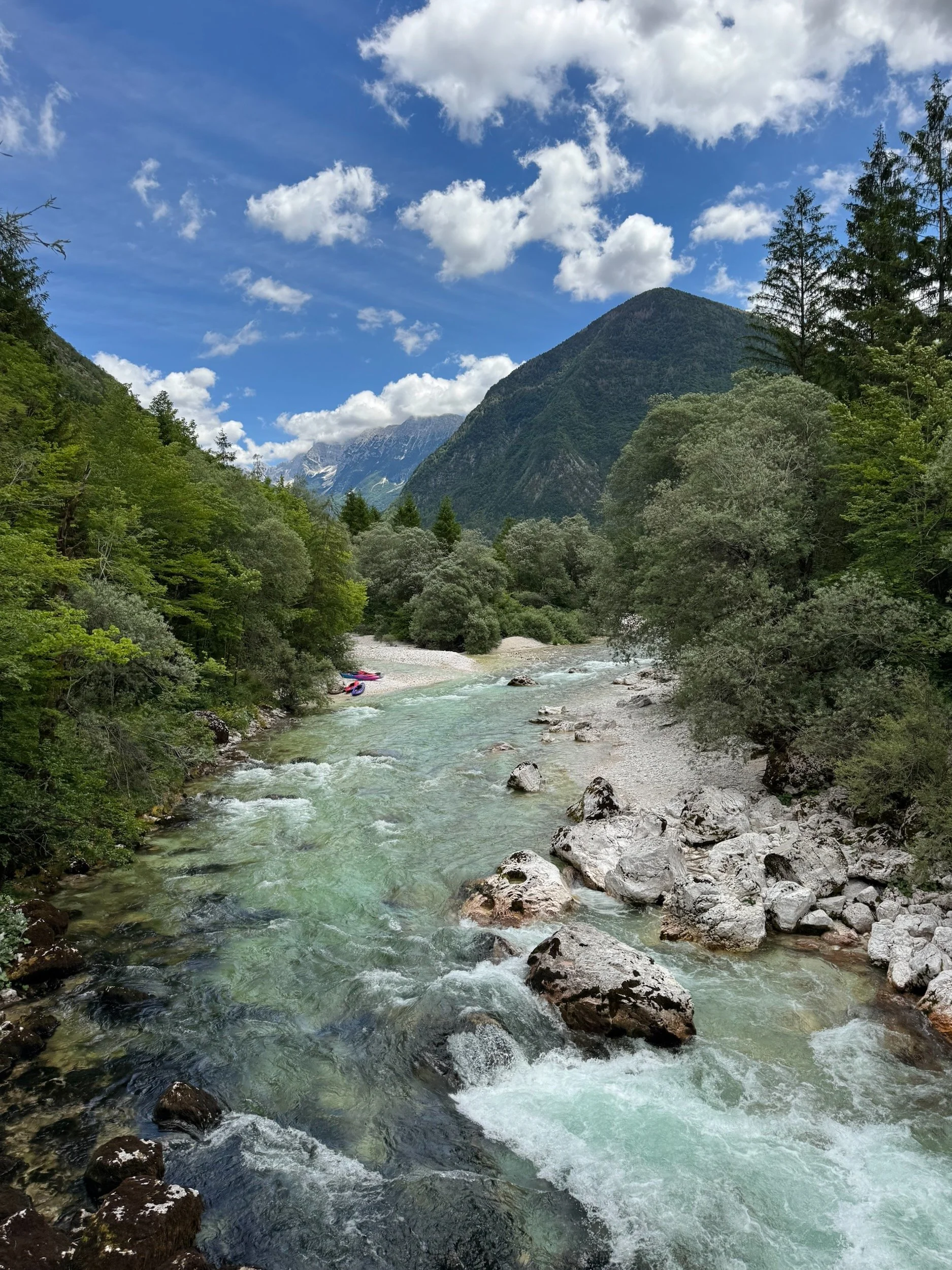
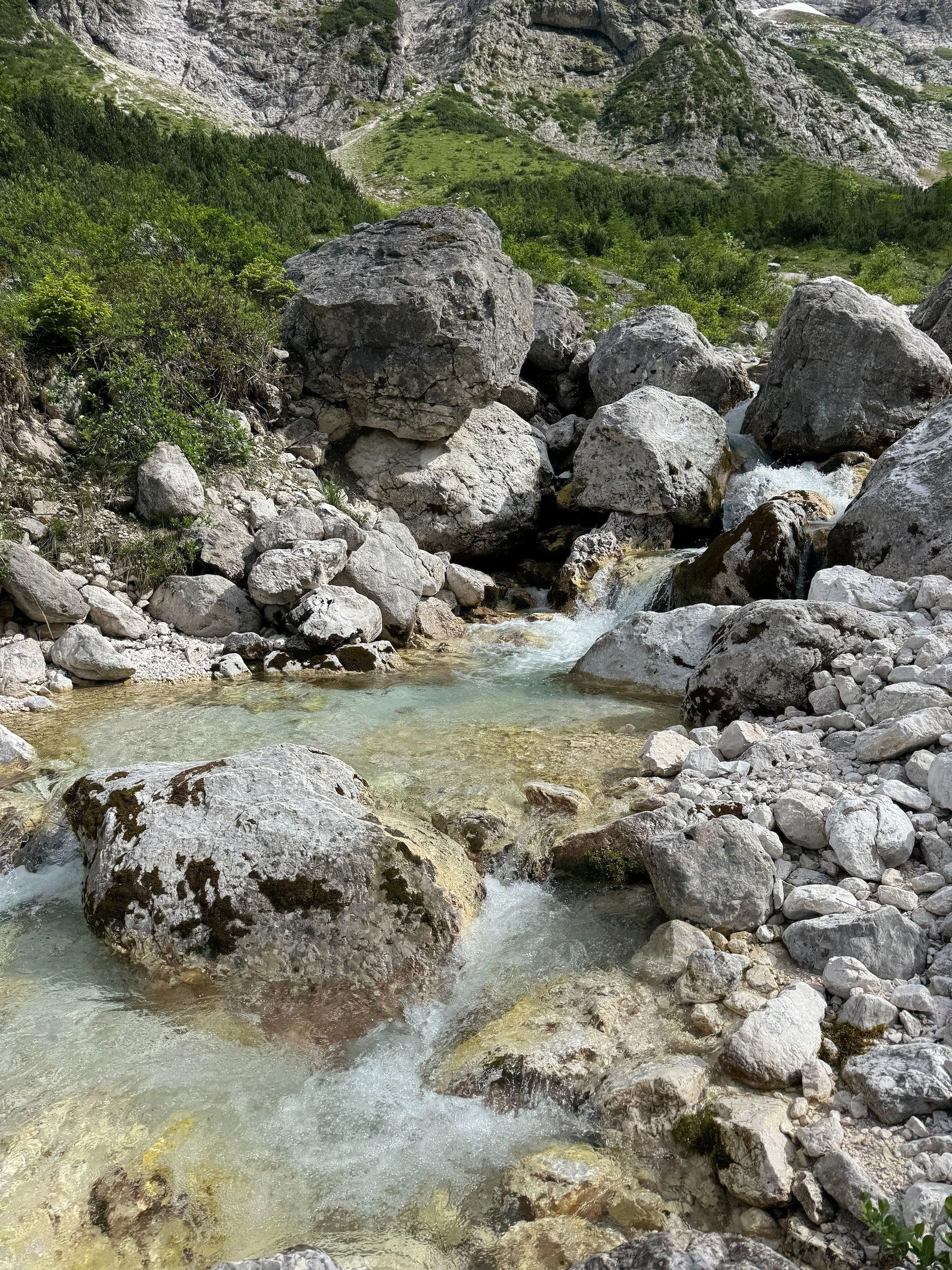
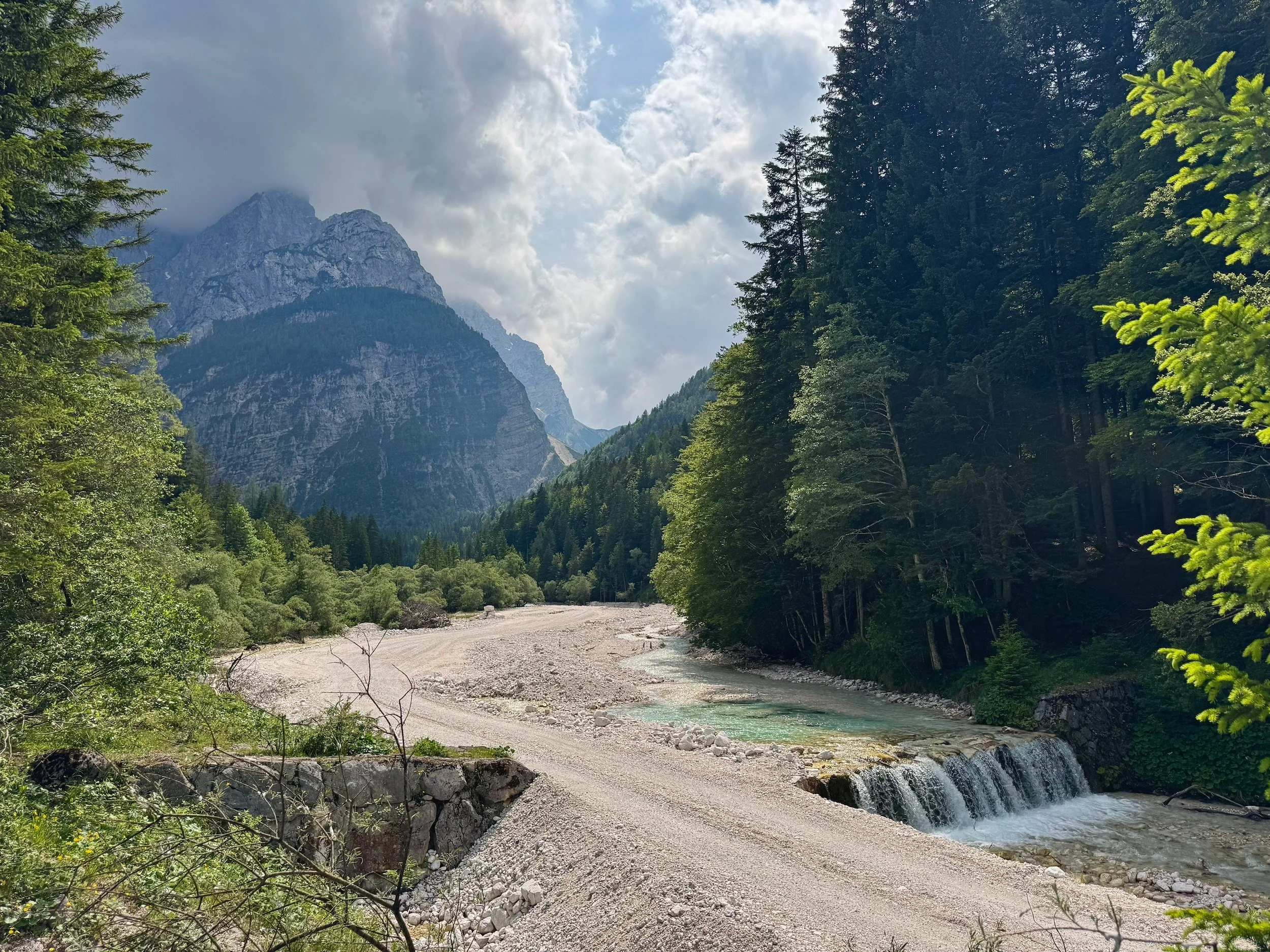
The Soča Valley was one of the most striking regions of our Slovenia road trip. The river is famous for its clear blue-green colour and this is one of those places where the photos are not exaggerating. In the right light, the water really does look almost unreal, with pale stones visible beneath the surface, forested slopes around it and mountains rising in the background. As the river moves through the valley, it shifts between narrow gorges, deep turquoise pools and wide gravel banks, so no two stops feel quite the same. Seeing it in person, it’s easy to understand why Slovenians speak so proudly about their rivers and water.
Drežnica
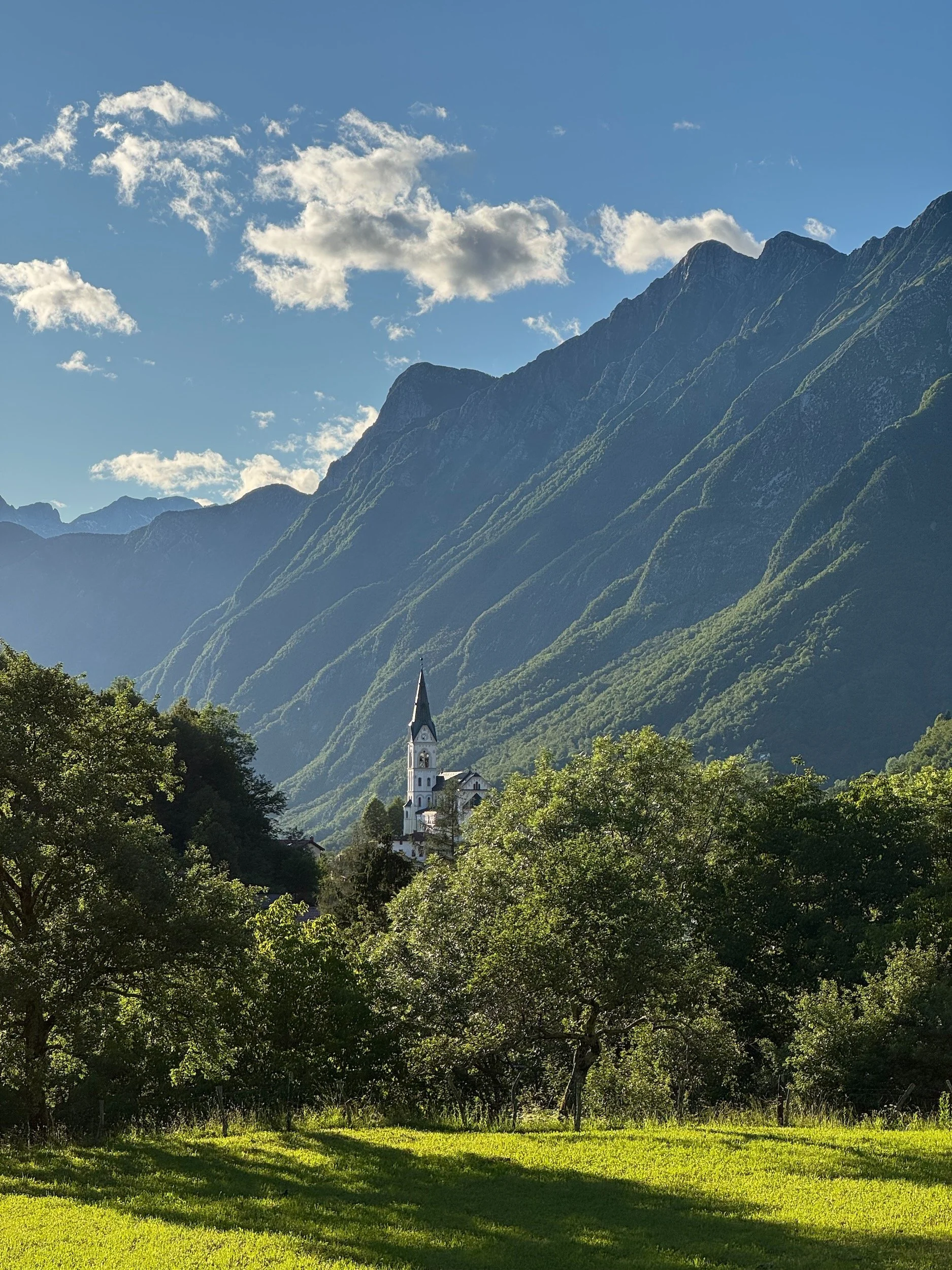
We stayed for four nights in Drežnica, a small, peaceful village on a plateau above Kobarid. Mountain views open up in almost every direction and several walks begin in the village, including trails to the lesser-known Krampež and Sopot waterfalls. Drežnica suited us well because it felt quiet and removed, while Kobarid was still only a short drive away.
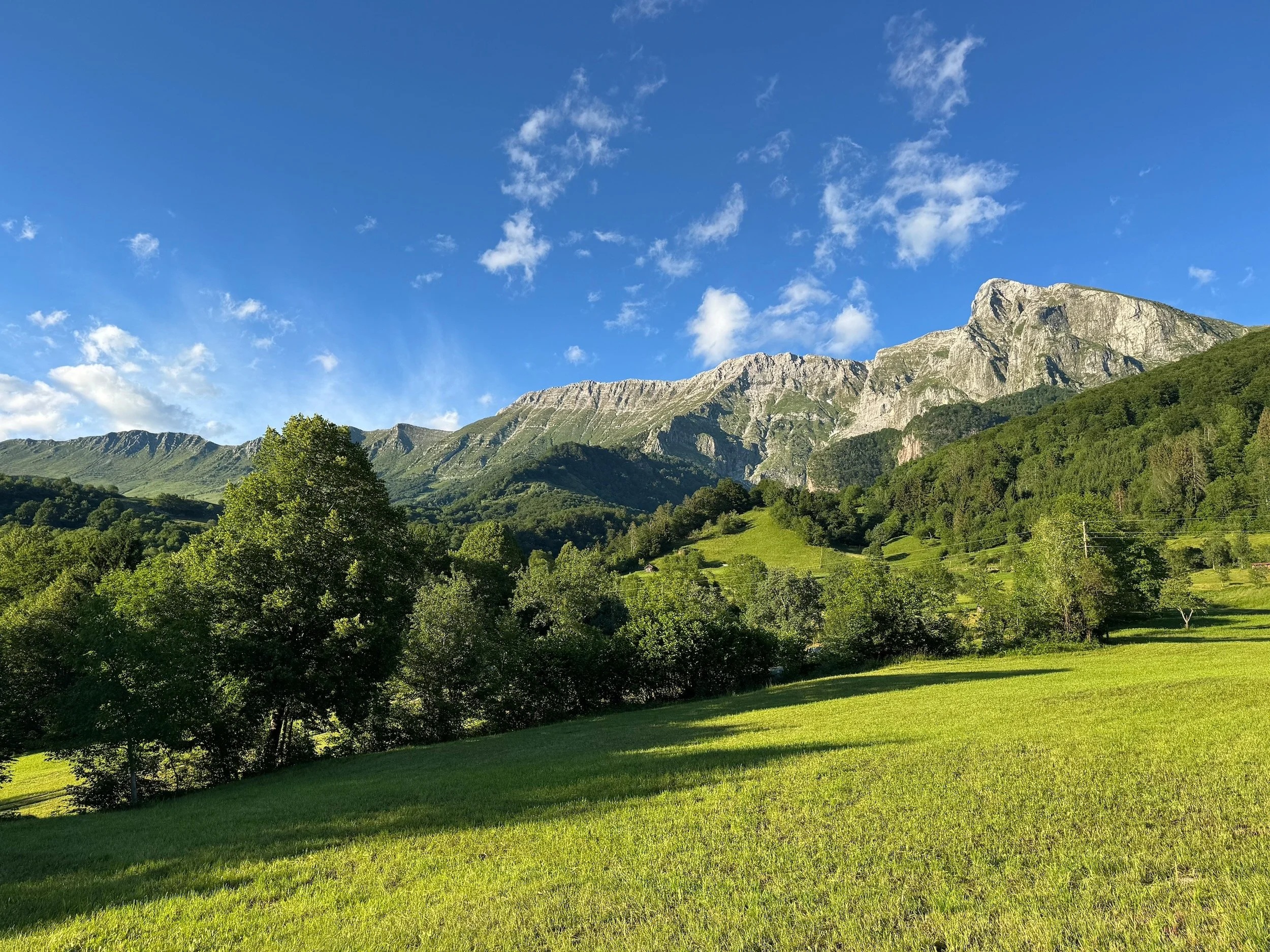
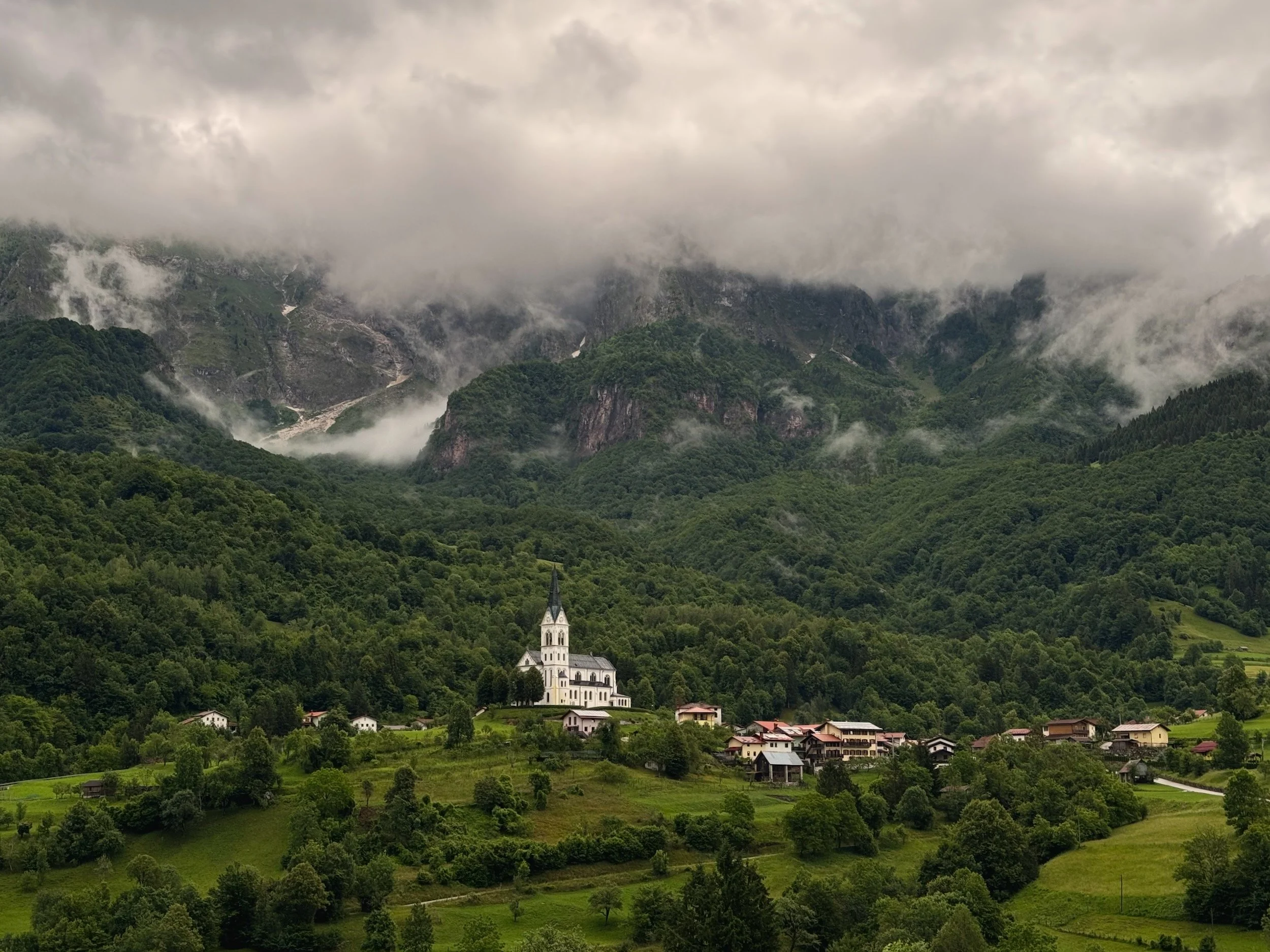
Kobarid is the more practical base if you want restaurants, history, trail access and a central location in the lower Soča Valley. The main sights are spread between Tolmin, Kobarid, Bovec and Trenta, with many separated by short but winding drives. We also had a few rainy days, so four nights did not feel excessive.
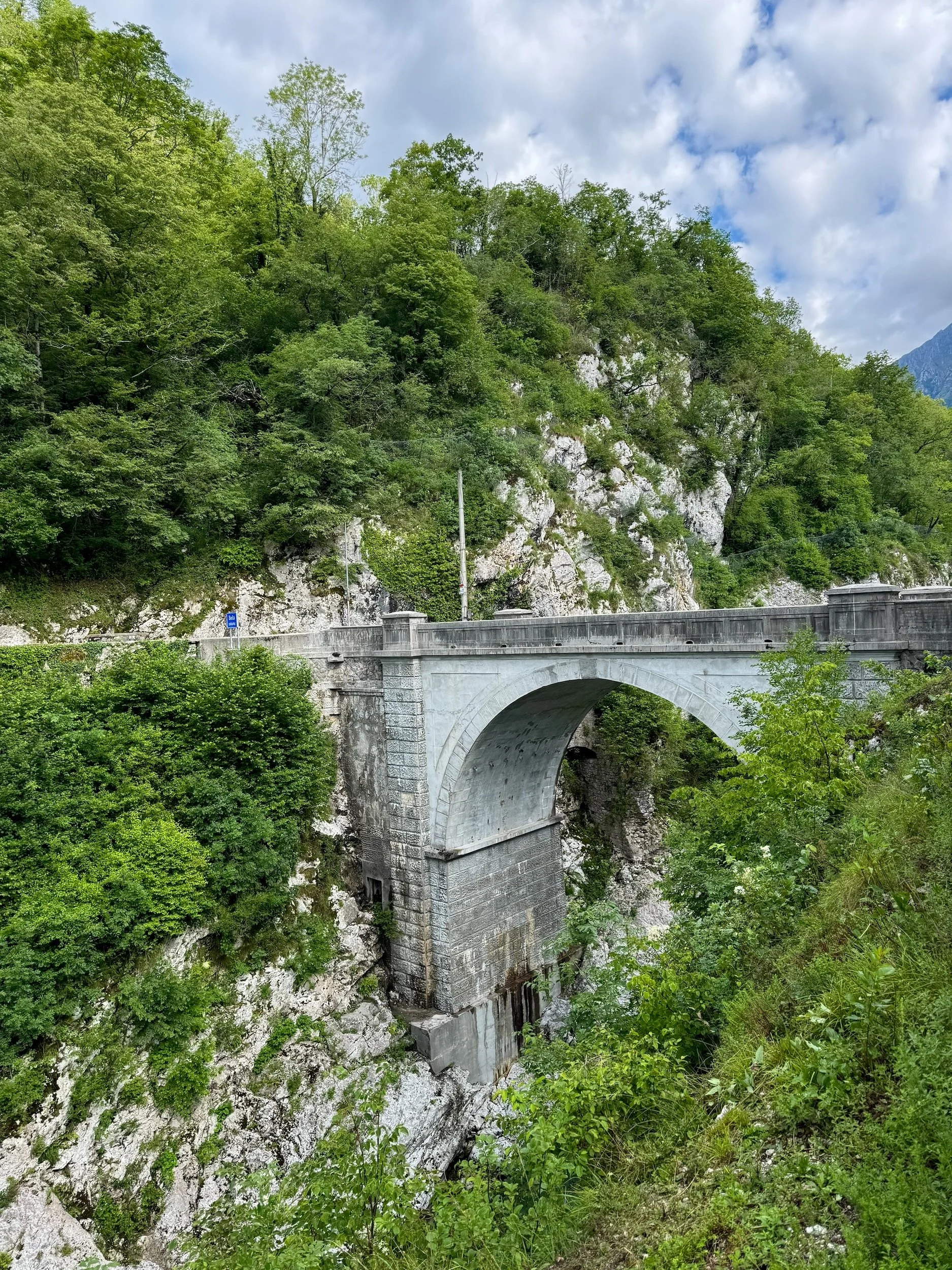
Around Kobarid, you can easily spend a few hours simply following the river. Just outside town, the historic Napoleon’s Bridge offers another beautiful view of the clear water. From the nearby car park, an easy 30-minute walk leads towards Kozjak Waterfall. We skipped the paid final section to the waterfall, but the forested riverside path and suspension bridge were still worth doing on their own. If you want a longer route, the Kobarid Historical Trail connects several of these places with First World War sites and viewpoints. It is a good option if you want to combine the landscape with some of the history that shaped this part of Slovenia.
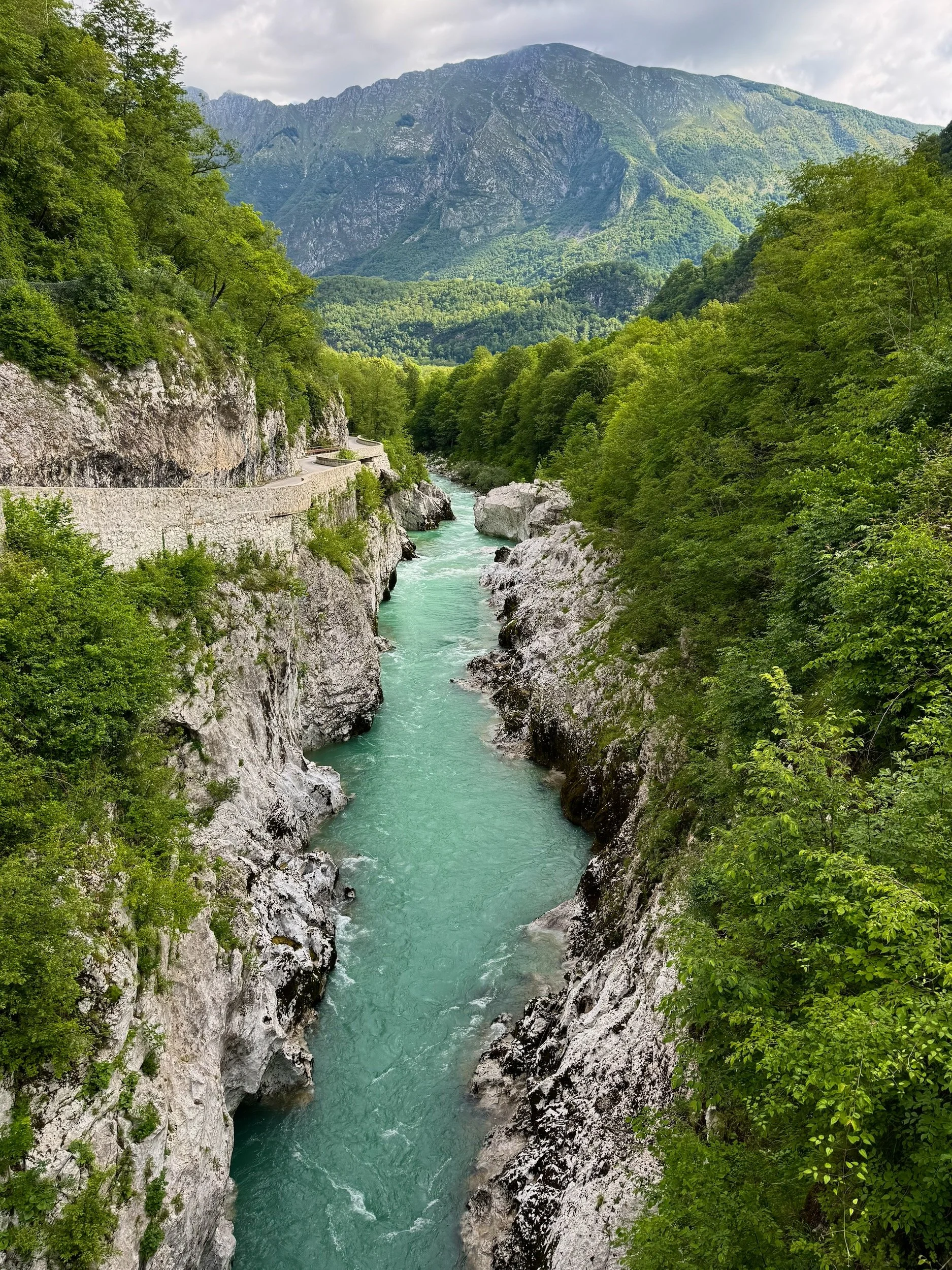
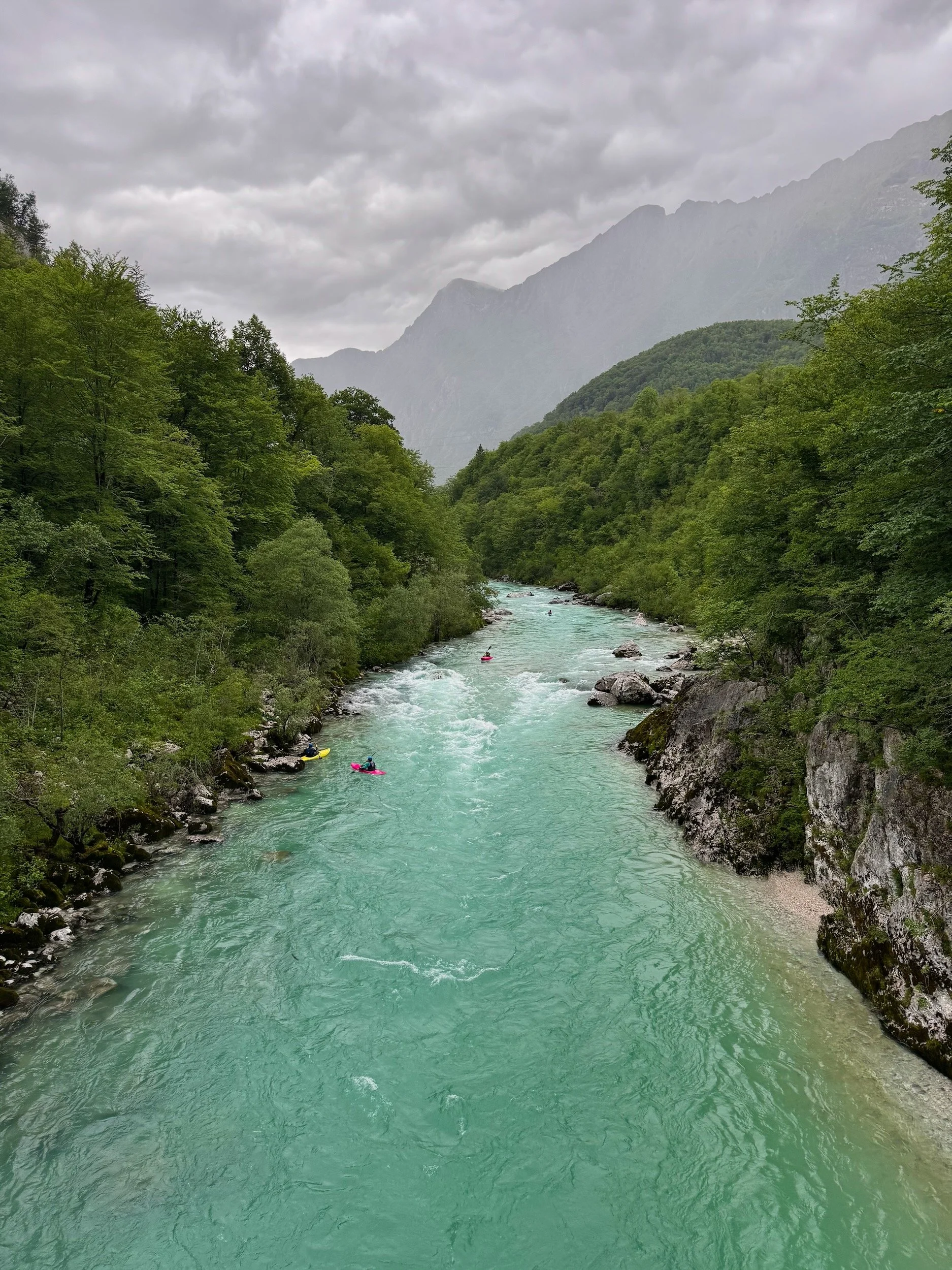
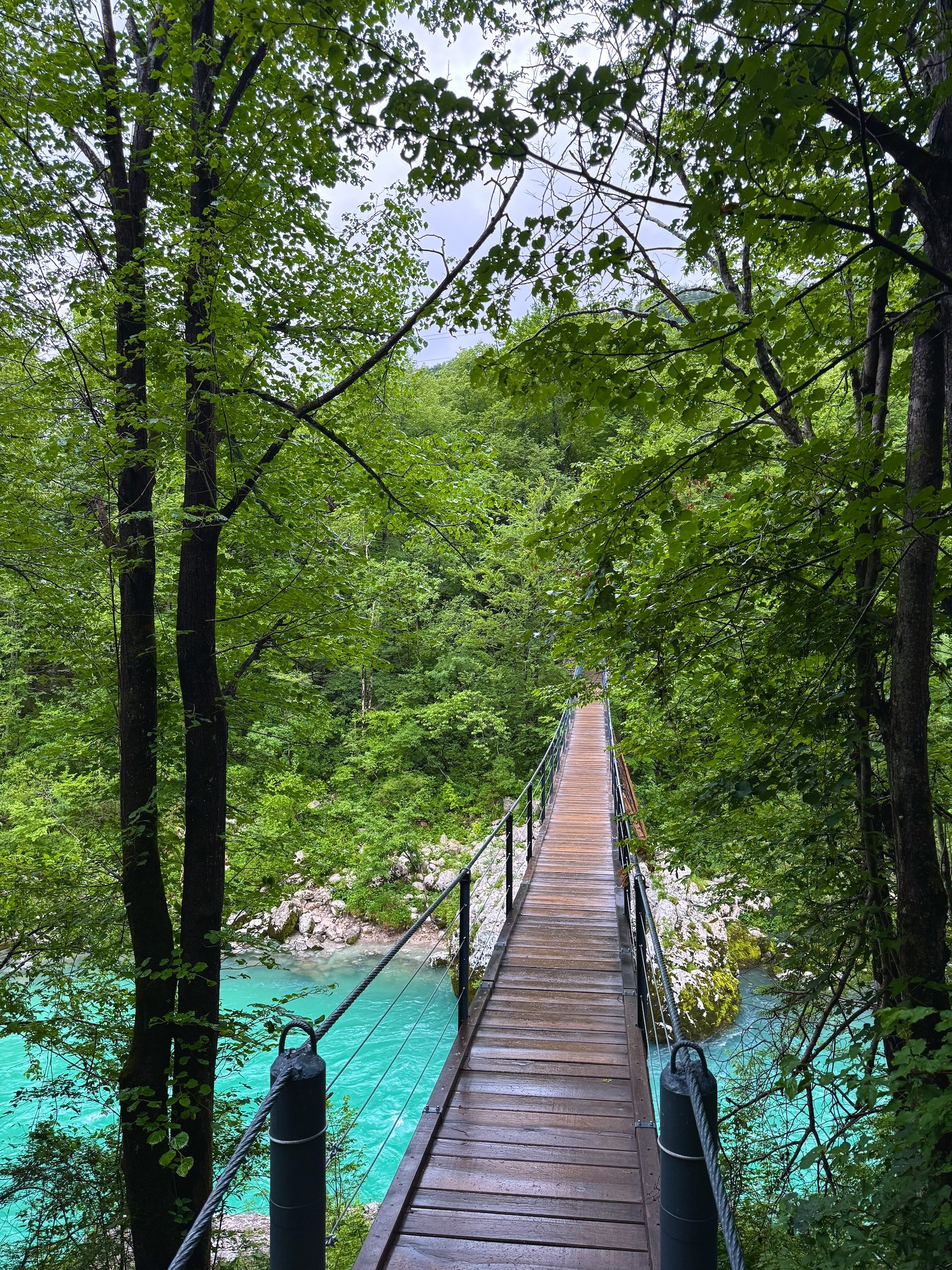
In the other direction, south of Kobarid, the Tolmin Gorges are another highlight of the lower valley. The short circuit leads through narrow canyon sections with clear turquoise water, steep rock walls, bridges and paths cut into the gorge. Allow up to two hours and wear shoes with decent grip, especially after rain.
Heading north from Kobarid takes you towards Bovec, the main hub for outdoor activities and guided tours. It is the best place to base yourself if rafting, kayaking, canyoning or ziplining are priorities. It also provides convenient access to the upper Soča Valley, where the river becomes wilder and the mountain scenery more dramatic.
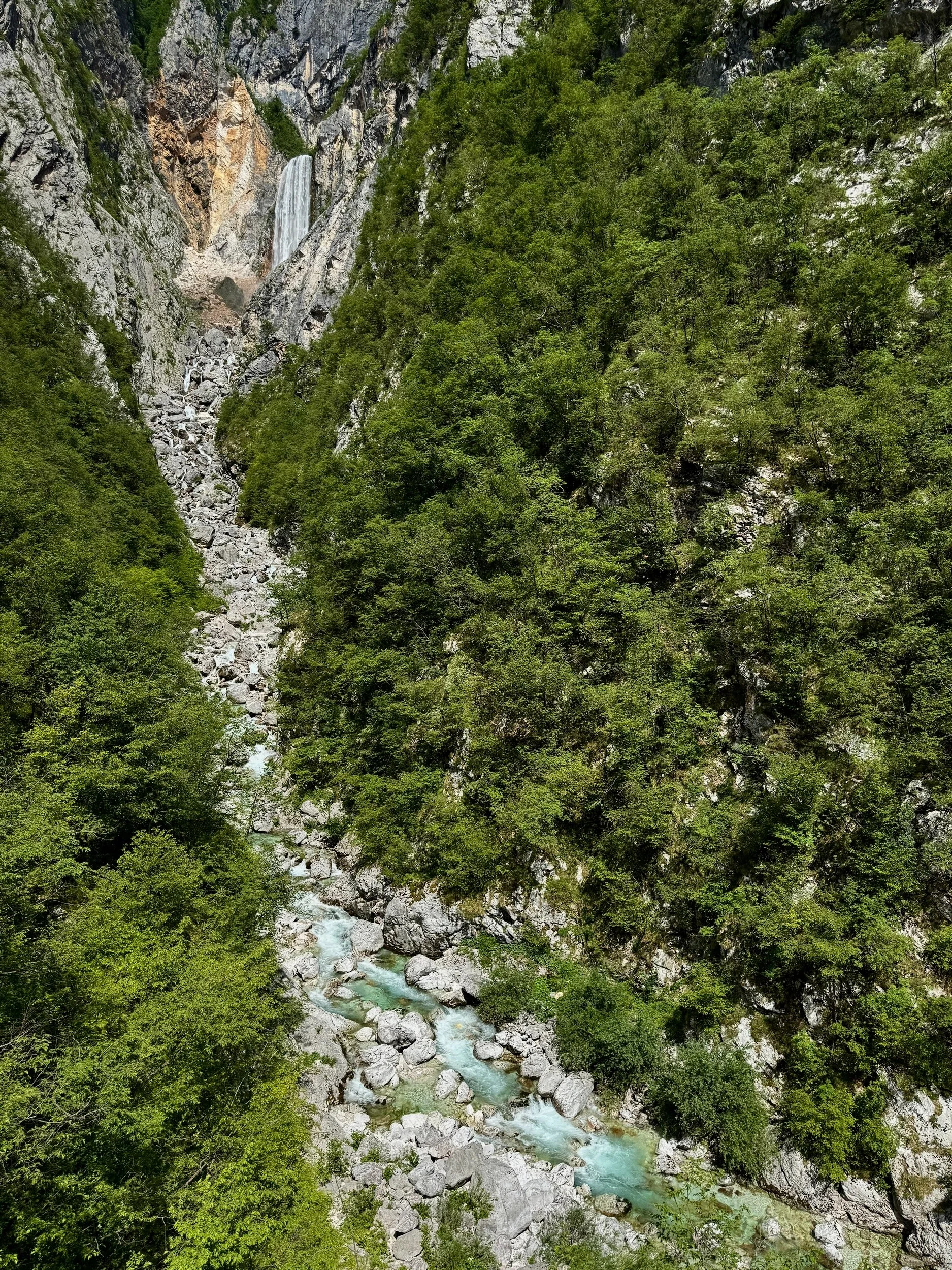
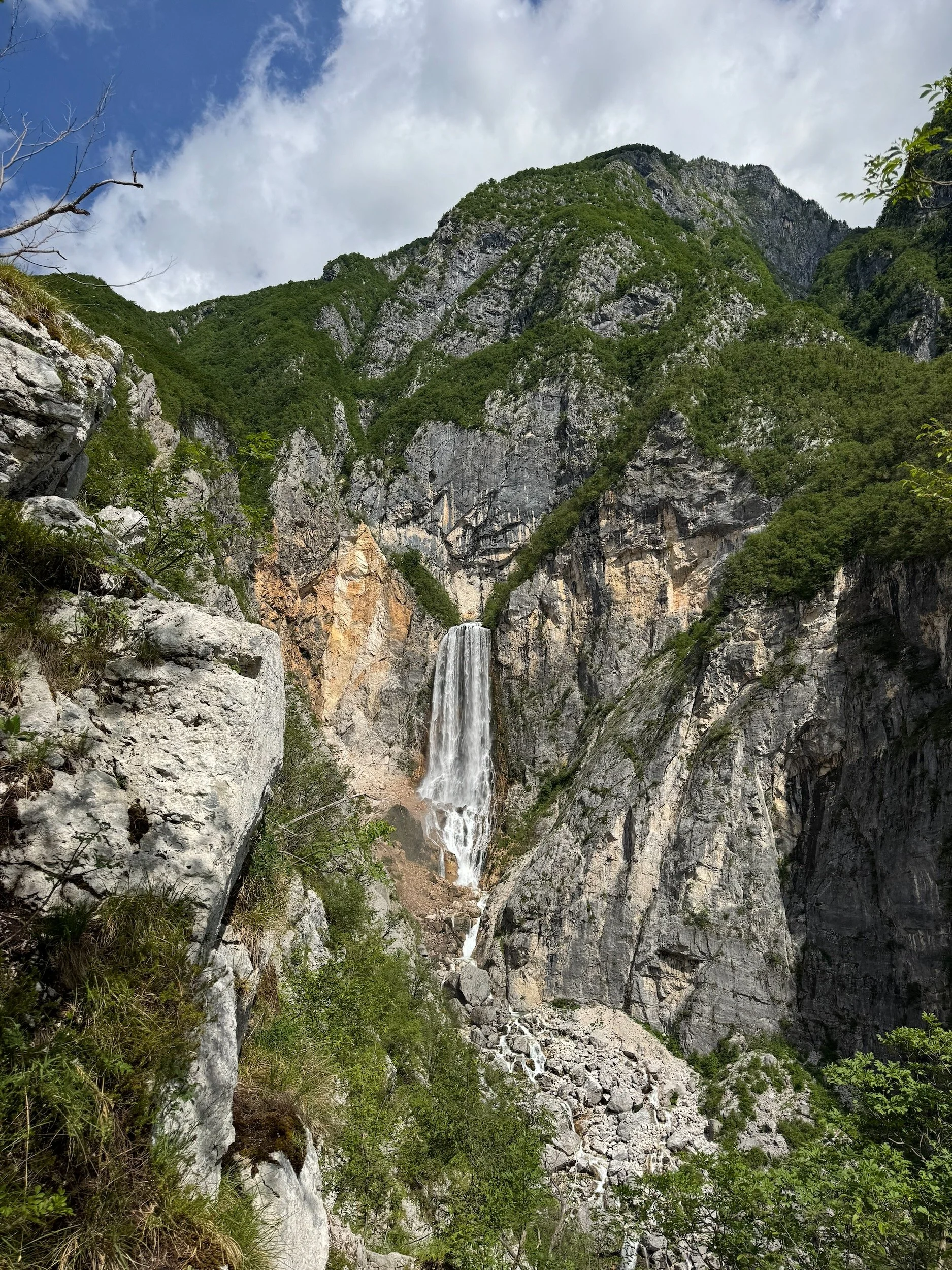
Along the way, you can walk to a viewpoint overlooking Boka Waterfall, the most water-rich and powerful waterfall in Slovenia. The first viewpoint is around a 15-minute walk from the road, but you can continue higher up the trail for an even better view. It quickly becomes steeper and more exposed though.
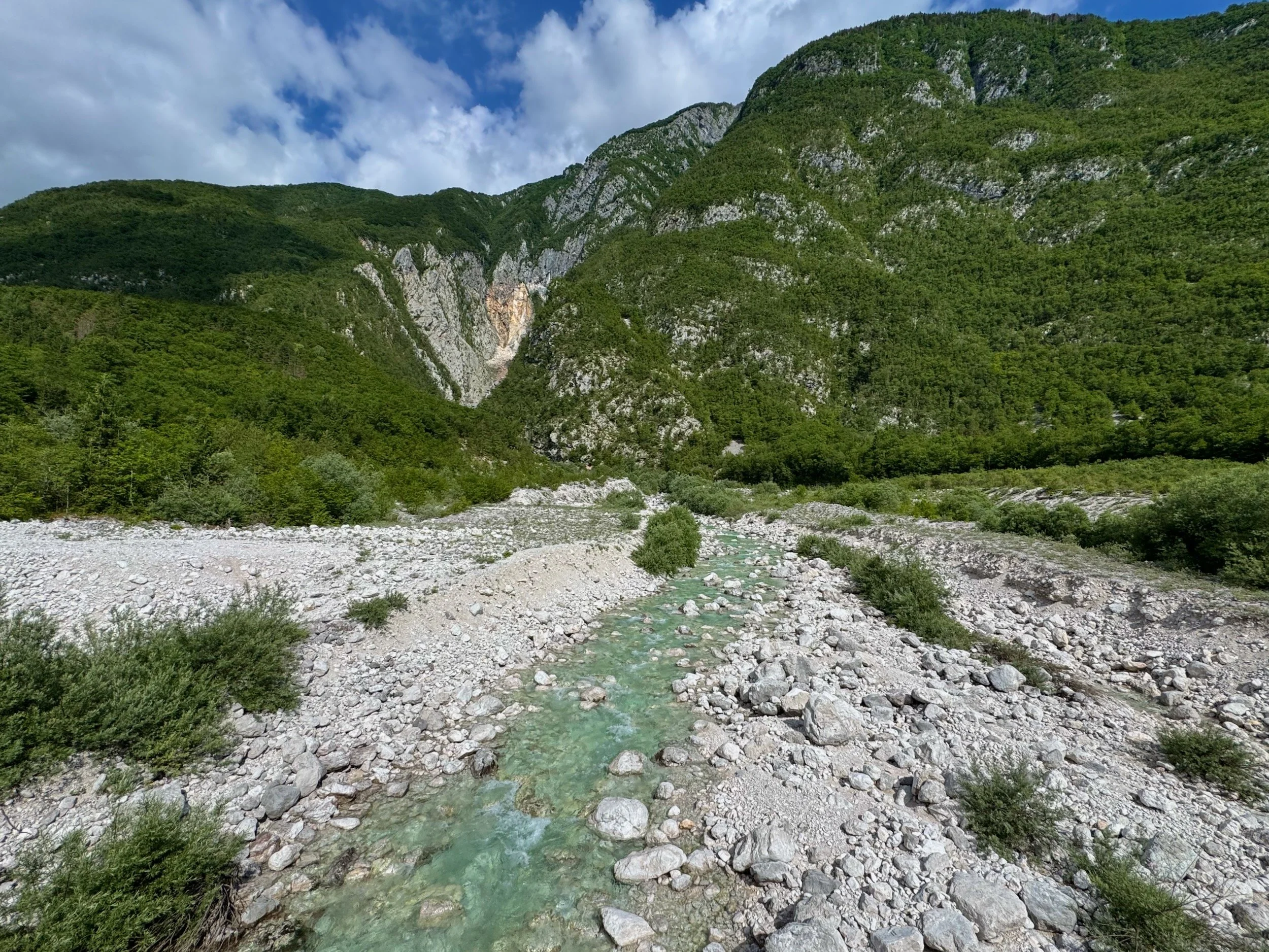
Great Soča Gorge
The Great Soča Gorge is one of the main highlights of the upper valley and it is easy to see why many people come specifically to see it. The narrow rock channel and vivid turquoise pools create some of the most striking scenery along the river. It is busier than some of the smaller river stops, but still well worth including.
For the easiest access, follow the Bovec–Vršič road to the turn-off for the Lepena Valley. Cross the bridge and park on the other side, where you can access the lower end of the gorge and join the riverside trail. Parking can be limited, so arriving earlier in the day is advisable.
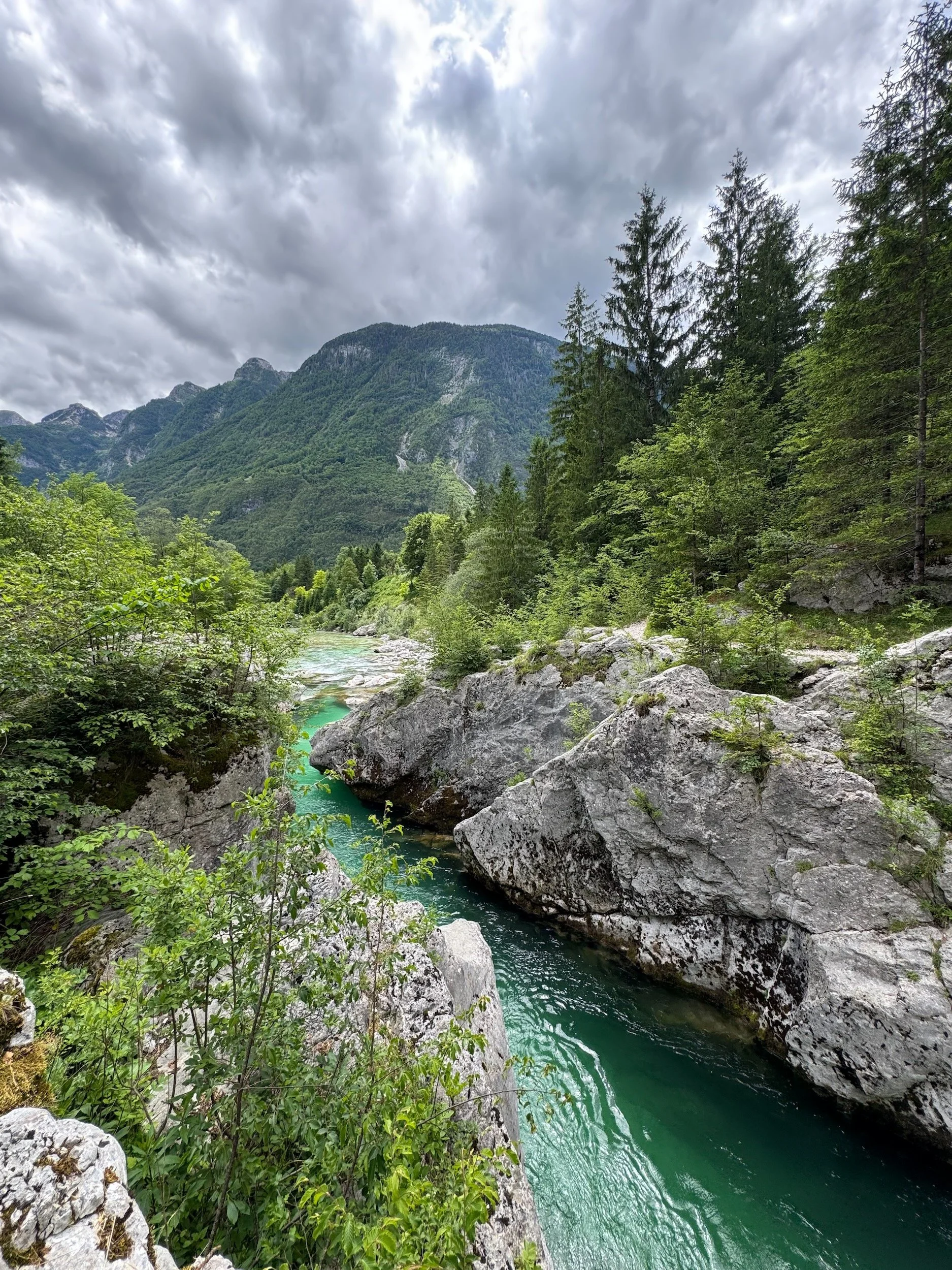
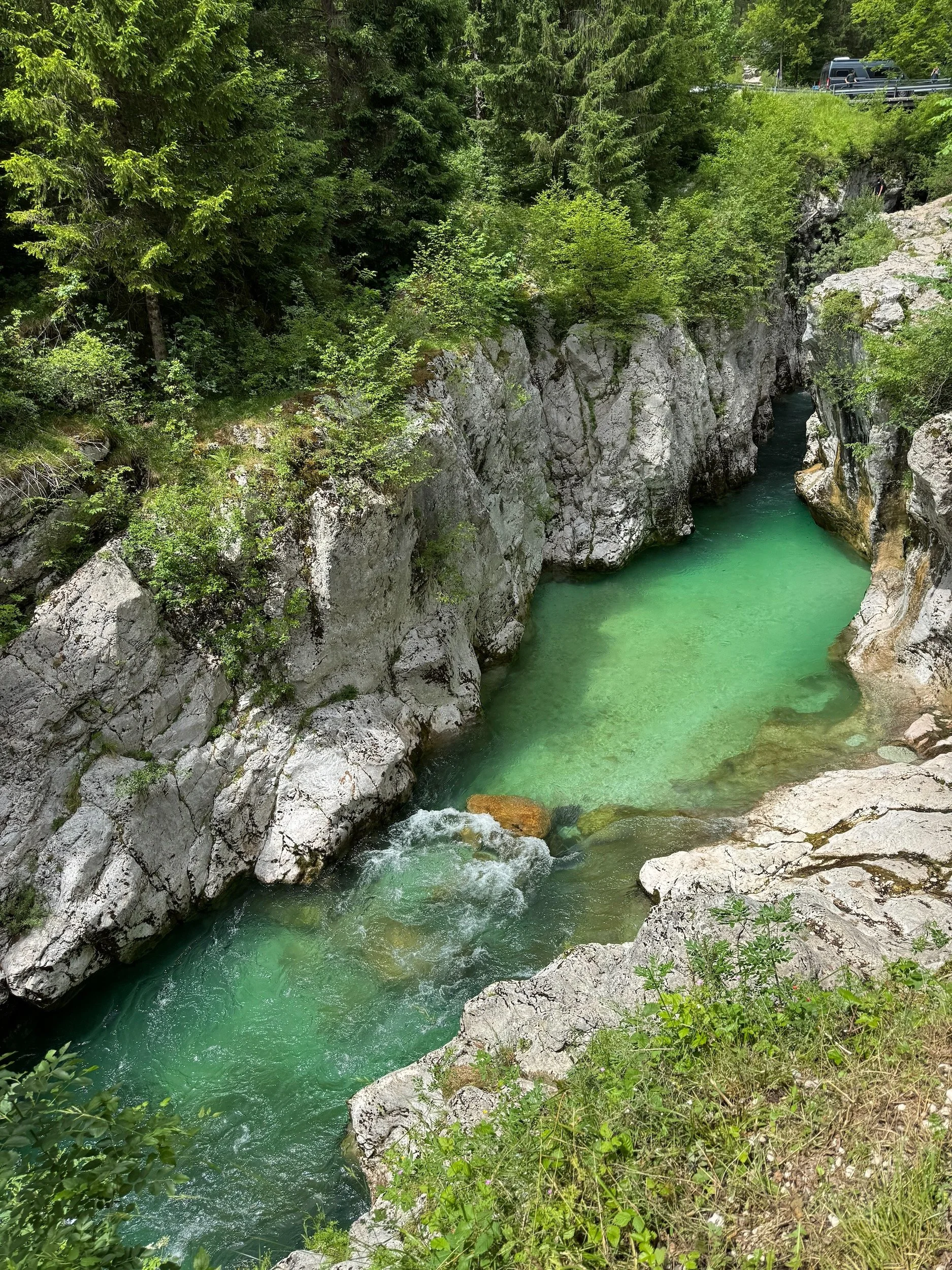
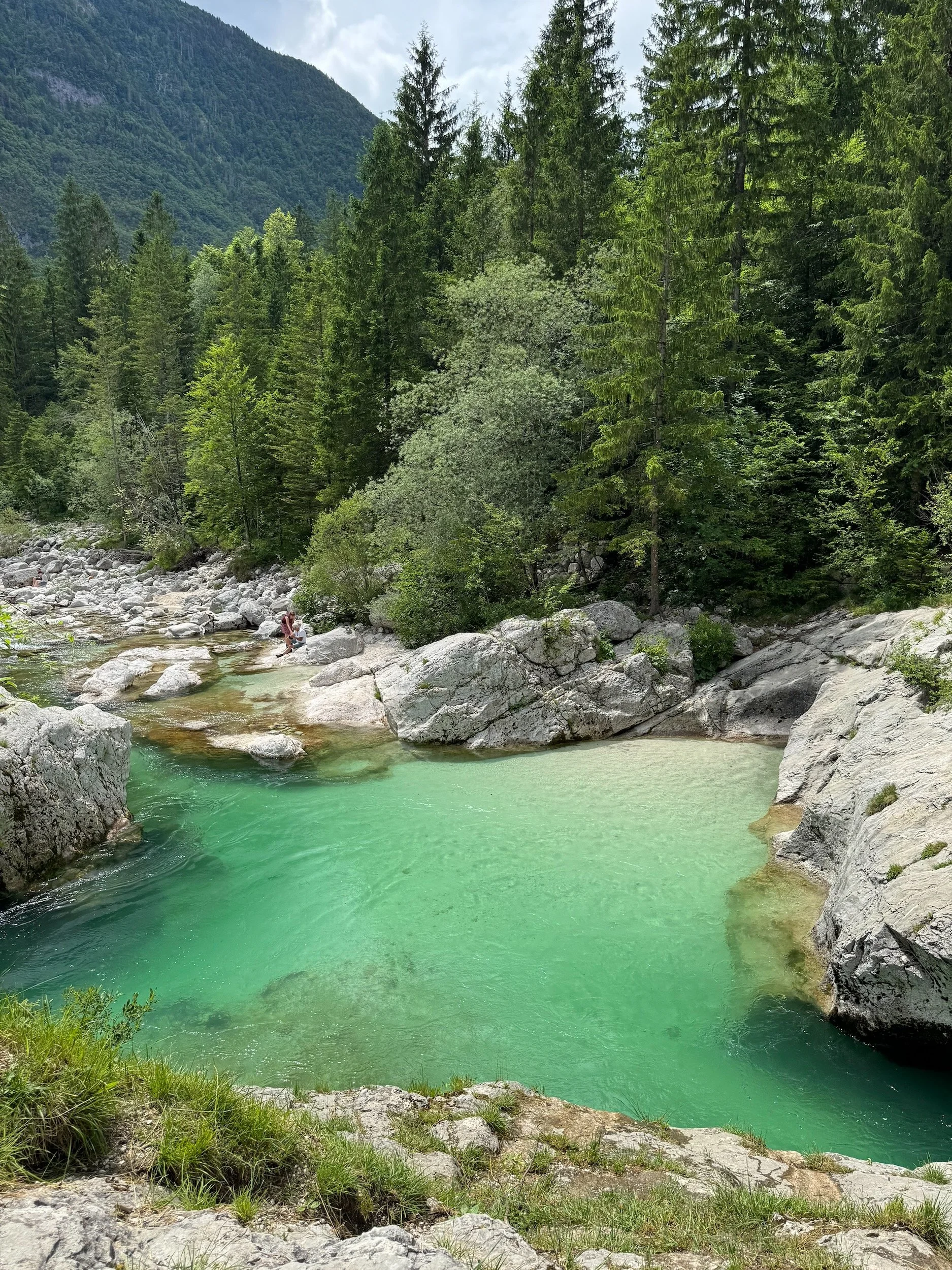
Soča Trail
The gorge also lies along the Soča Trail, or Soška pot, which follows the river from its source through the Trenta Valley to Bovec. The full trail is a long day hike, but you do not need to walk it in its entirety. Several access points along the road allow you to follow shorter sections, crossing picturesque footbridges and walking through forests and along the riverbank. This is a great way to experience more of the valley beyond its roadside viewpoints.
A Note on the Weather
The weather here can be unpredictable and can change the experience considerably. Rain made the mountains around Drežnica feel beautifully atmospheric, but it also left river paths, waterfall trails and gorge walks slippery. Bring a proper rain jacket, wear grippy shoes and keep your plans flexible.
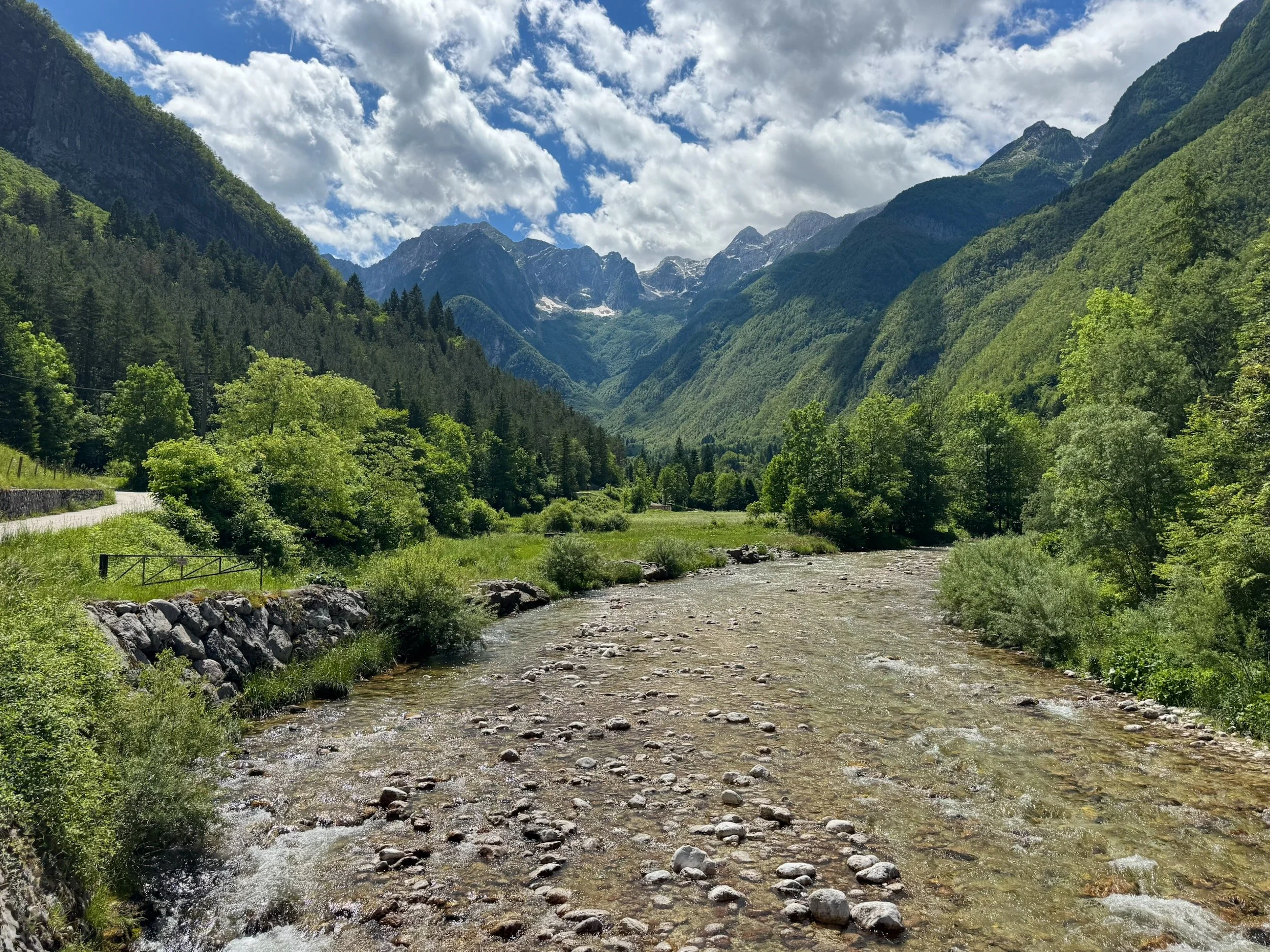
For us, the real appeal of the Soča Valley was not one particular sight. It was the combination of the river, the mountain backdrop, the small villages and the sense that there was always another trail, gorge or viewpoint nearby. If you enjoy clear water, outdoor activities and mountain scenery, this is one of those places where adding an extra night is easy to justify.
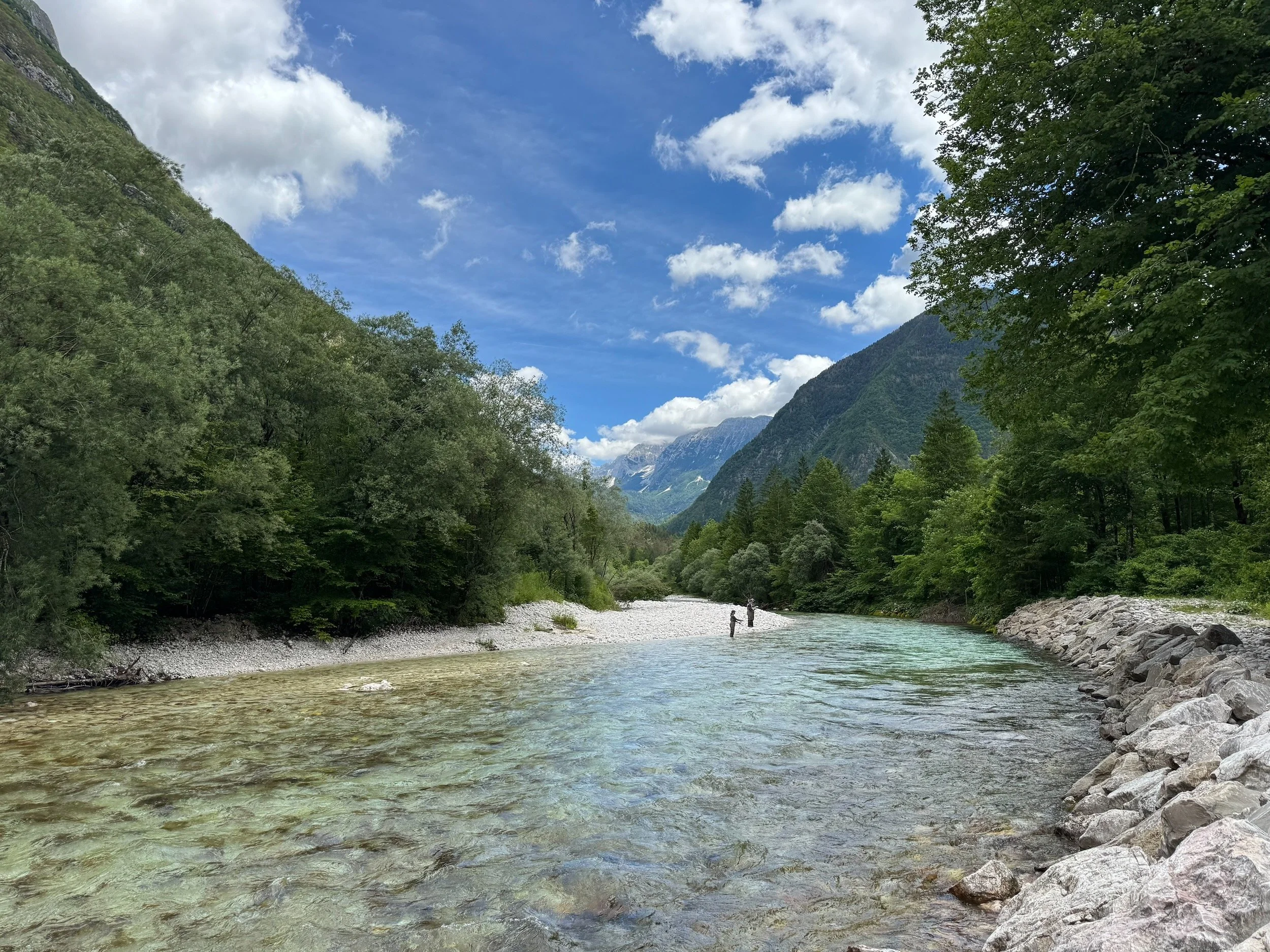
Soča Valley
How long to stay: 3 to 4 nights. Add another night if you want to include rafting, canyoning or a longer hike.
Best for: Clear river scenery, waterfalls, gorge walks, hiking, rafting, canyoning and quiet mountain villages
Good to know: Distances look short on the map, but the winding roads make journeys slower than expected. Some natural attractions charge seasonal entrance fees and Vršič Pass can close because of weather, snow or organised events.
Where to stay: Drežnica is best for quiet surroundings, mountain views and walks from the village, though dining and shopping options are limited. Kobarid offers restaurants, history and central access to the lower valley. Bovec is livelier and more activity-focused, making it the better base for rafting, canyoning and exploring the upper Soča Valley.
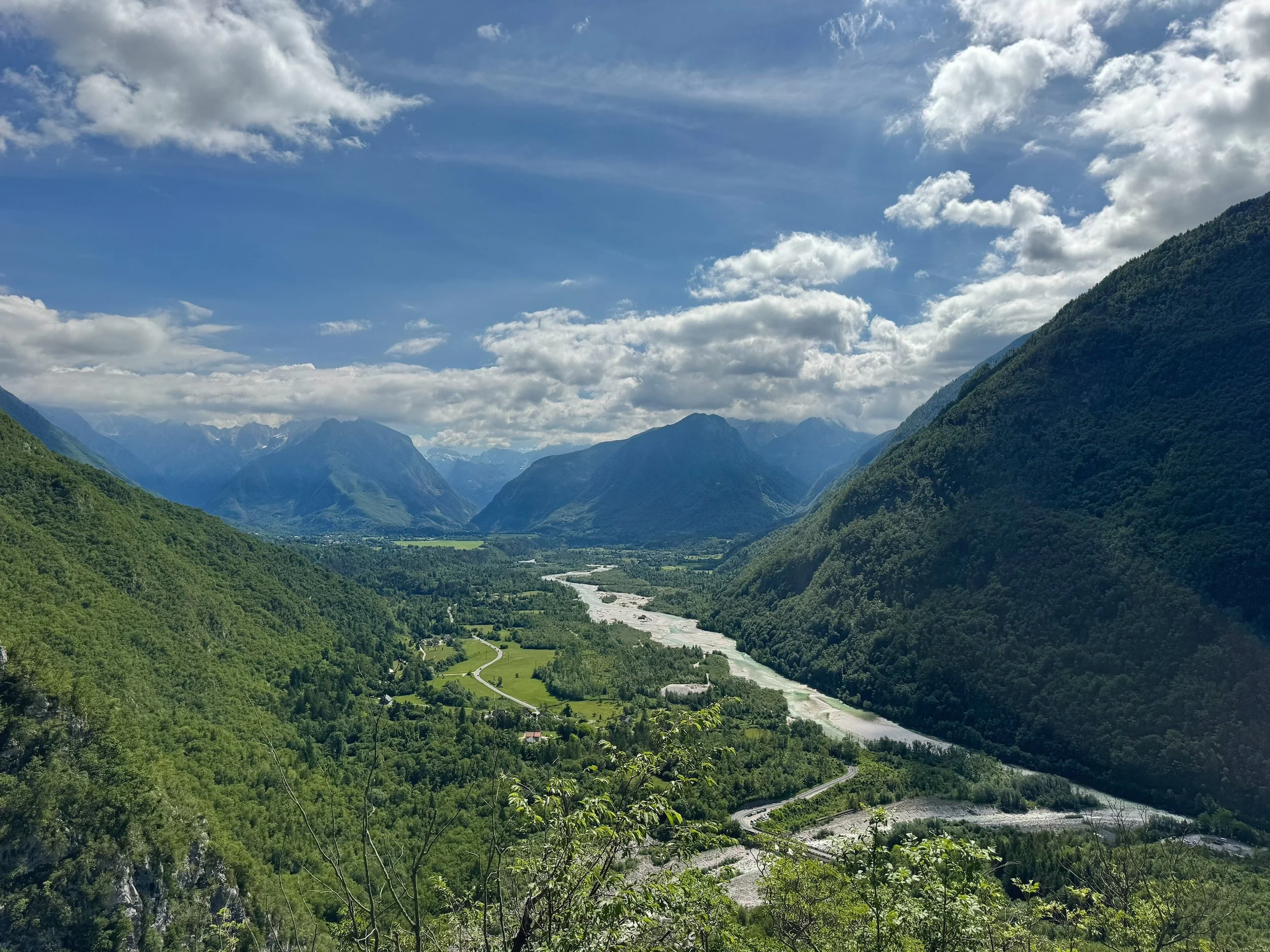
Crossing the Vršič Pass | Day 13
Driving from Bovec to Kranjska Gora through Trenta takes you over Vršič Pass. It is a beautiful but also extremely winding mountain road, with several viewpoints and places to stop along the way.
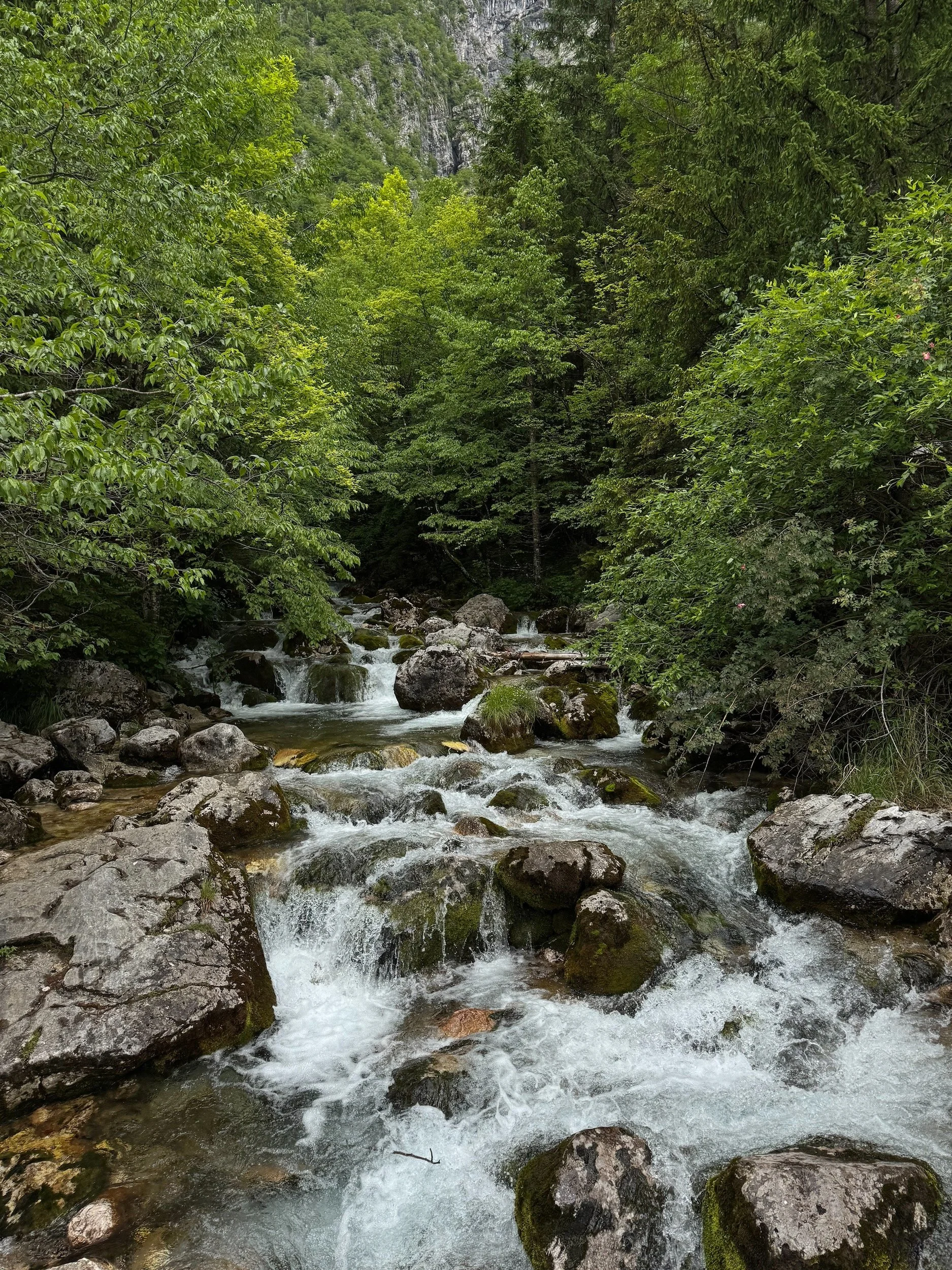
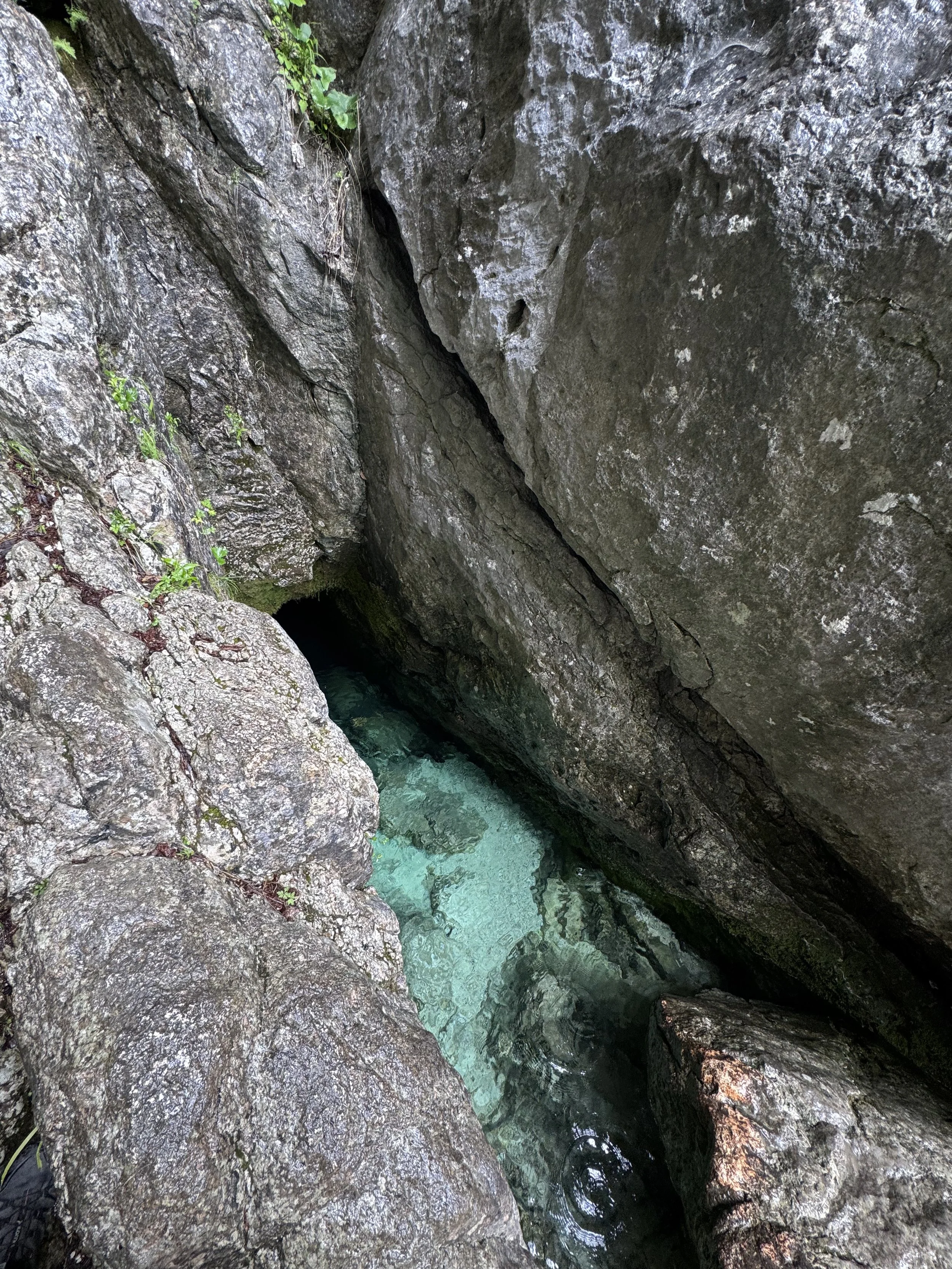
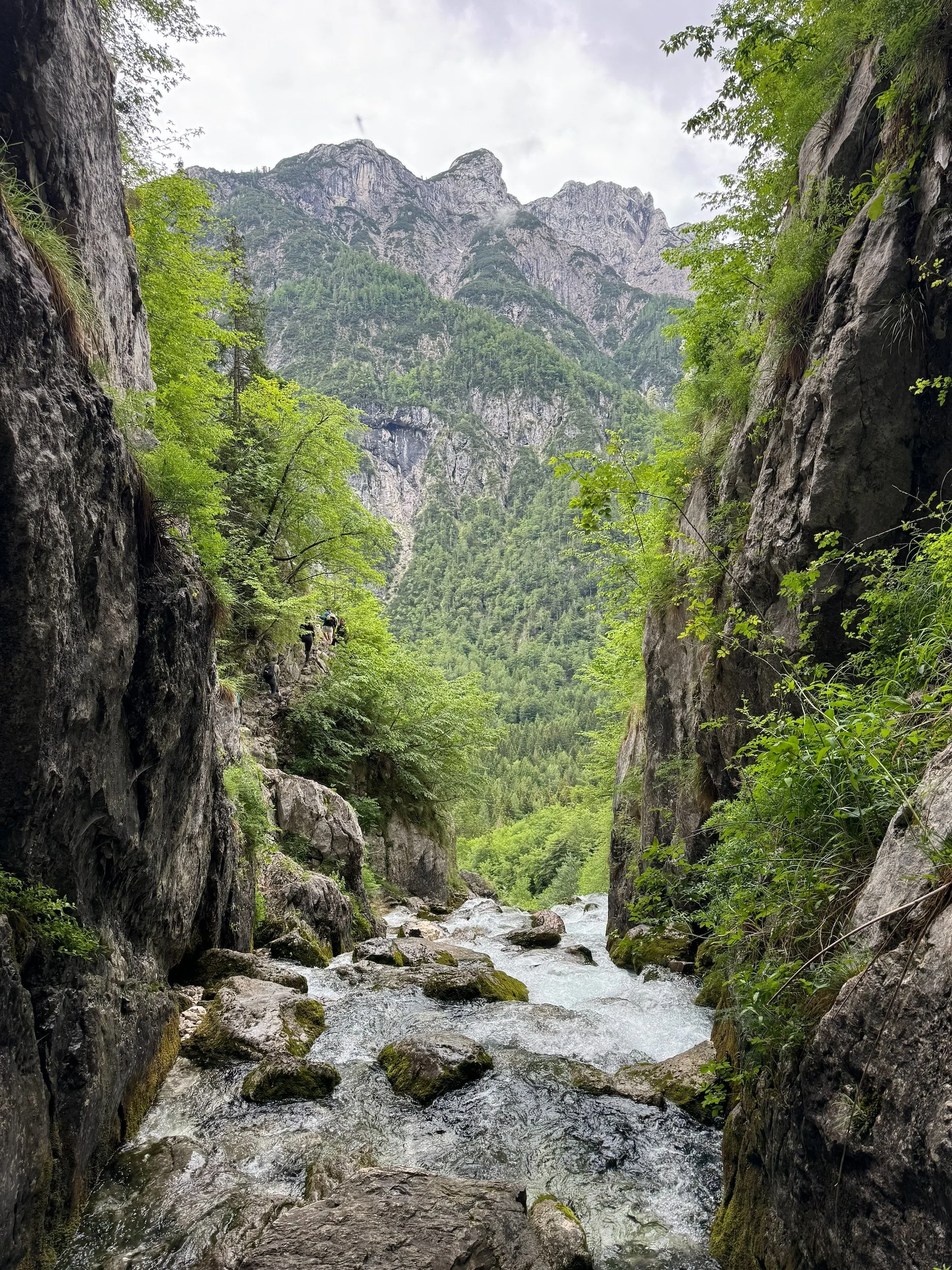
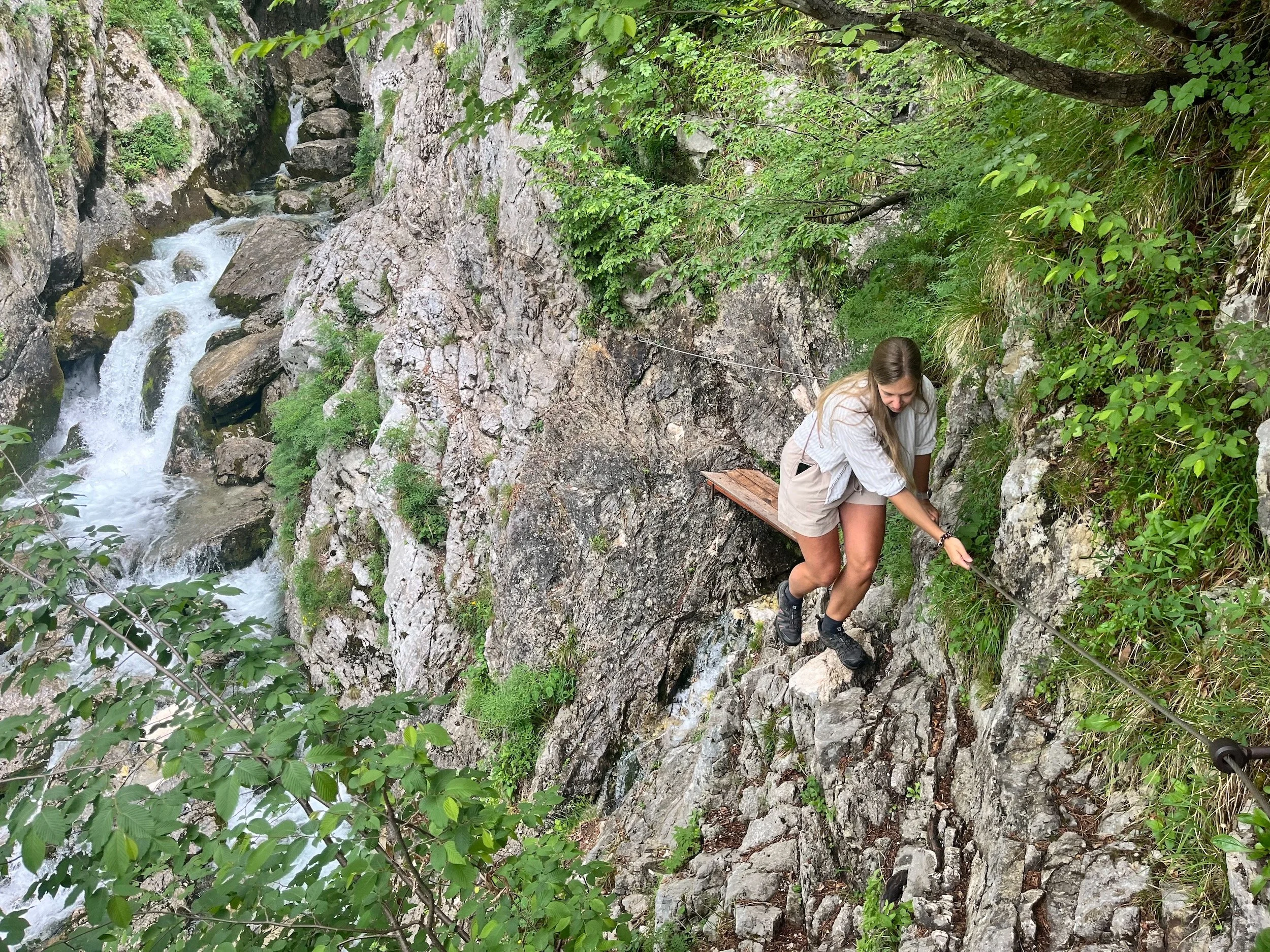
Before beginning the main climb to the pass, you can stop at the Source of the Soča River. It makes more sense to visit during this transfer than as a separate return journey from Kobarid. The walk is short, but the final section is steep and secured with fixed cables and metal footholds. The source itself is quite small, so it can quickly feel crowded. When we arrived, we had to wait our turn and carefully move around other hikers on the slippery rocks.
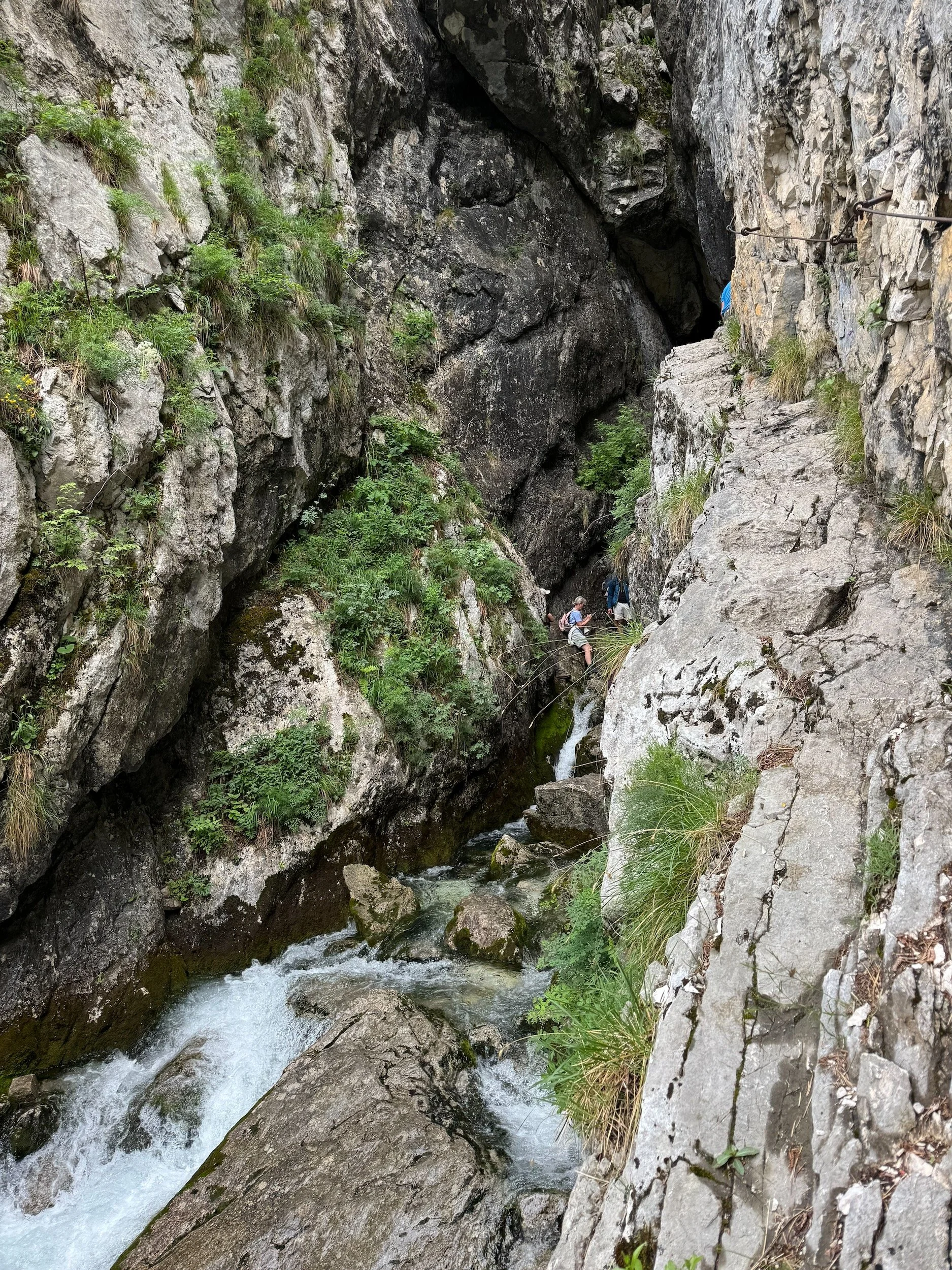
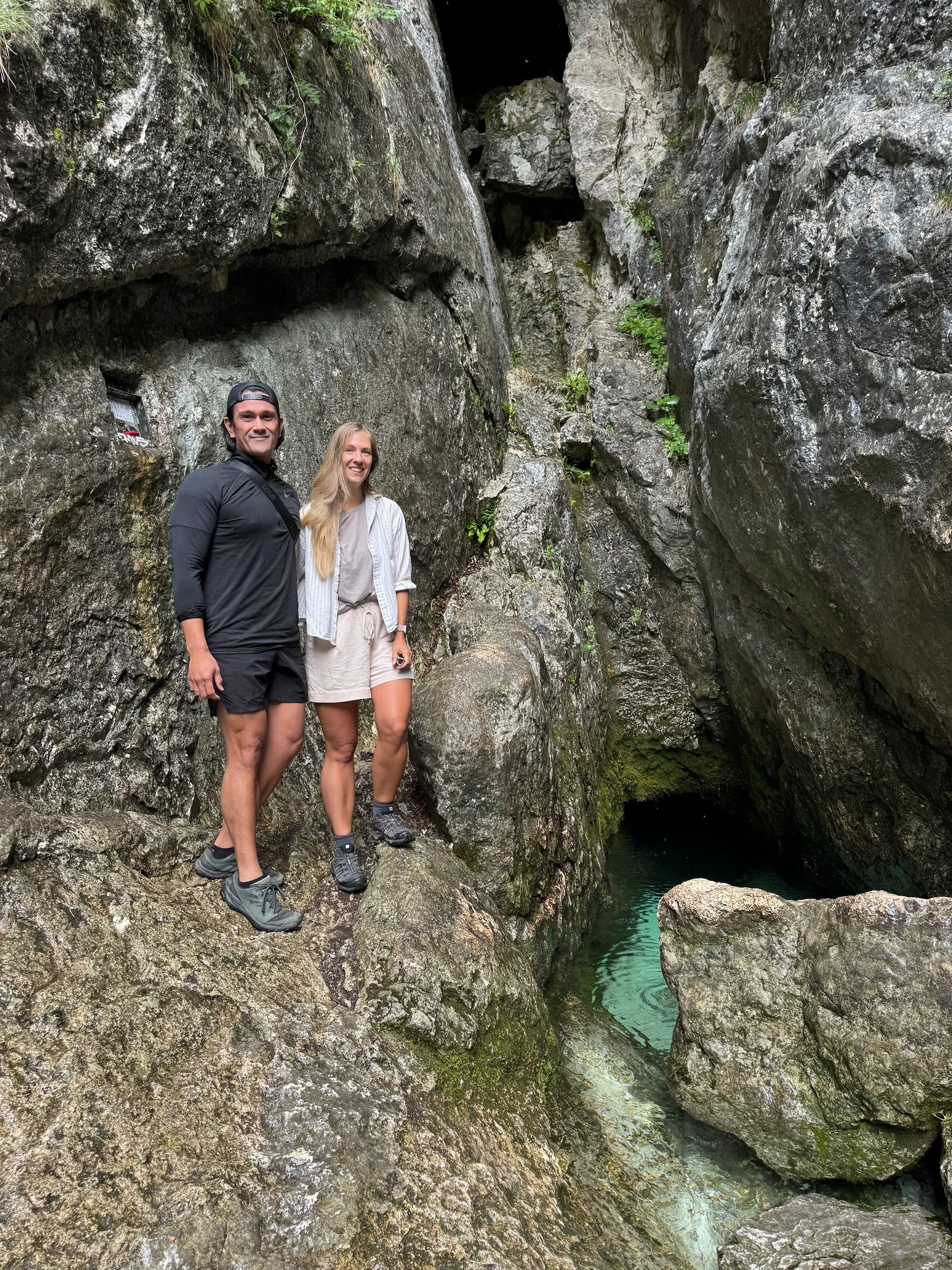
Driving tip
Vršič Pass is narrow and very winding, so traffic can move slowly and overtaking is rarely safe. Allow extra time and use a safe pull-out if traffic begins collecting behind you. Check for weather-related closures and scheduled events before setting off.
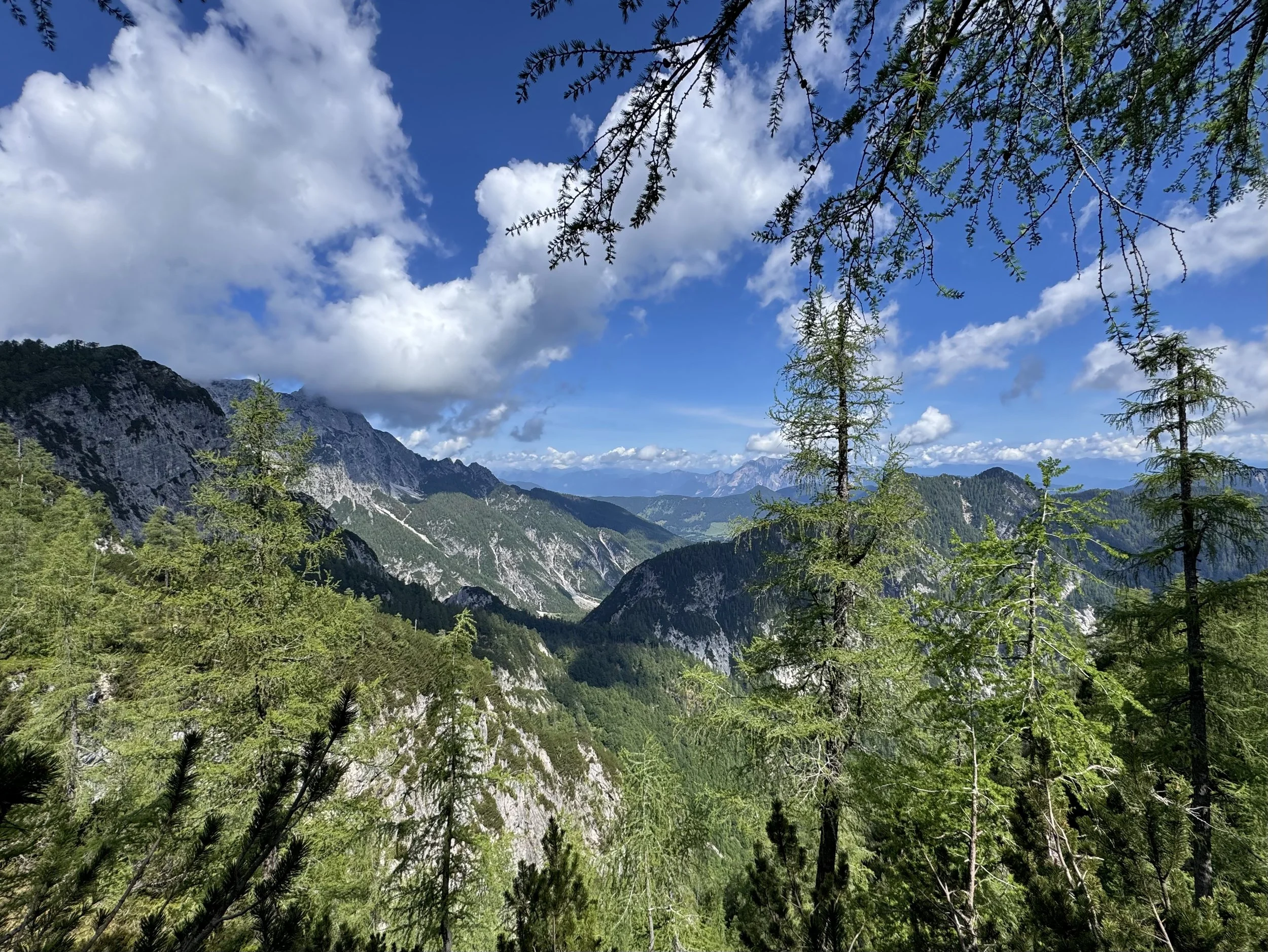
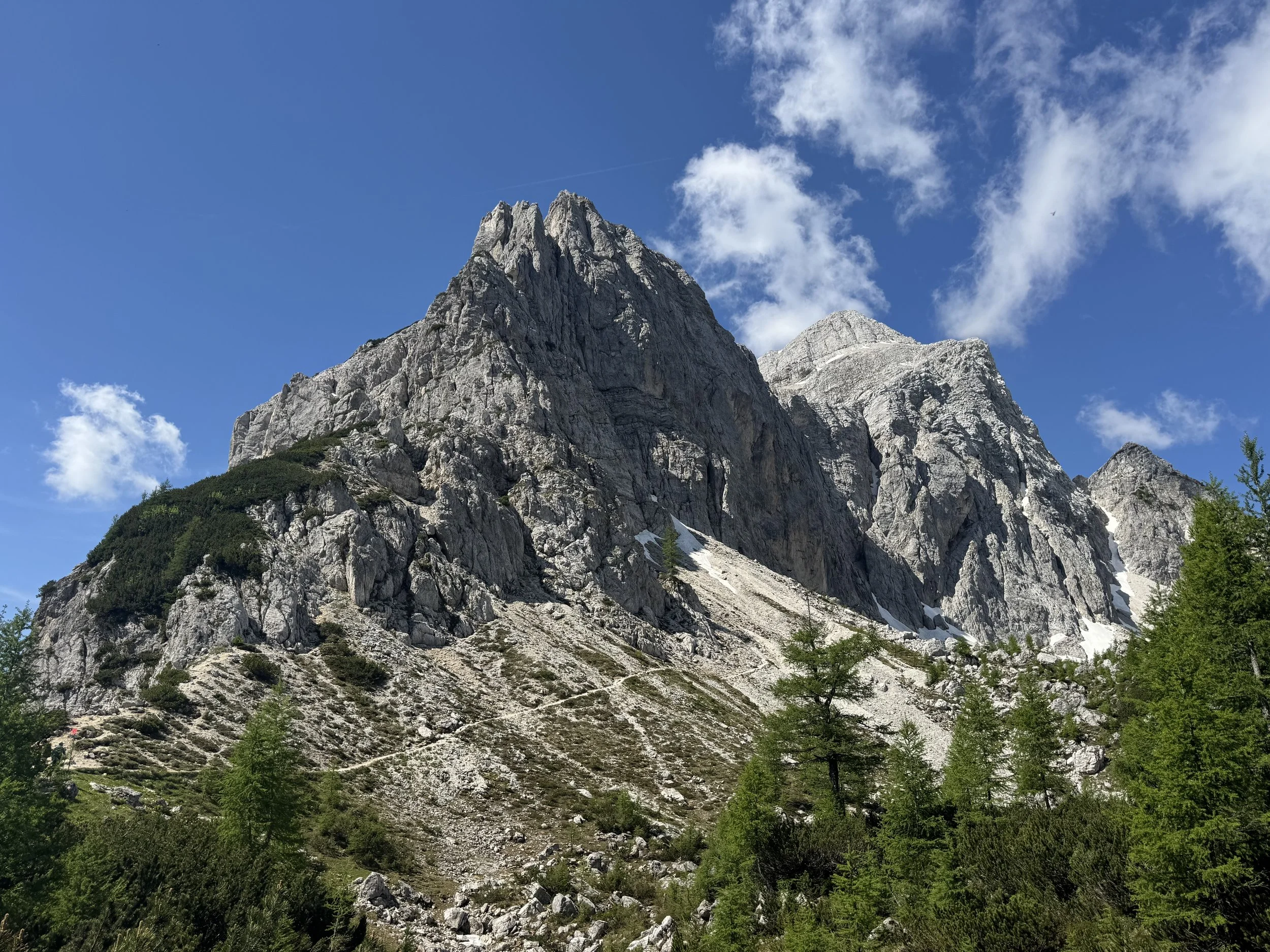
Although we had set off in full sunshine, the sky became increasingly cloudy as we continued to drive up. Near the top of the pass and during the descent towards Kranjska Gora, the fog became much thicker and we saw very little of the surrounding mountains. A few days later, we drove back up from Kranjska Gora for a hike in clear weather and the pass felt like a completely different place. This time, we could fully appreciate the sweeping views across the surrounding peaks and valleys.
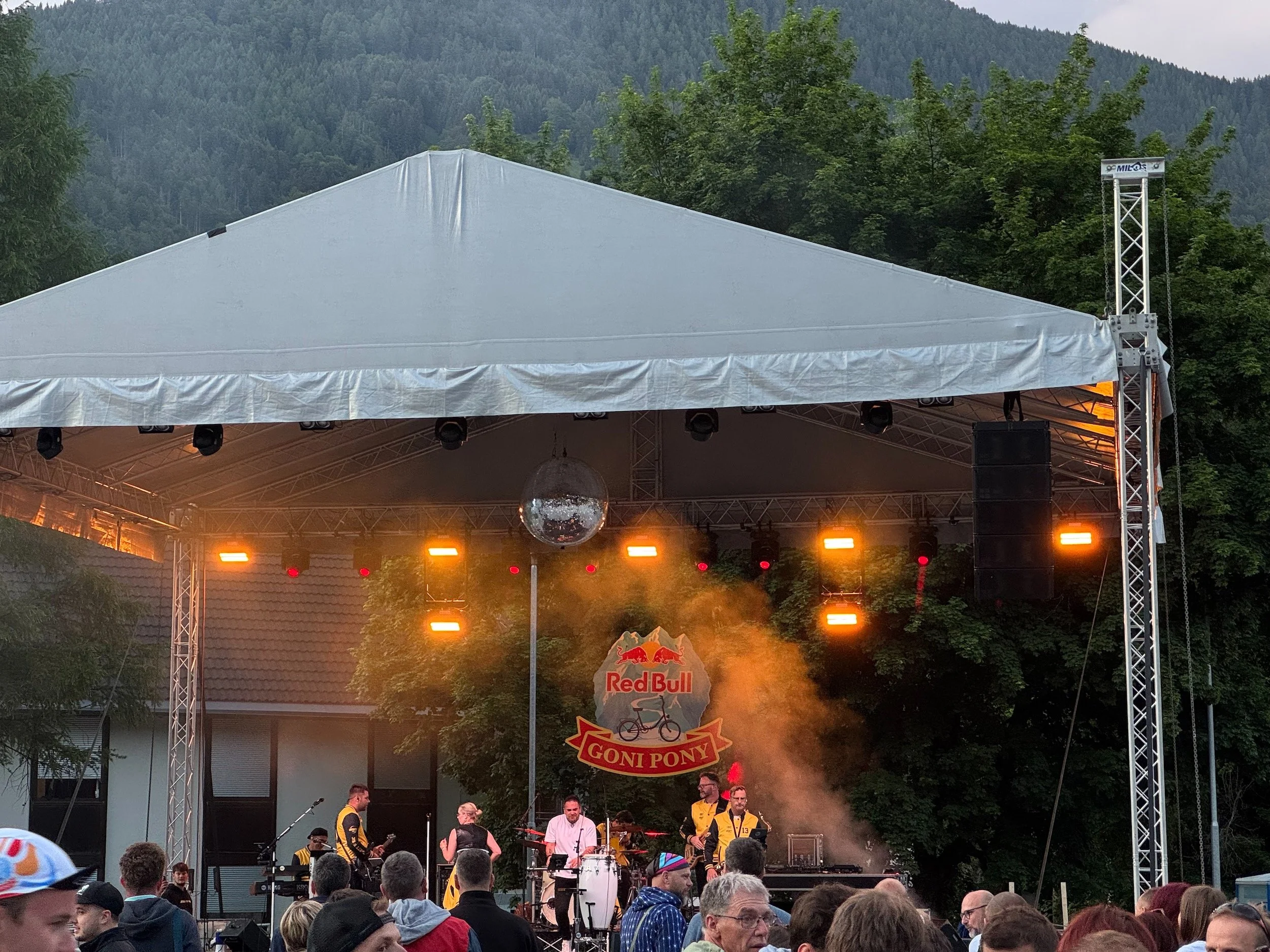
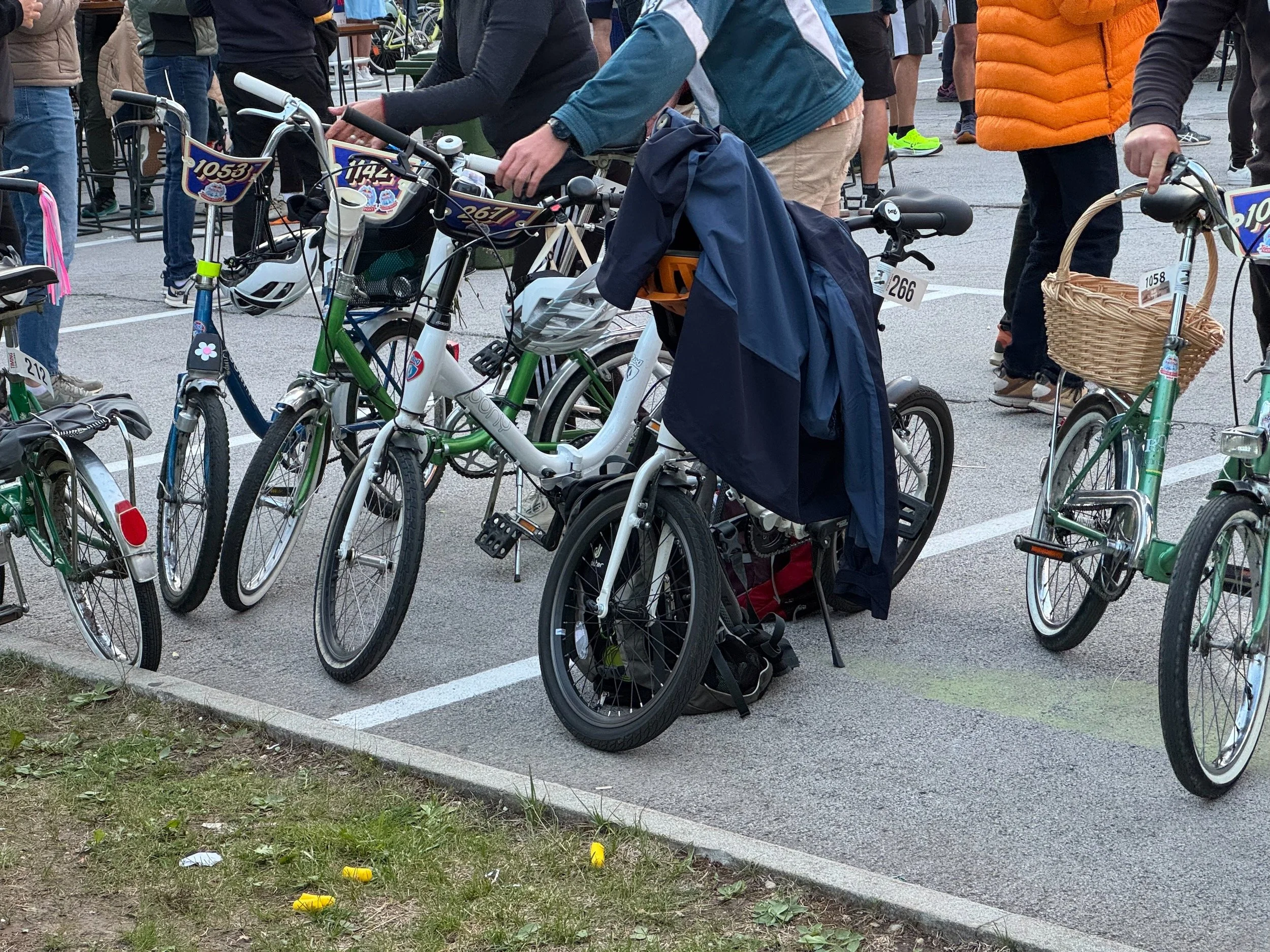
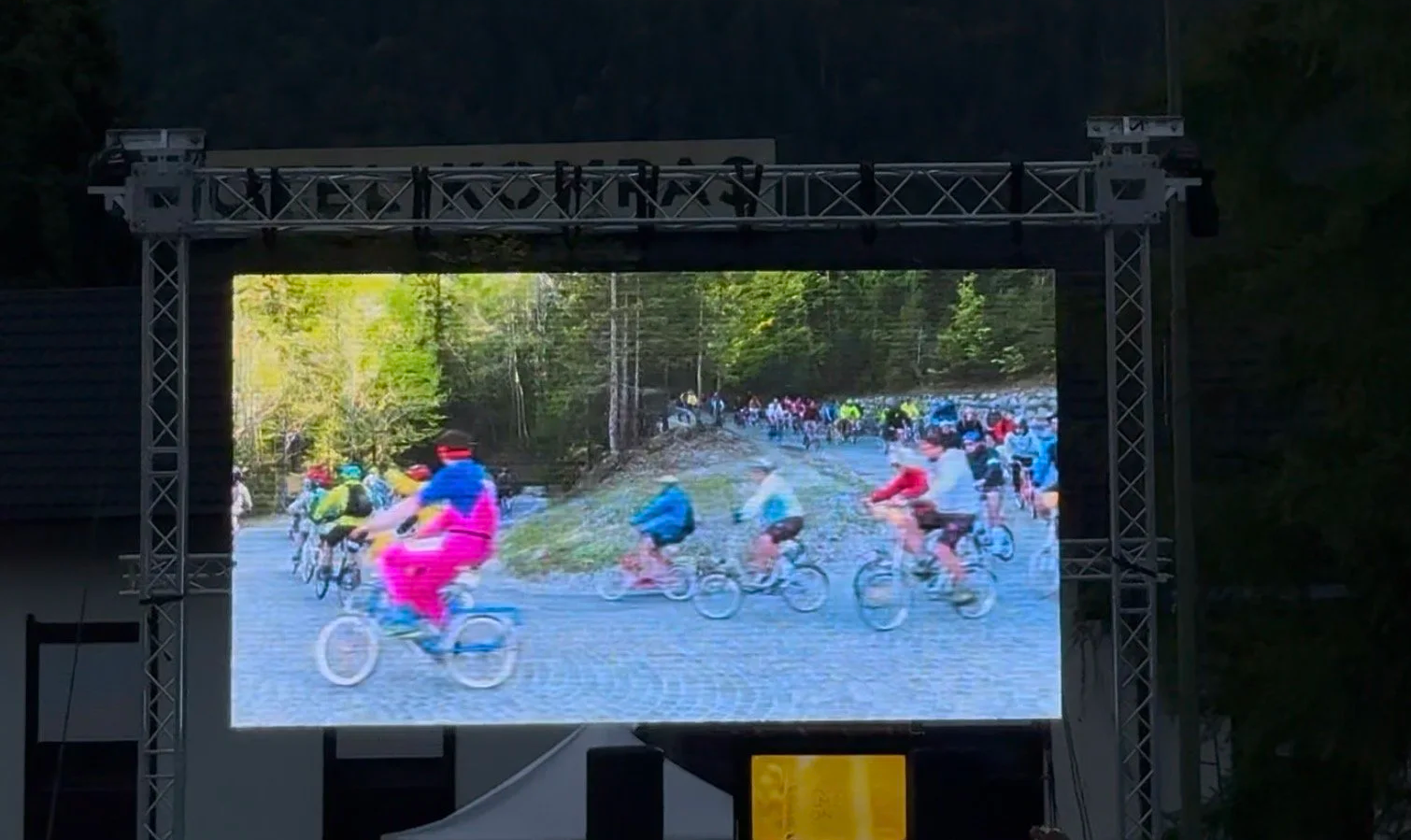
We also only just made it across the pass before the road closed for Red Bull Goni Pony, an annual cycling event in which riders tackle the steep pass on small retro Pony bicycles. Many participants embrace the theme by dressing in colourful 80s inspired clothing, while some complete the climb in groups wearing matching outfits. We only learned afterwards just how well known and wonderfully unusual the event is.
Kranjska Gora and the Julian Alps | Day 13-16
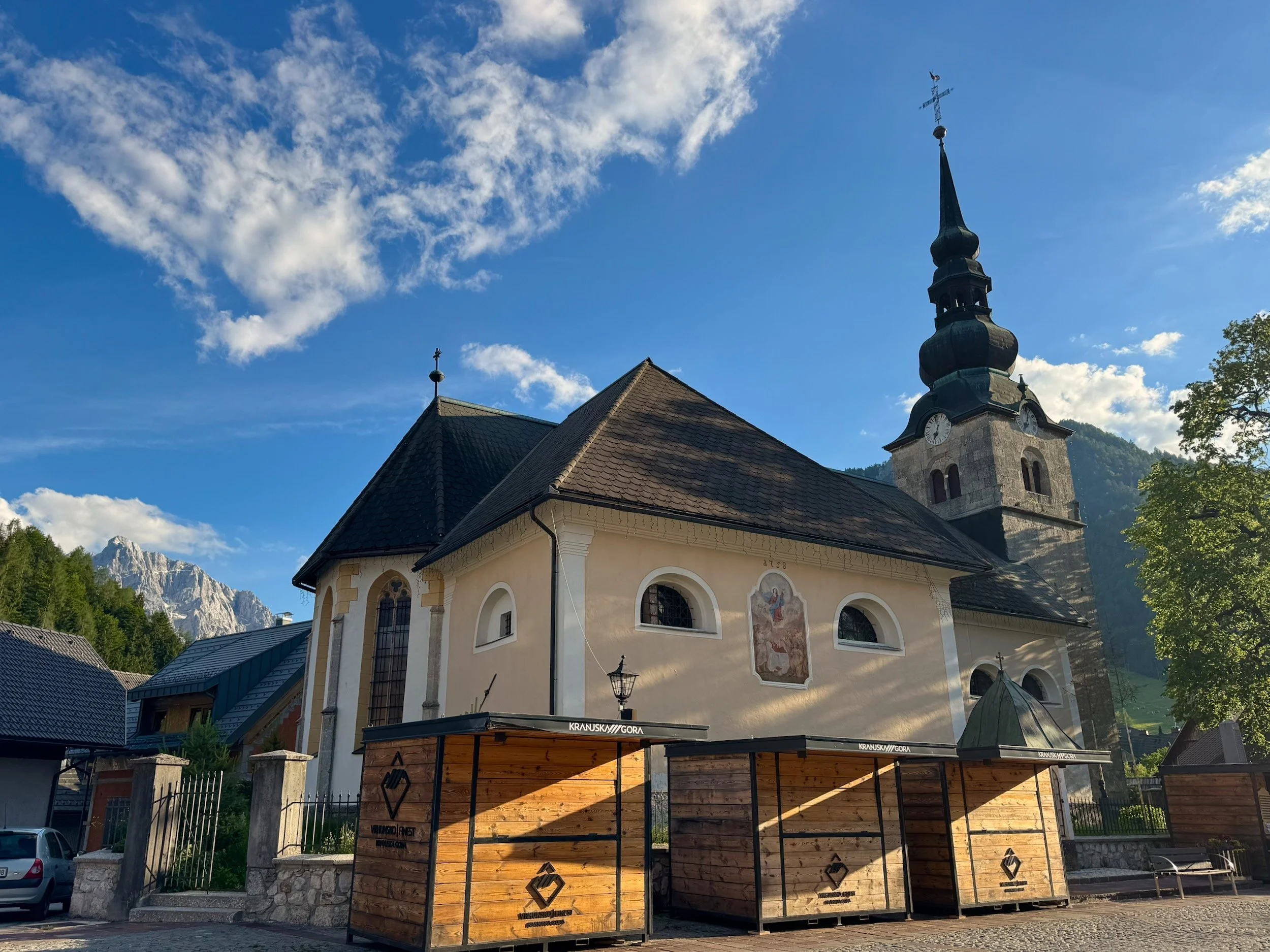
Kranjska Gora was our final base in Slovenia and one of our favourite areas of the trip. The small town has a lively but relaxed atmosphere, with plenty of restaurants, cafés and outdoor shops, while the surrounding peaks give it a more classic alpine feeling than some of the earlier stops. Most importantly, there is an impressive amount to see and do within a relatively short drive.
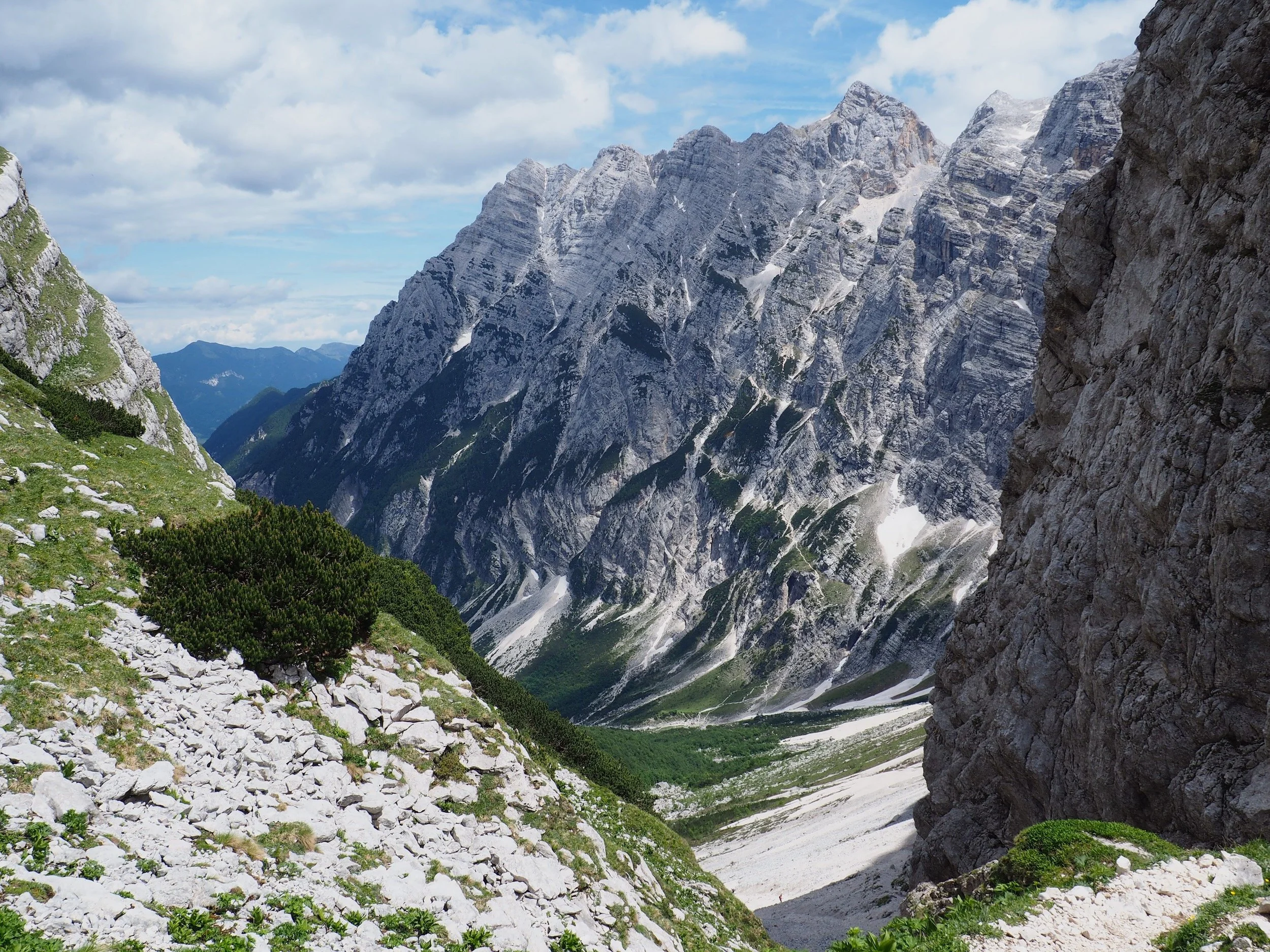
It is a particularly good base for exploring the higher Julian Alps. Depending on the weather, you can choose between proper mountain hikes, waterfalls, alpine valleys, lakes and easy nature walks. Four nights gave us a good taste of the area, although it would be easy to stay longer if hiking is one of the main reasons for your Slovenia trip.
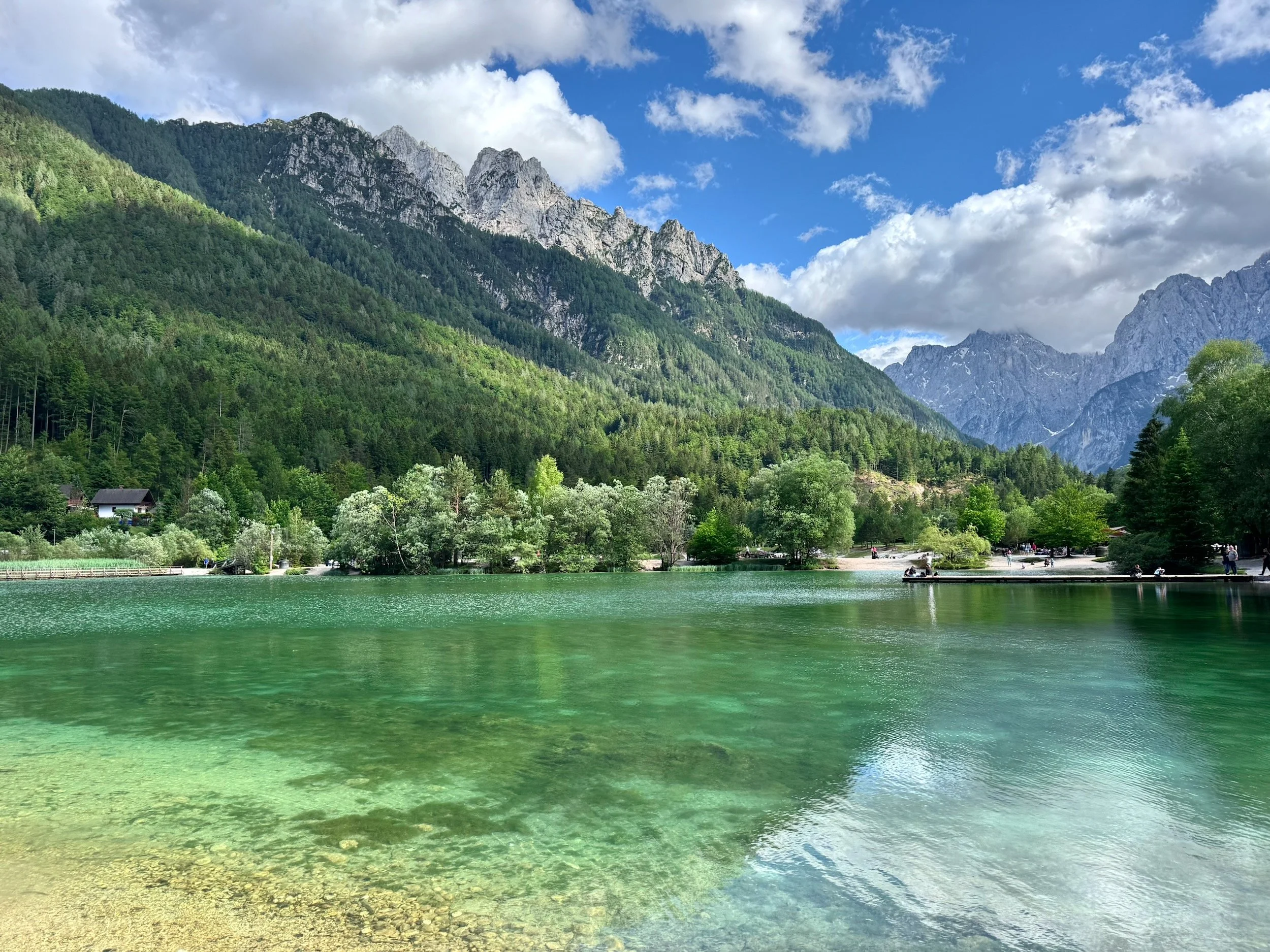
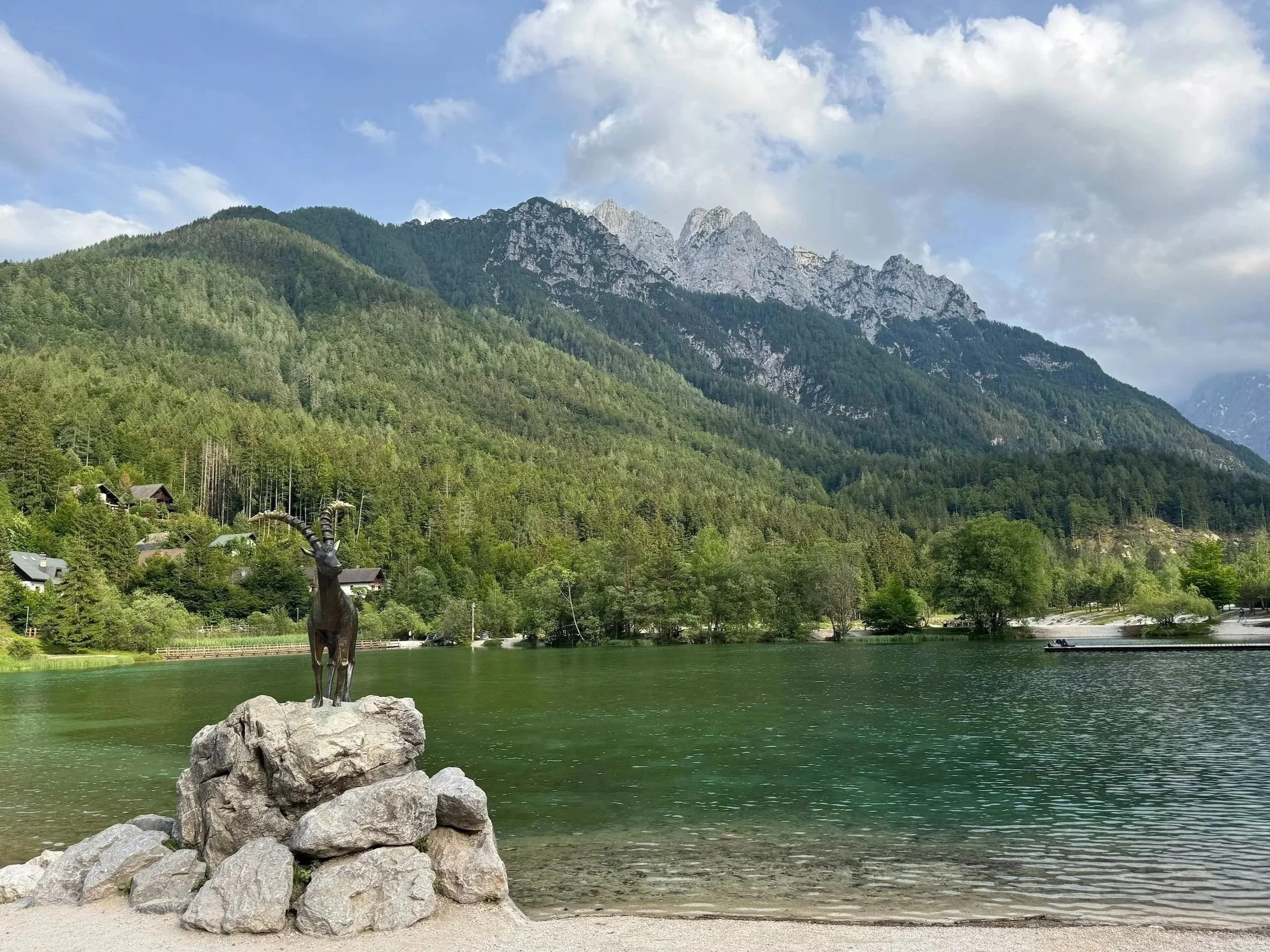
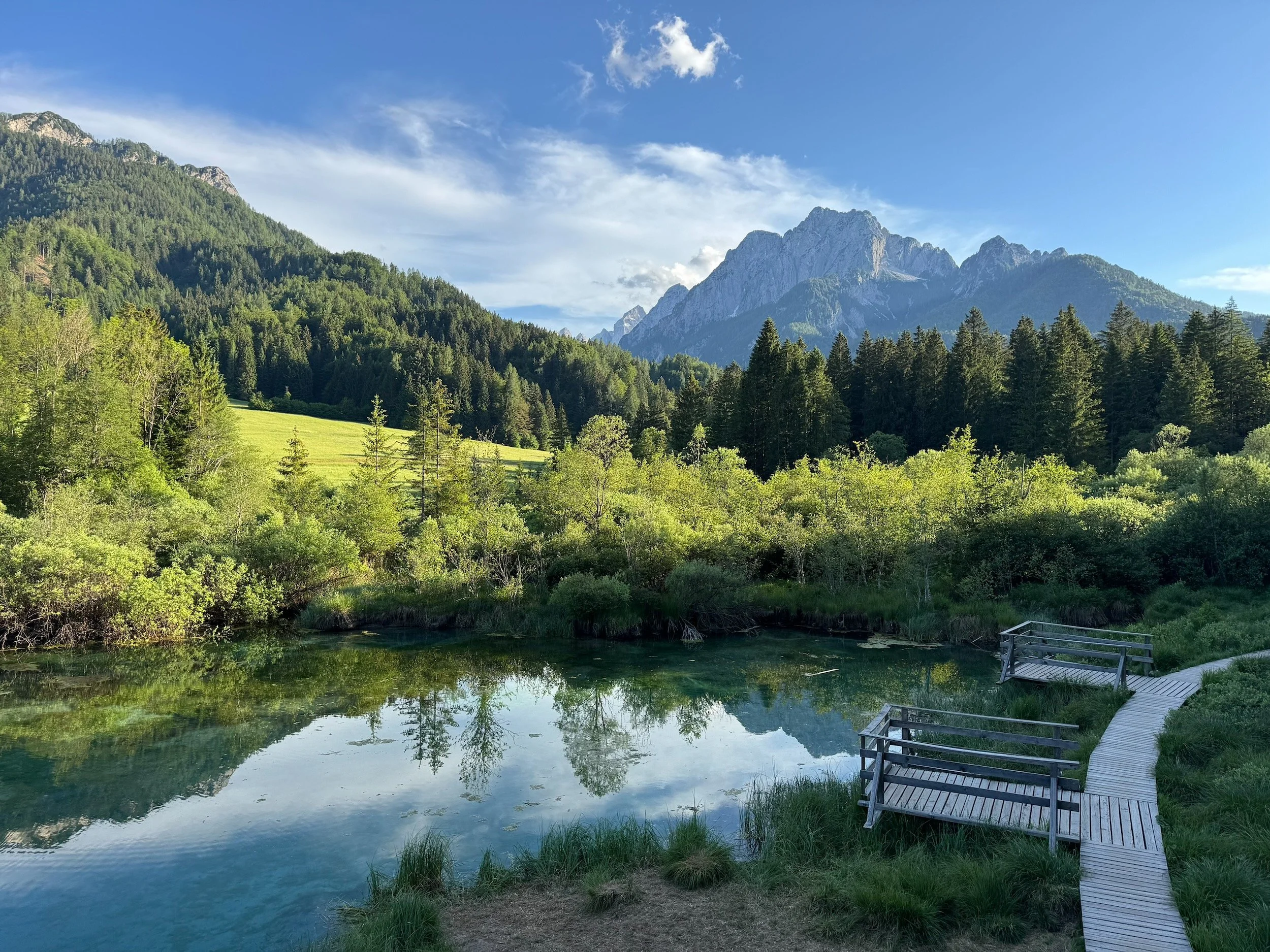
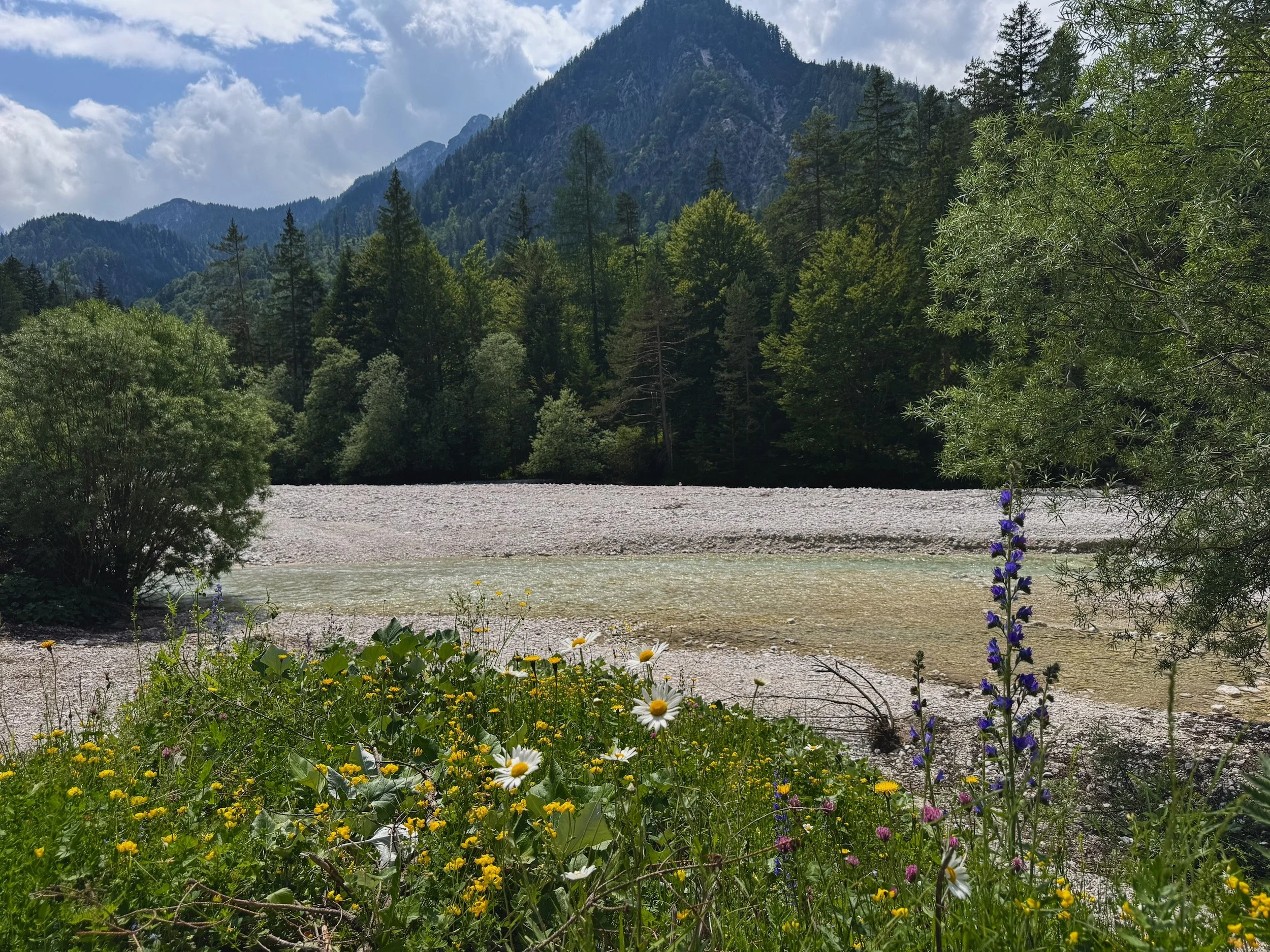
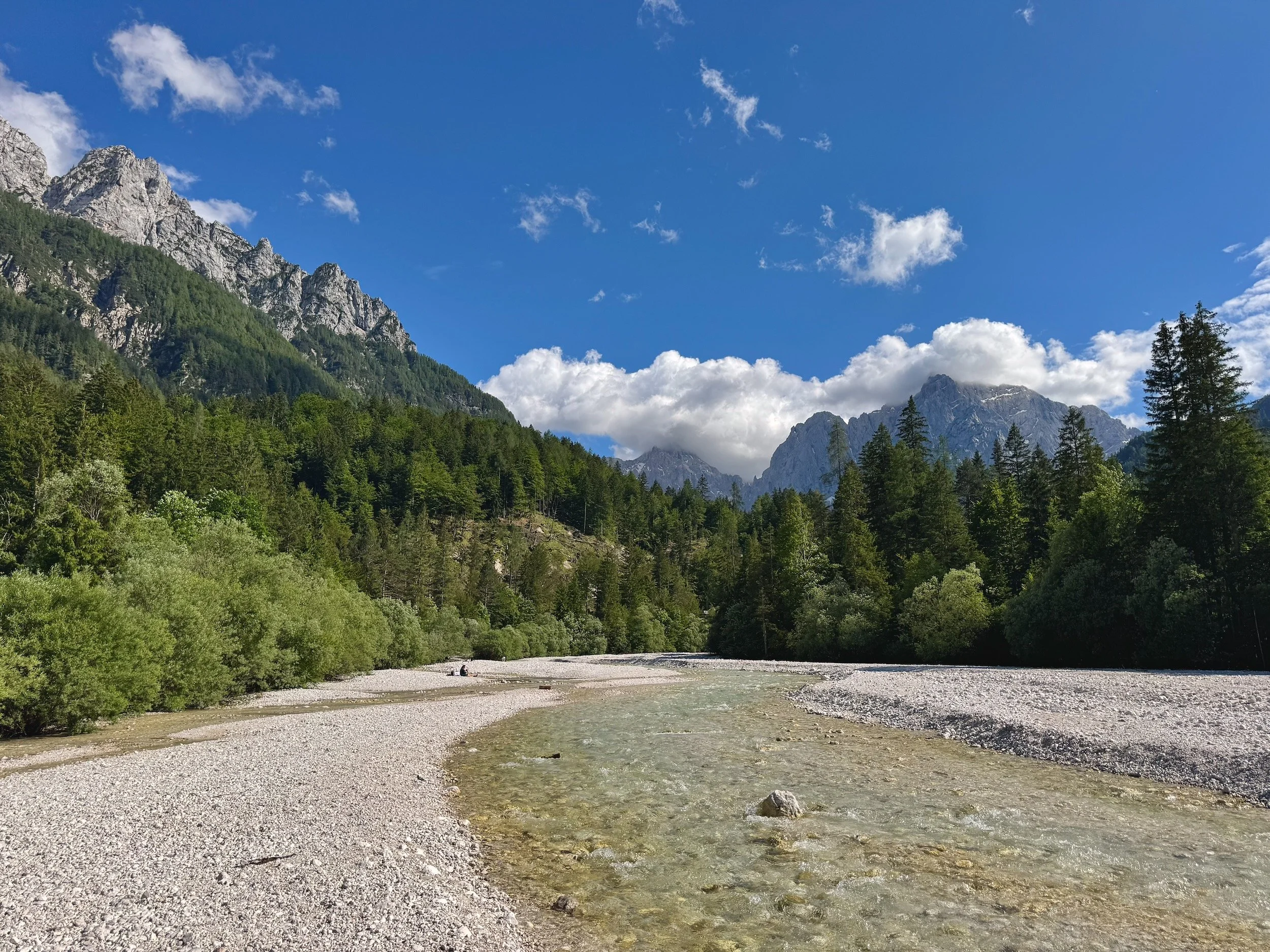
Just outside town, Lake Jasna is an easy place to visit for a walk, swim or slower morning beneath the mountains. The two connected lakes sit near the beginning of the road towards Vršič Pass and are surrounded by paths and places to sit by the water. The nearby river banks along the Sava Dolinka also offer peaceful spots to relax, with clear flowing water and shaded areas that are perfect for a quiet break. Zelenci Nature Reserve, near Podkoren, is another short and accessible stop. A forest path and boardwalk lead to the emerald-green source lake of the Sava Dolinka, framed by the surrounding mountains.
Slemenova Špica
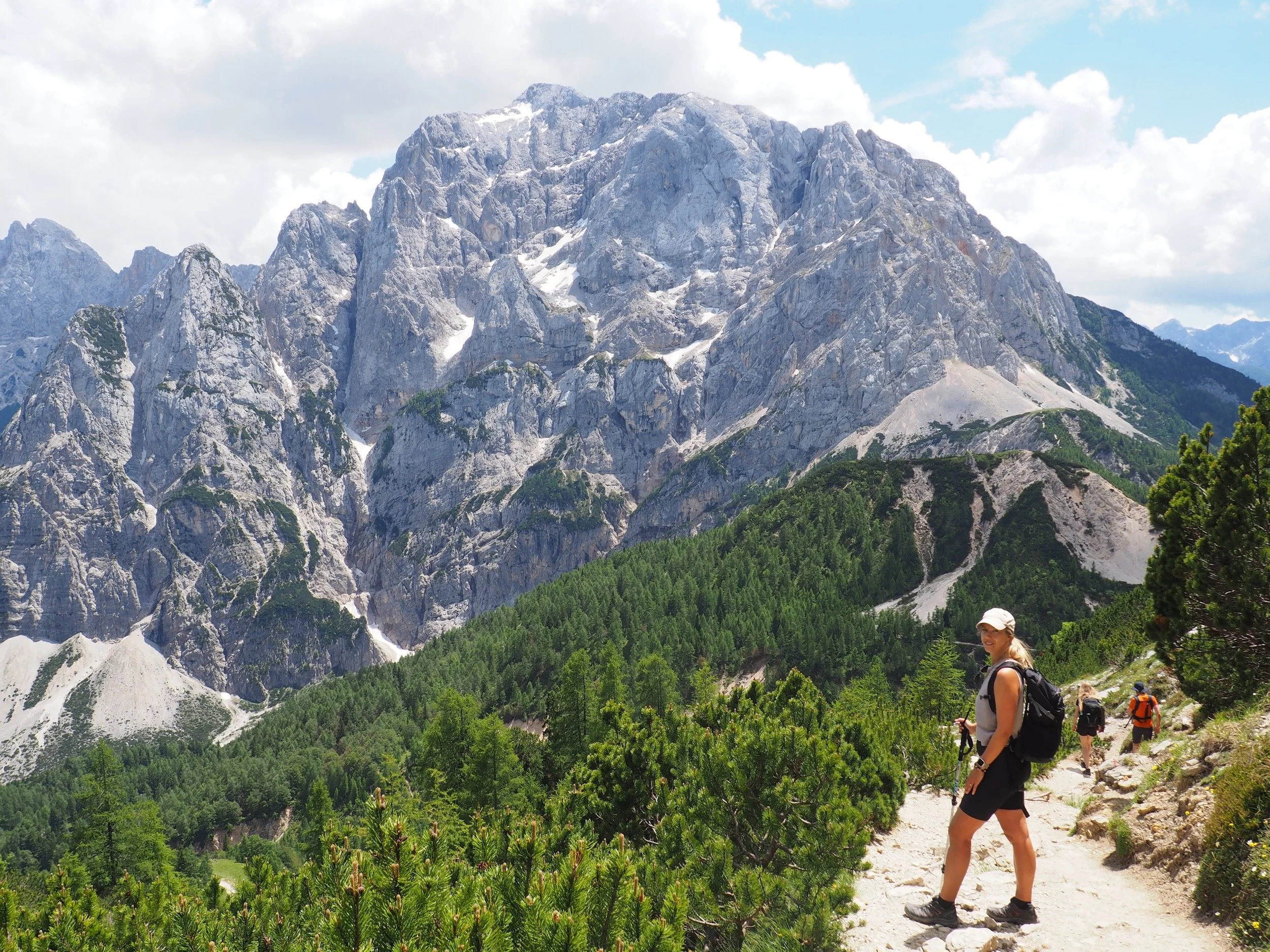
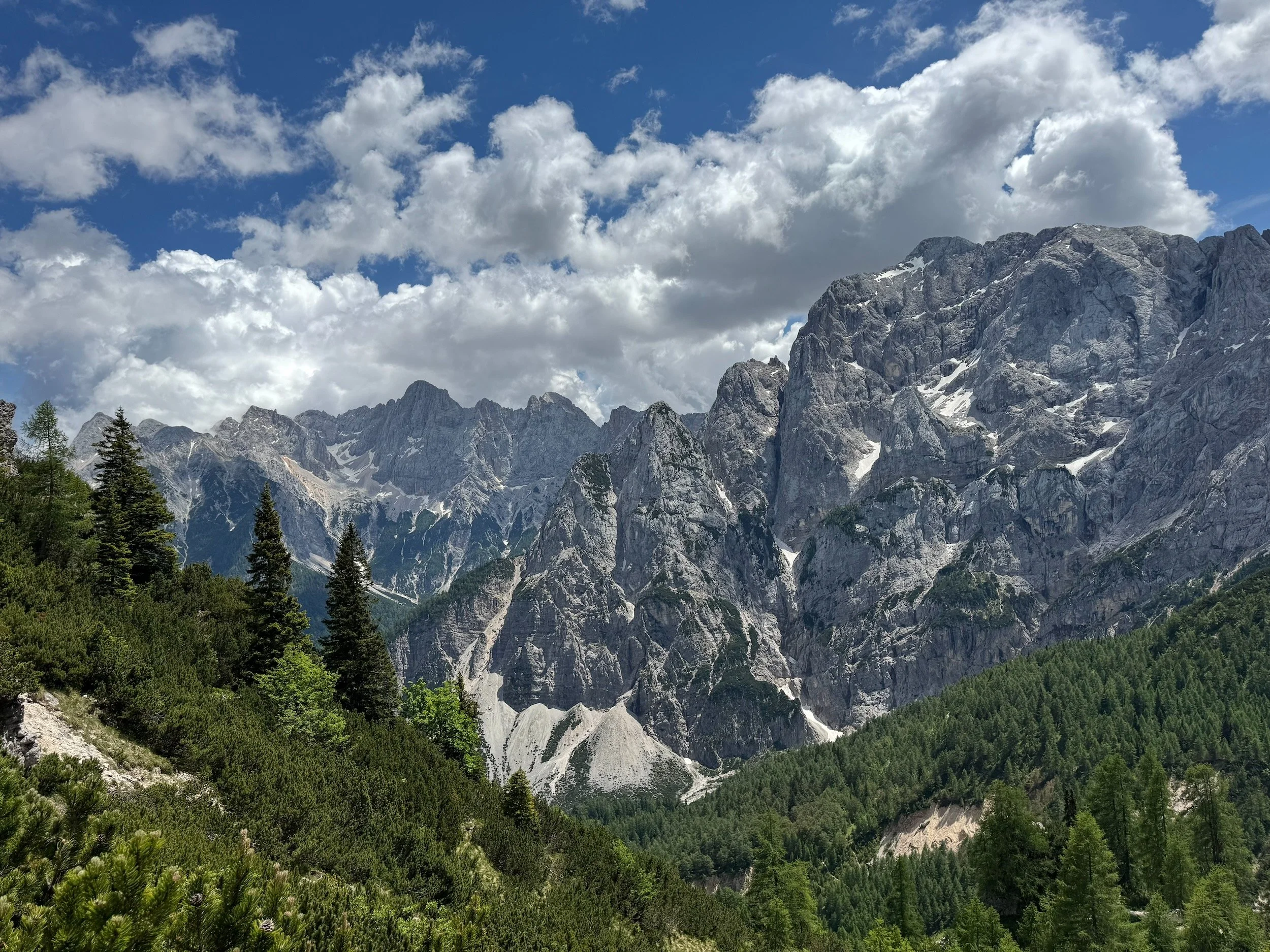
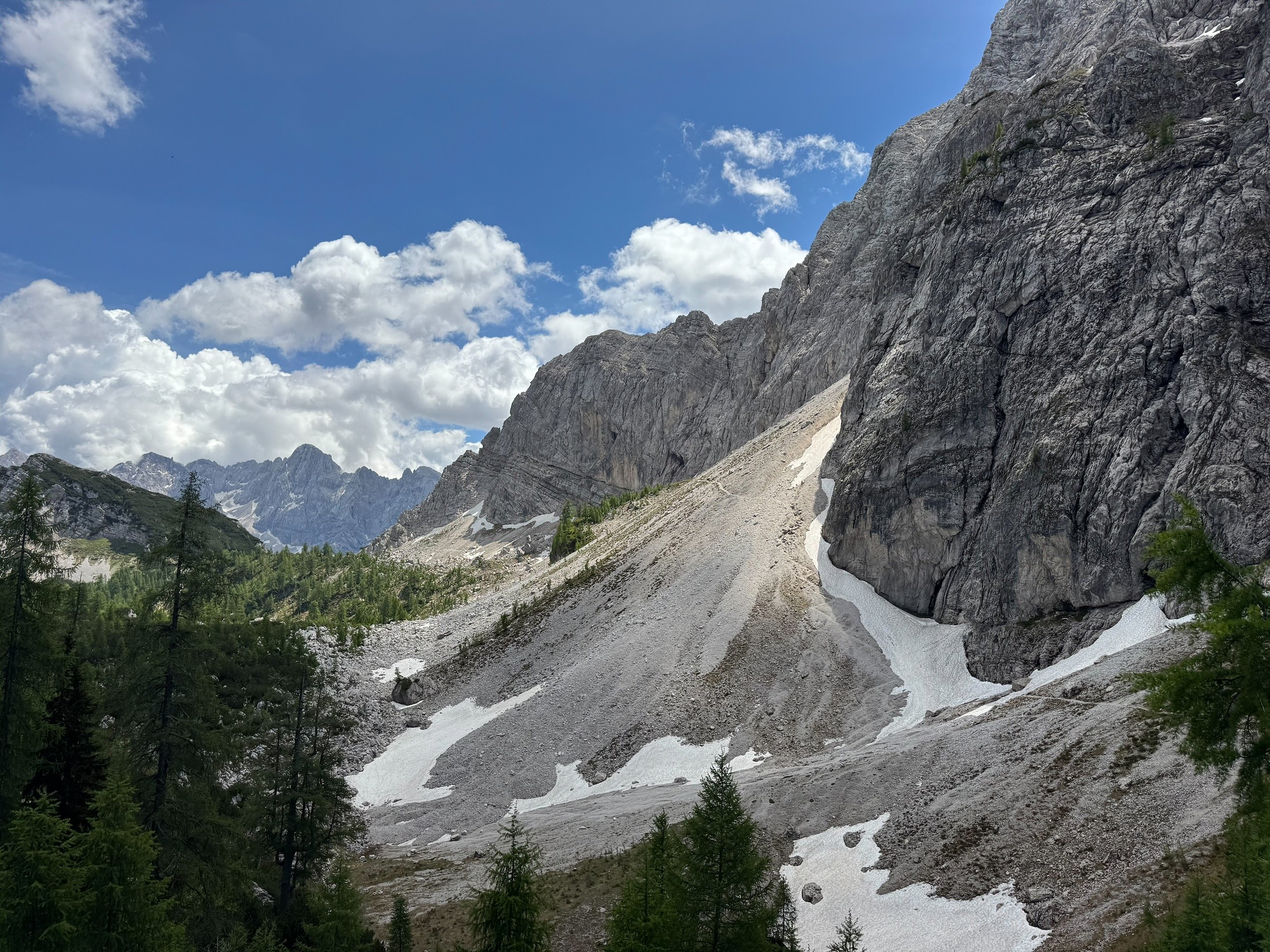
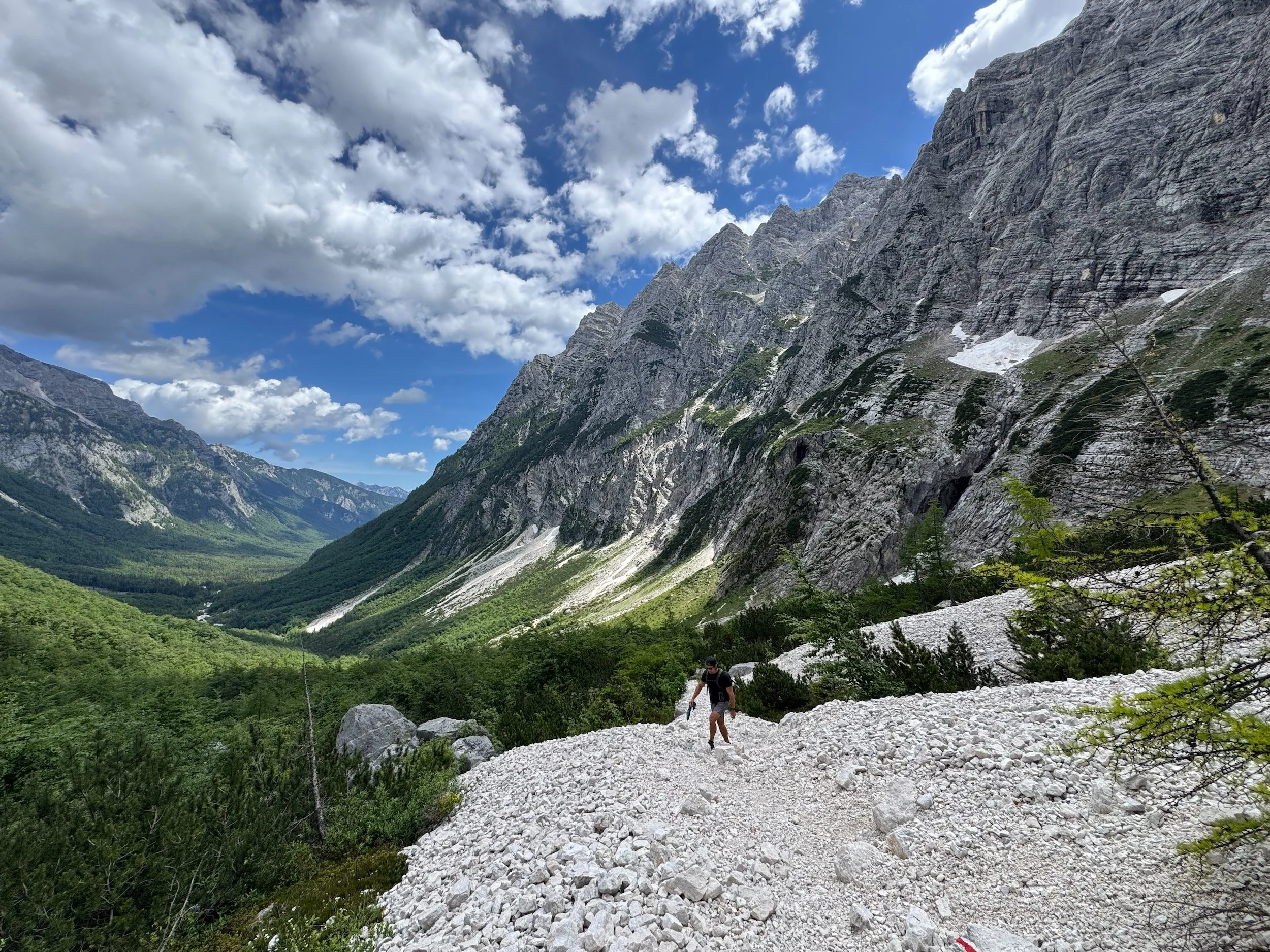
One of the best-known hikes in the area is Slemenova Špica, starting from the top of Vršič Pass. The route climbs towards the Vratca saddle before crossing beneath Mojstrovka and opening onto the broad grassy slopes of Sleme. From here, you get beautiful views of Jalovec, Mojstrovka and the surrounding Julian Alps.
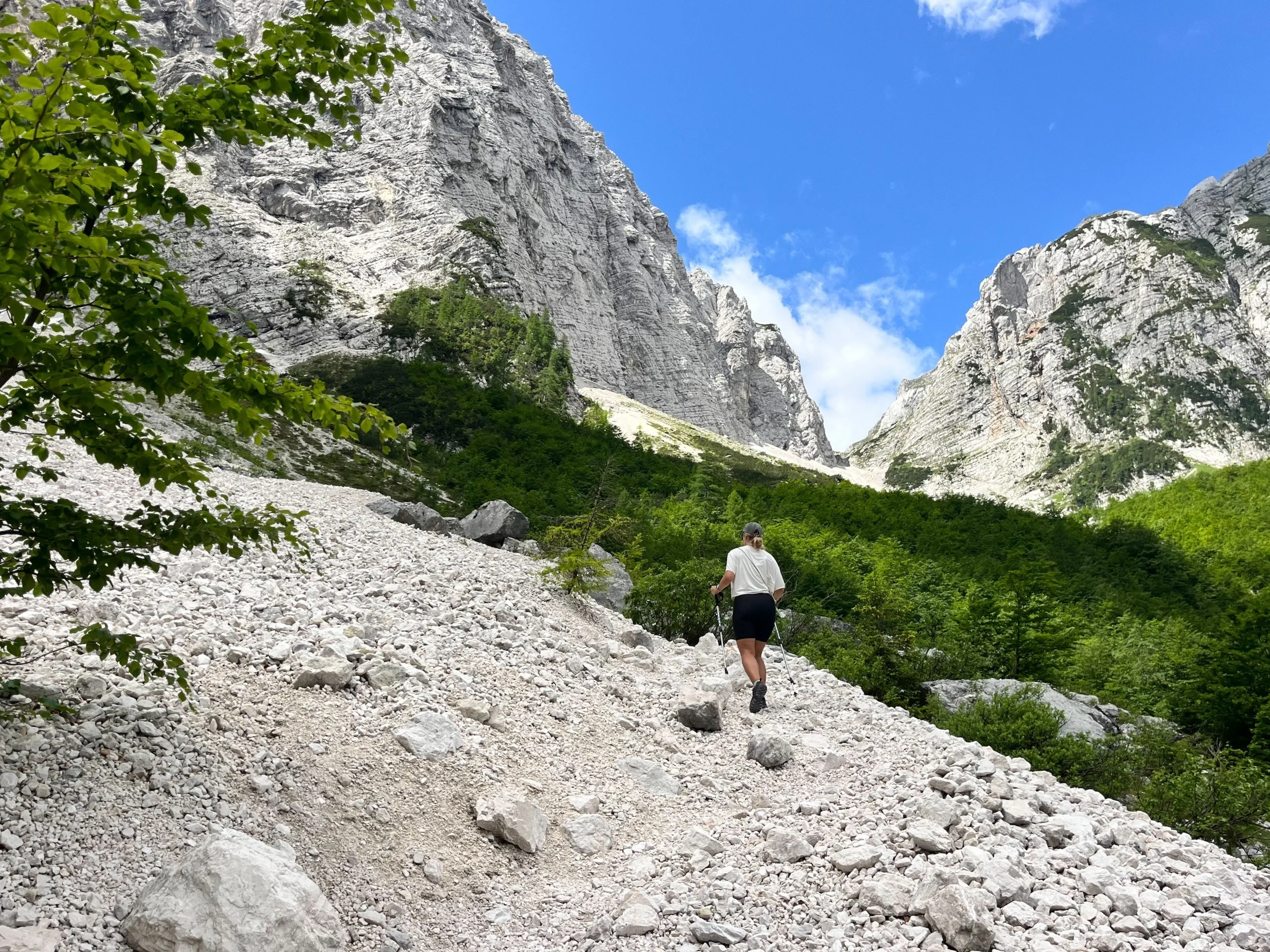
The route is classified as an easy mountain trail, with around 300 m of elevation gain. The official walking time is about an hour each way, though I would allow two and a half to three hours for the return hike and time at the viewpoint, plus additional time if you started the hike from the restaurant. The path is not technically difficult, but the initial climb is fairly steep and parts of the trail are rocky and uneven. We saw some people hiking up there with normal sneakers and they were struggling, particularly on the looser sections, so sturdy footwear with good grip is strongly recommended.
Parking at the pass can fill quickly, but there is additional parking by Erjavčeva koča, a nearby mountain hut and restaurant. A marked connecting trail leads from there to the main route, so you do not need to walk along the road. Be careful when using Google Maps: the pin marked Sleme does not indicate the correct trailhead. Navigate to Vršič Pass or Erjavčeva koča, then follow the marked hiking signs.
Peričnik Waterfall
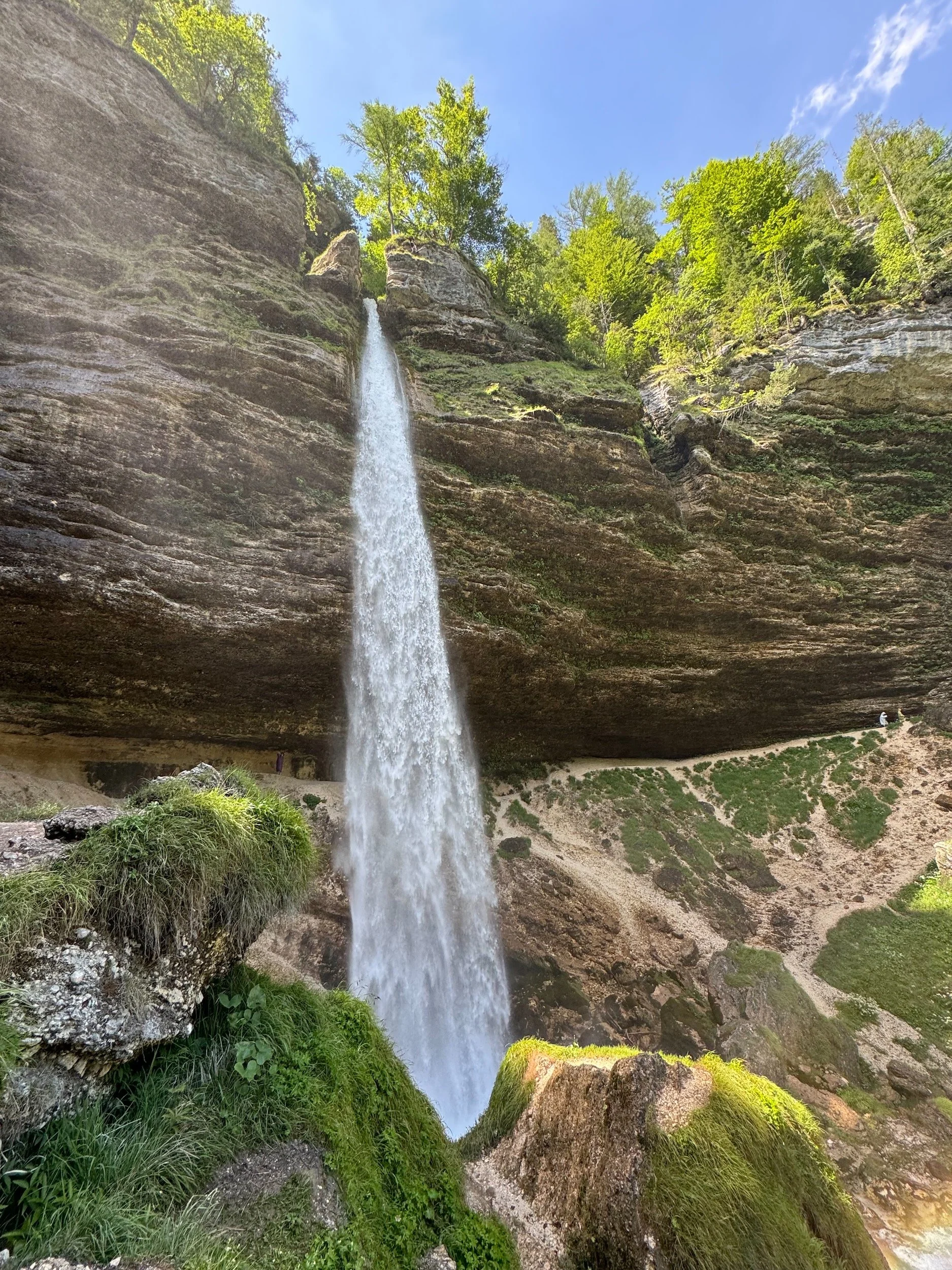
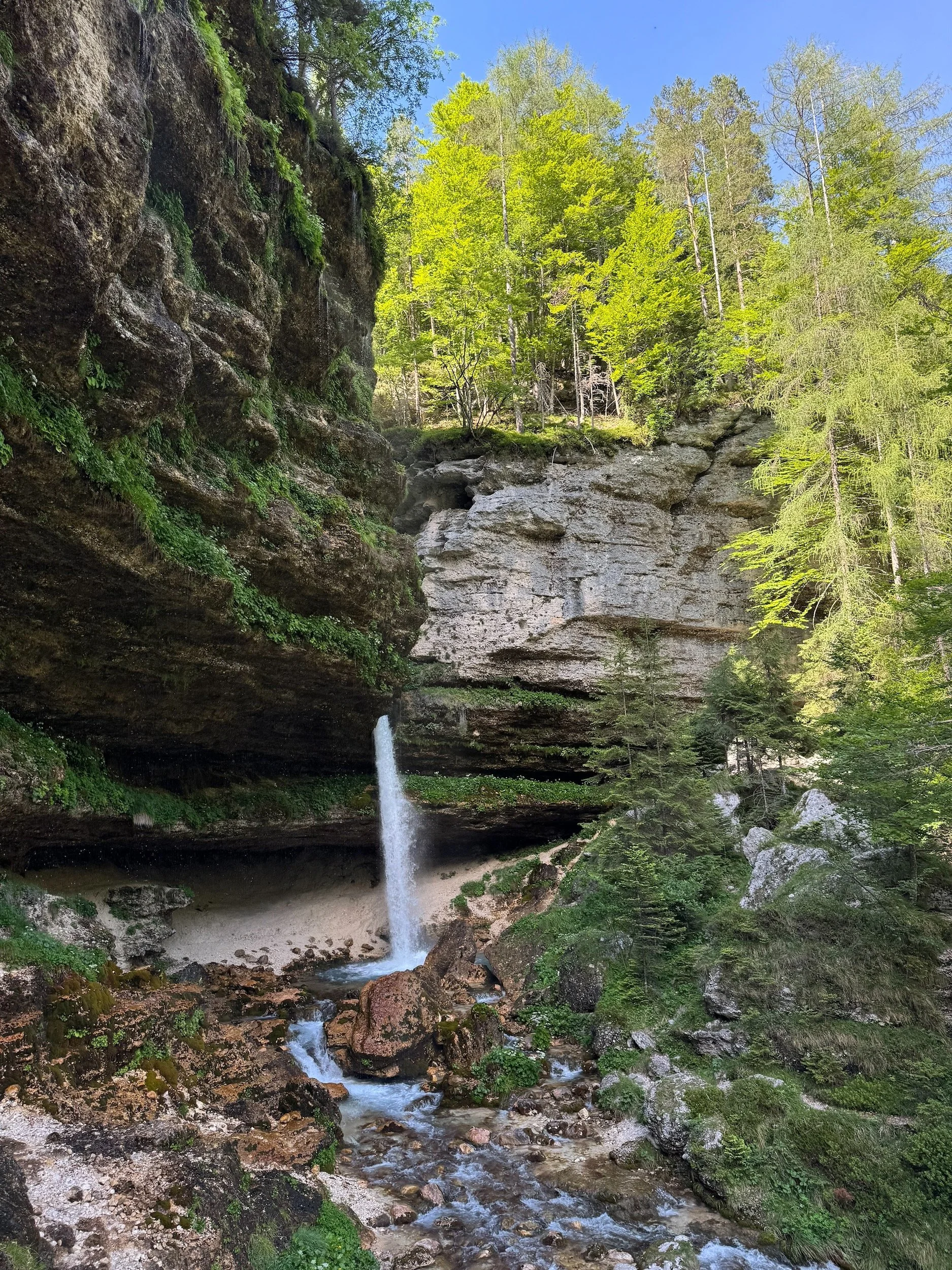
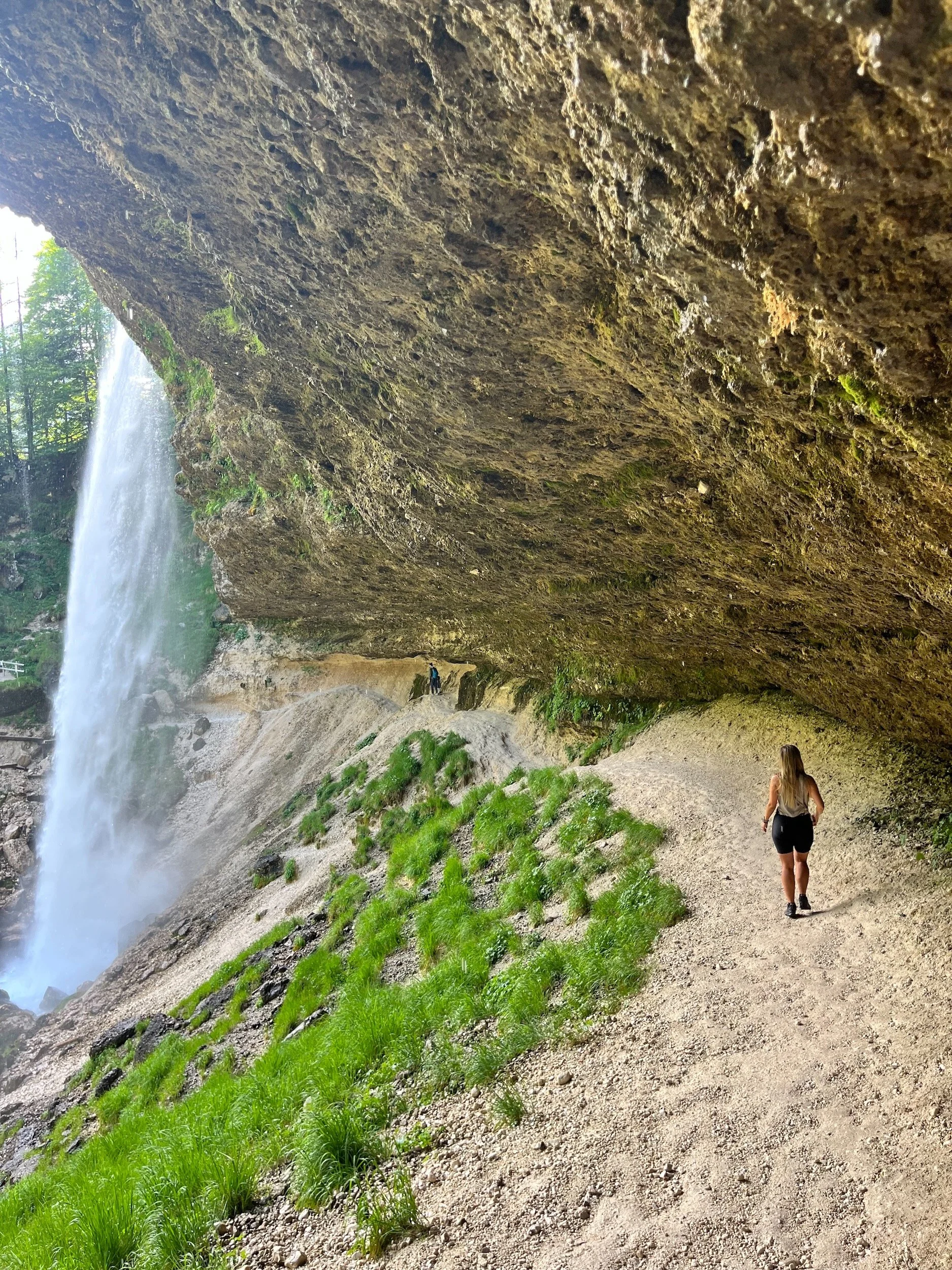
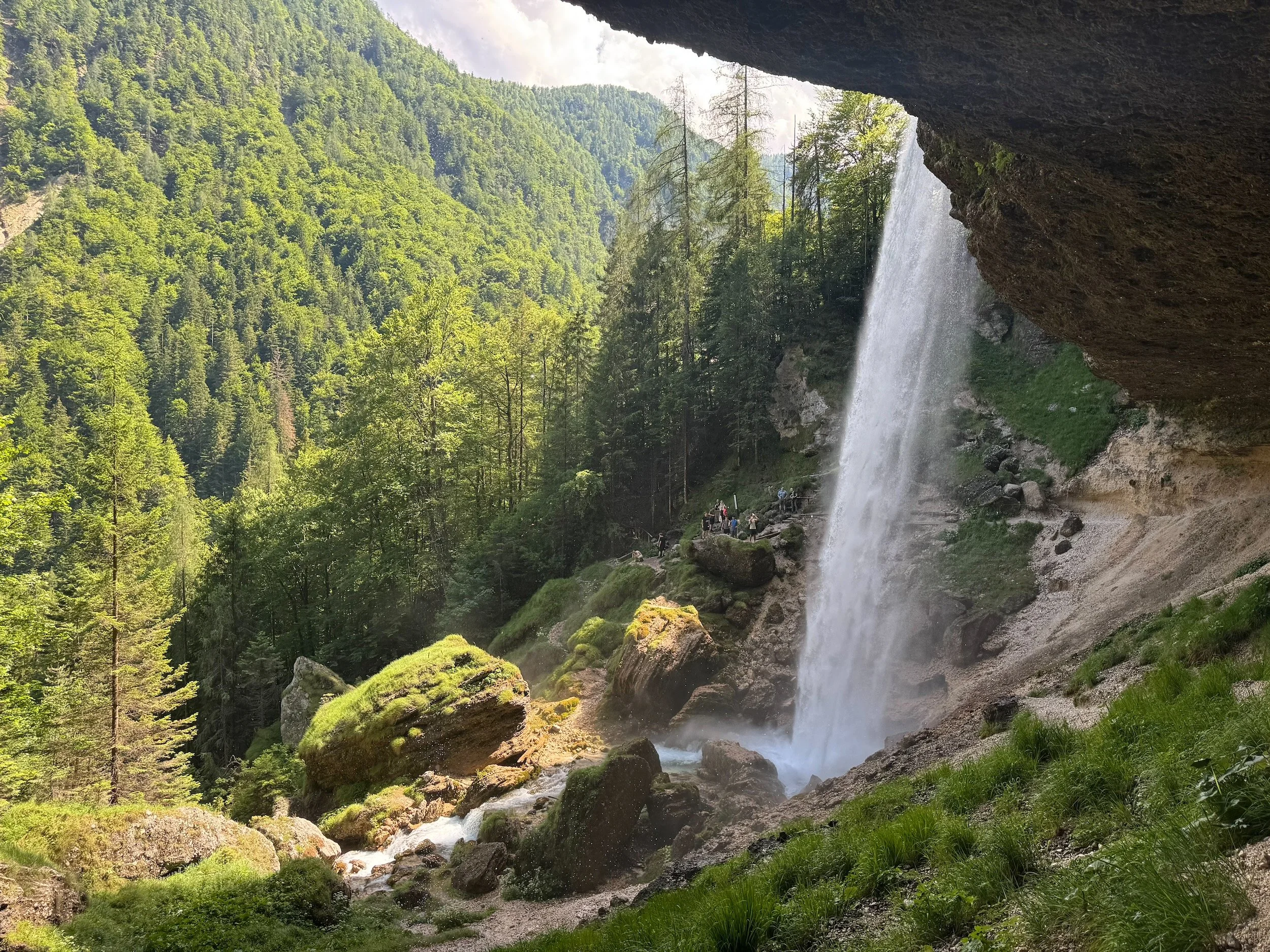
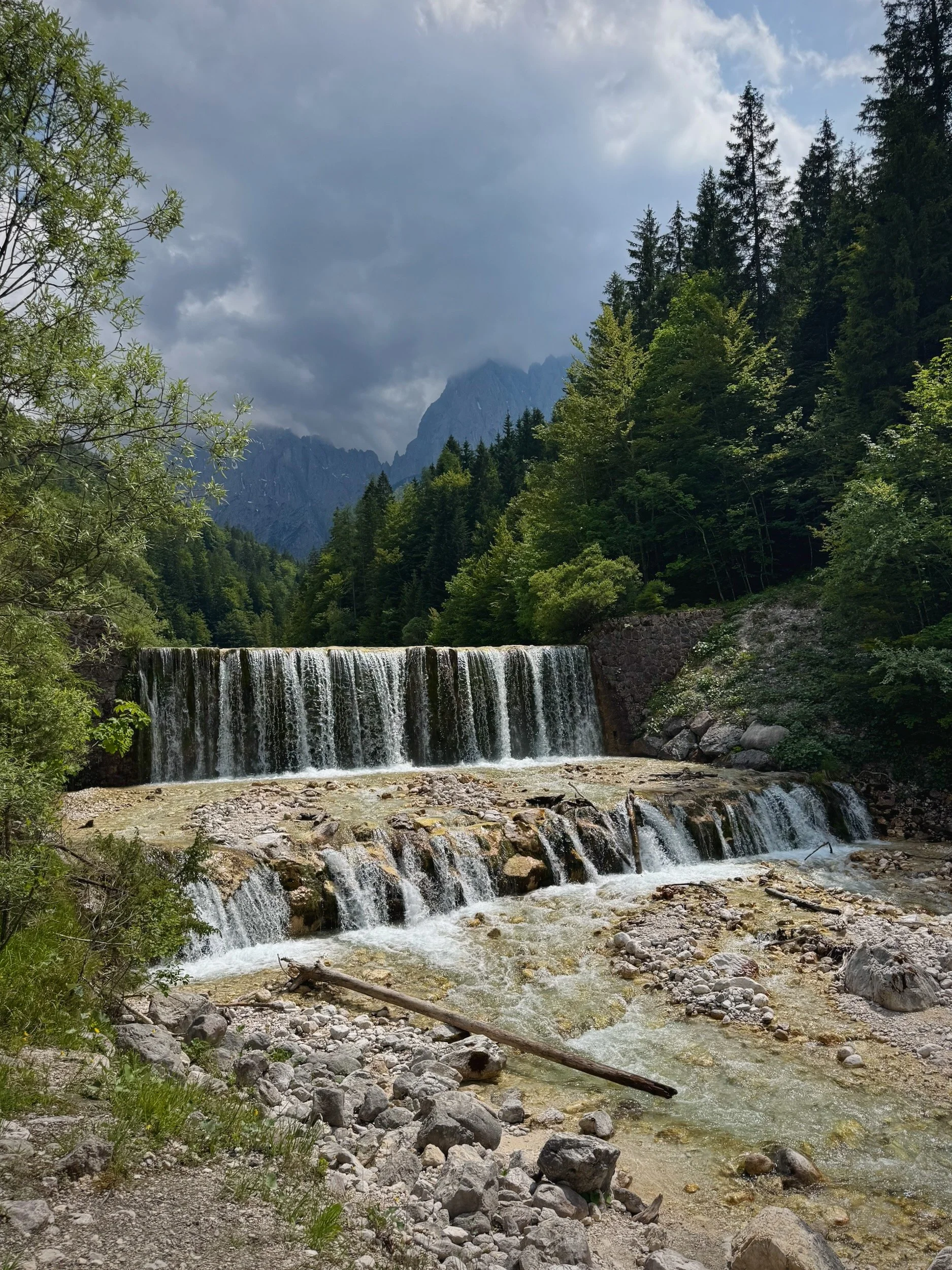
Another beautiful area is Vrata Valley, a long glacial valley stretching from Mojstrana towards the immense north face of Triglav. One of the main stops along the way is Peričnik Waterfall, where a short but steep forest trail climbs to the 52-metre Lower Peričnik. One of its most unusual features is the path behind the falling water, allowing you to experience the waterfall from both sides. The ground can be wet and slippery, so wear suitable footwear and bring a rain jacket if you want to stay relatively dry. During our summer visit, however, the cool spray felt rather refreshing. You can also continue higher up the trail to the smaller, 16-metre Upper Peričnik.
Access to Vrata Valley is regulated, with a barrier controlling private vehicles and parking permitted only in designated areas. Restrictions and fees vary by season, while spaces can fill quickly. Seasonal buses and electric shuttles run from Mojstrana to Peričnik Waterfall and farther into the valley, making public transport the easier option during busy periods. Check the current traffic arrangements before visiting.
If you want to explore more of the valley on foot, follow part of the Triglavska Bistrica Trail. It begins at the Slovenian Alpine Museum in Mojstrana, passes Peričnik Waterfall and continues towards Aljažev Dom beneath Triglav’s north face. You can walk only the section to the waterfall or continue deeper into the valley.
Vrata Valley
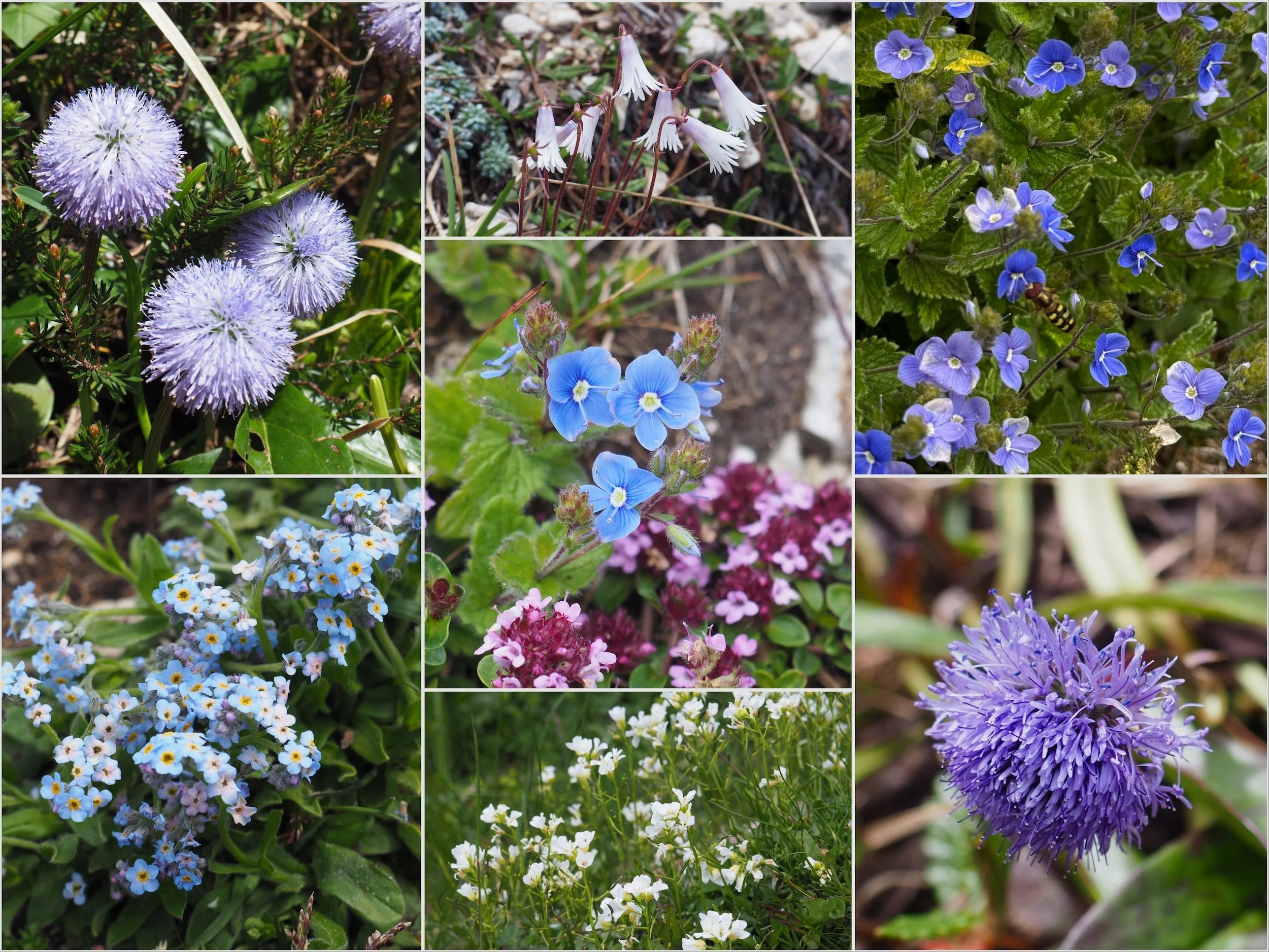
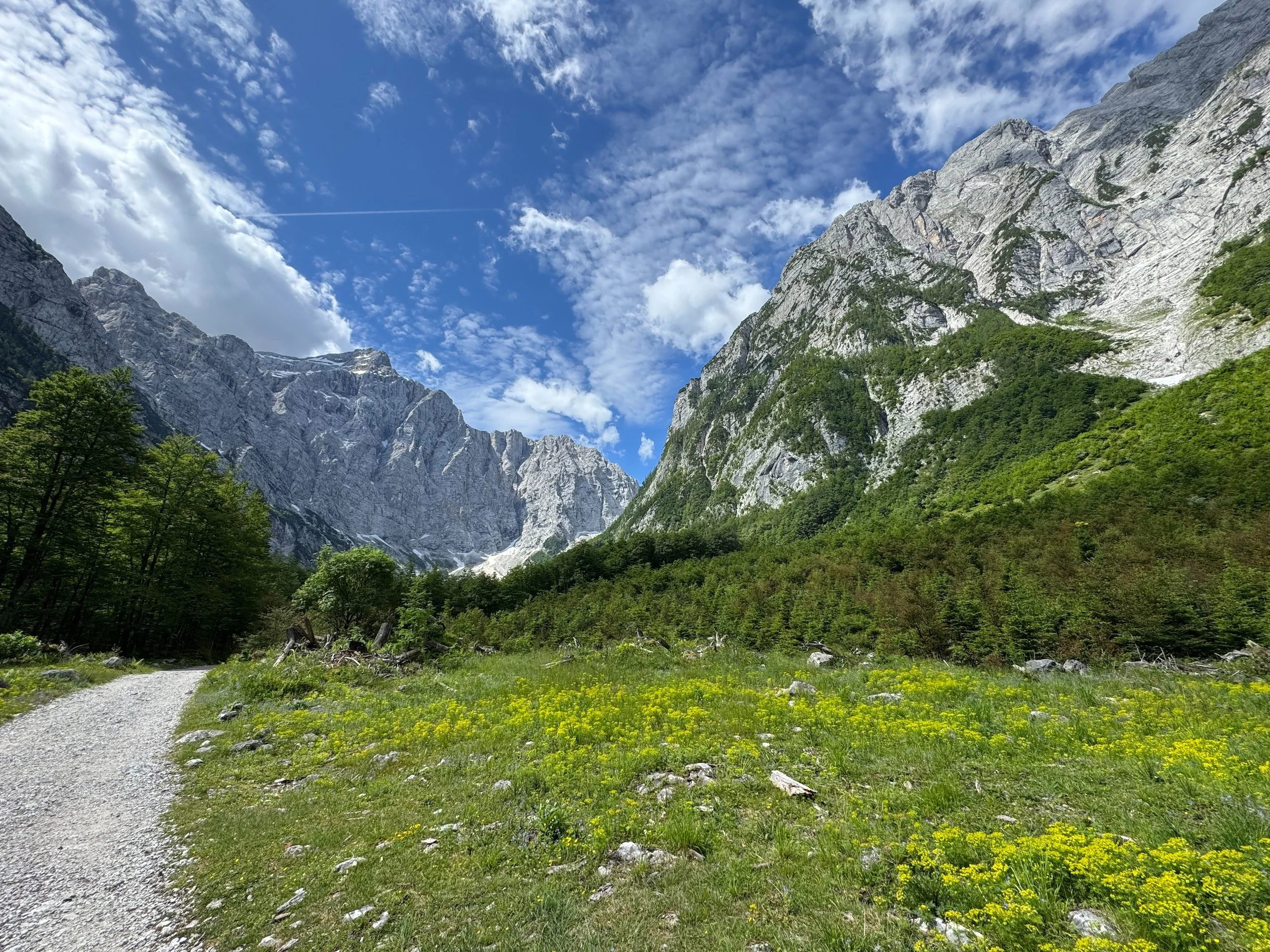
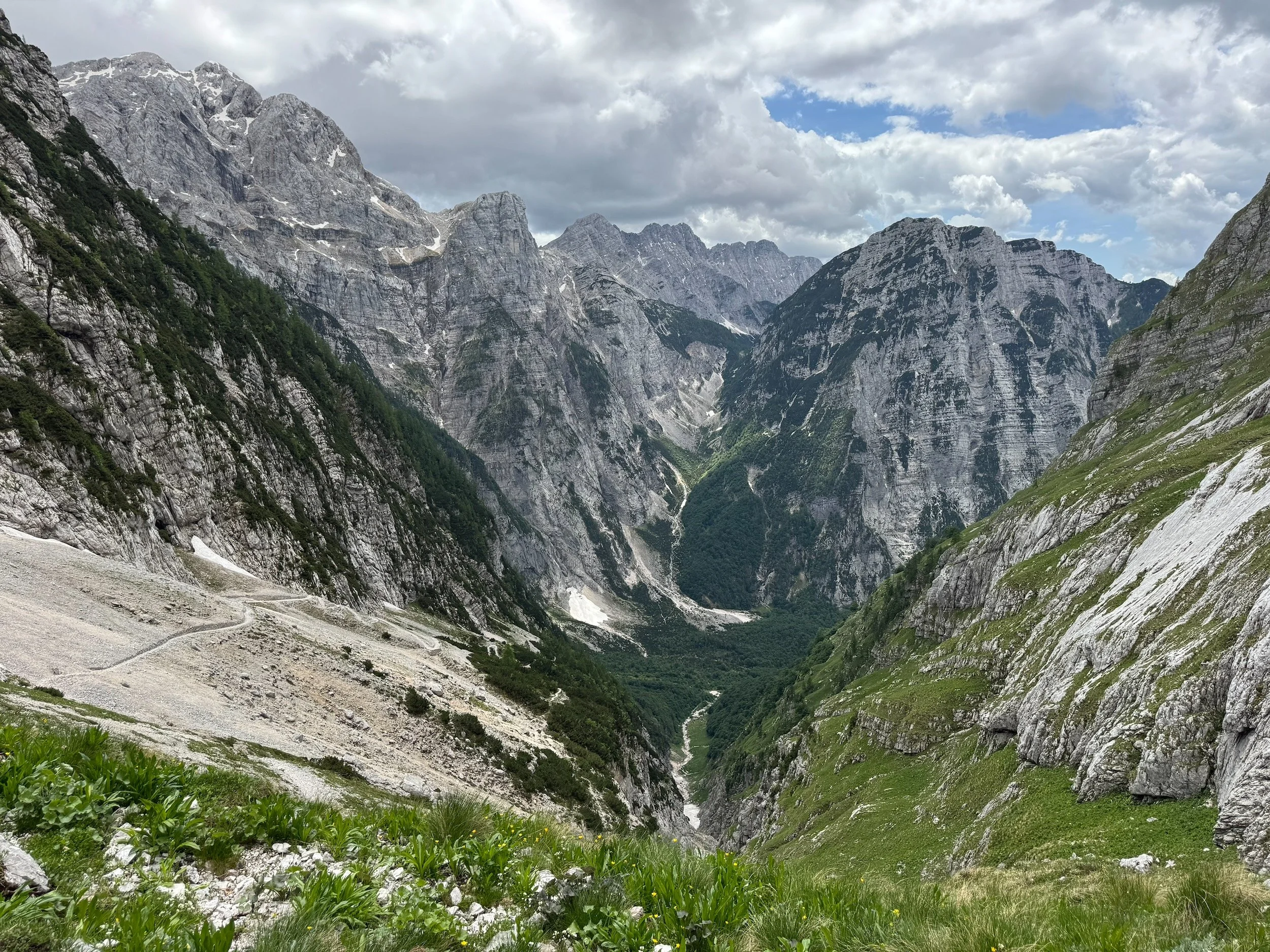
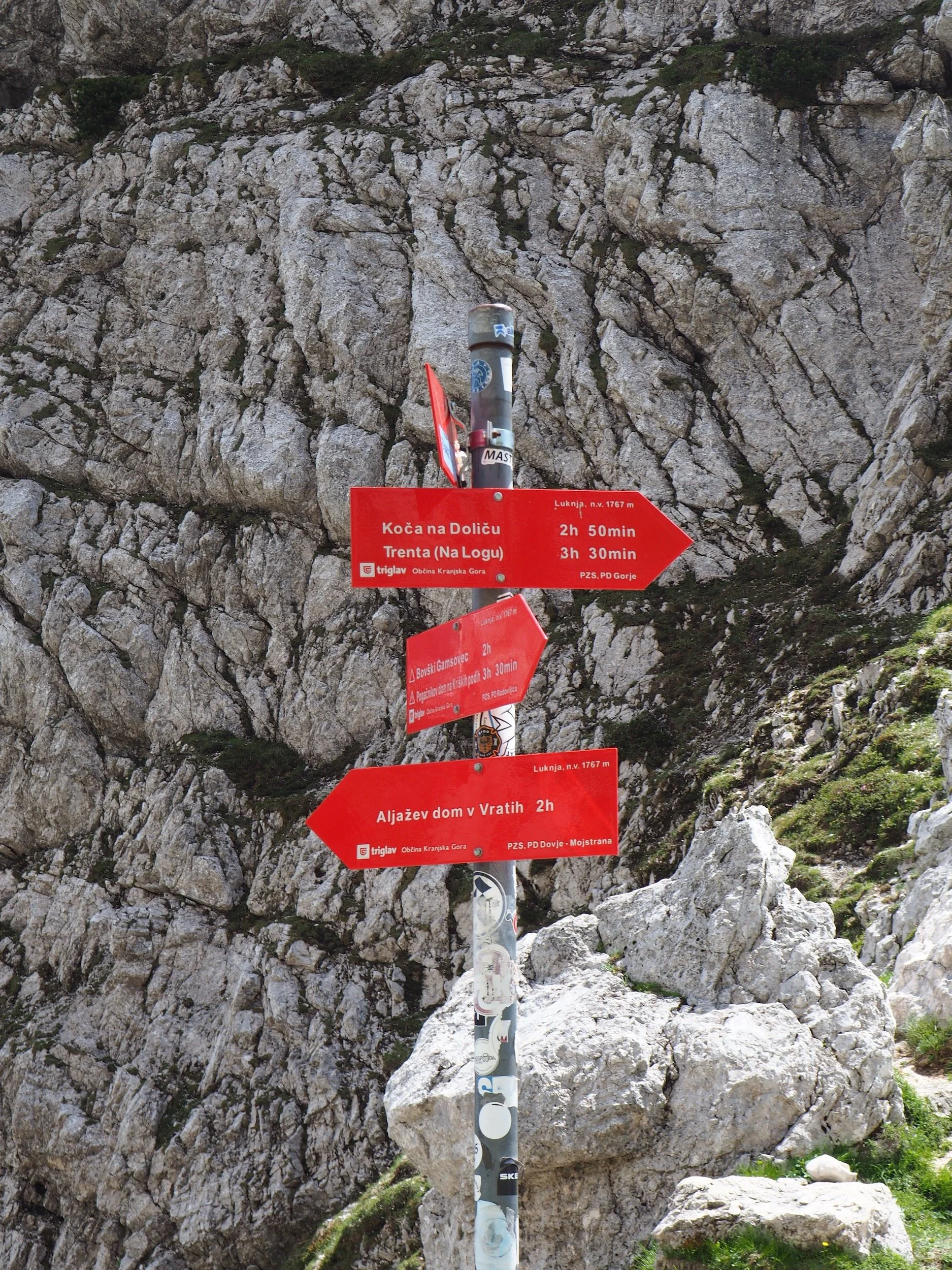
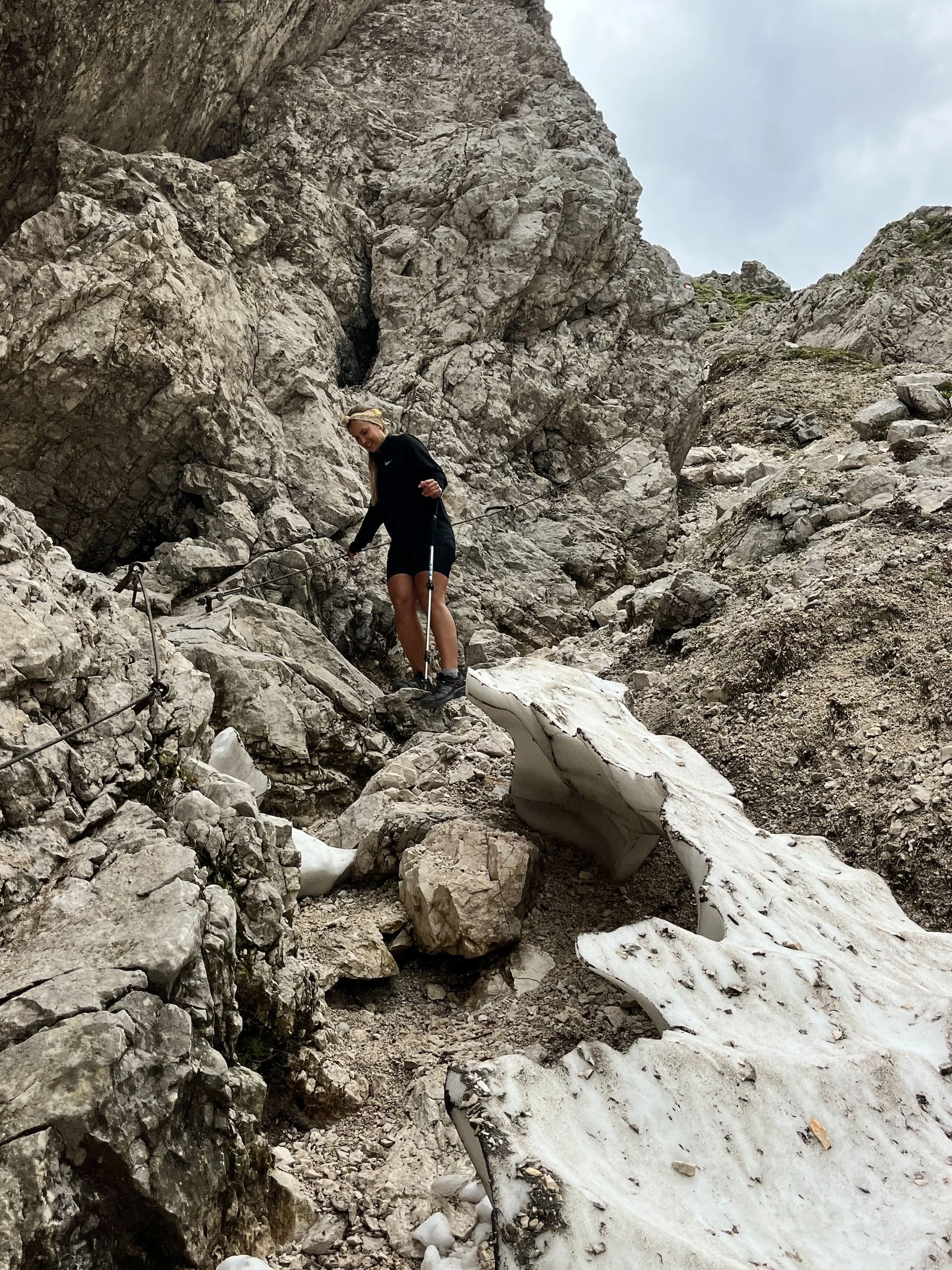
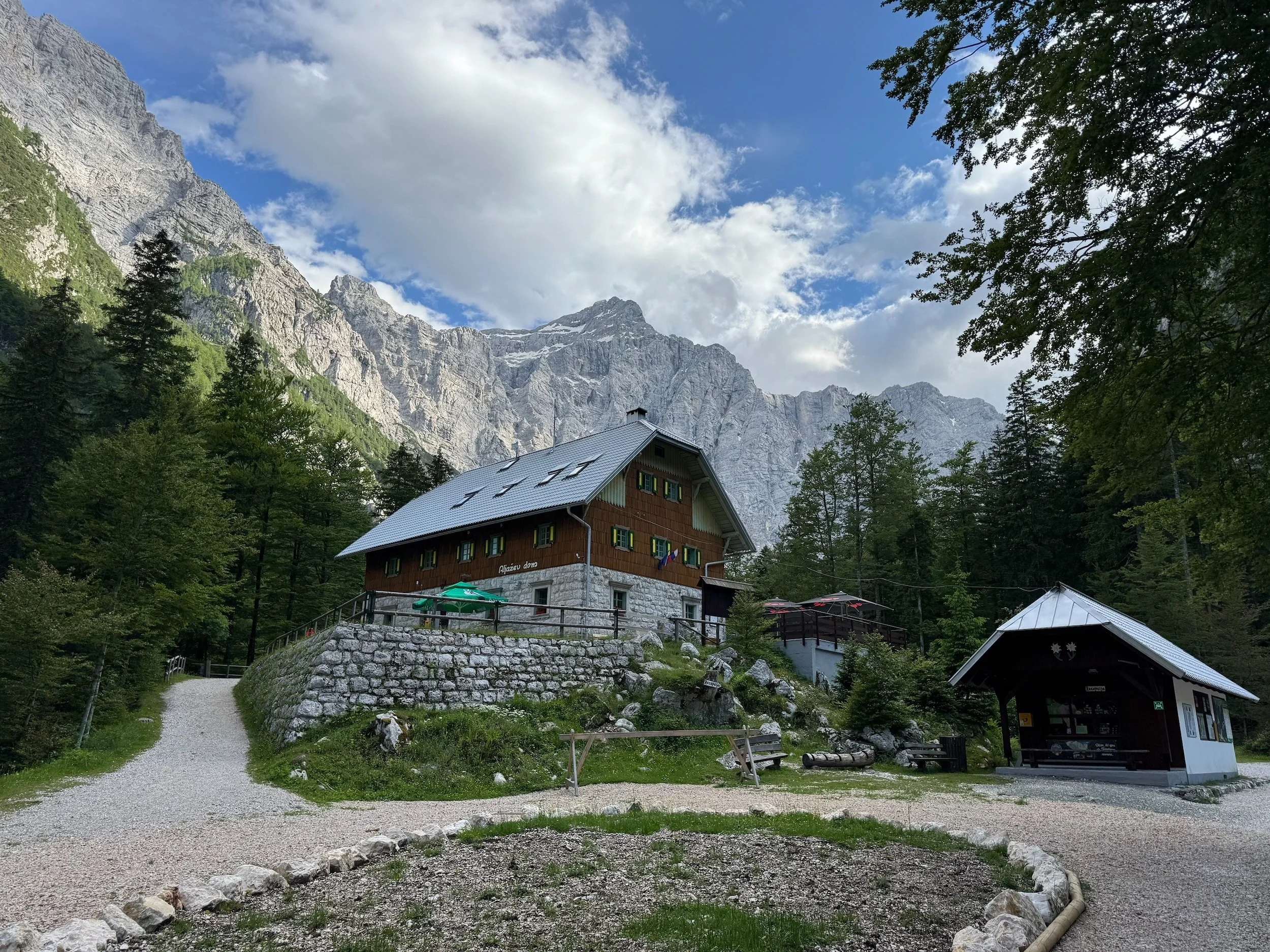
The road continues deeper into the valley towards Aljažev Dom, the starting point for several demanding mountain trails. We hiked from here to Luknja Pass, a 1758 m saddle between Triglav and Bovški Gamsovec. The route is roughly four kilometres each way and climbs around 740 m. It begins along a forested path before opening into the broad upper Vrata Valley, surrounded by mountains, alpine flowers and the clear Triglavska Bistrica stream. With very few other hikers around, the valley felt peaceful and remote.
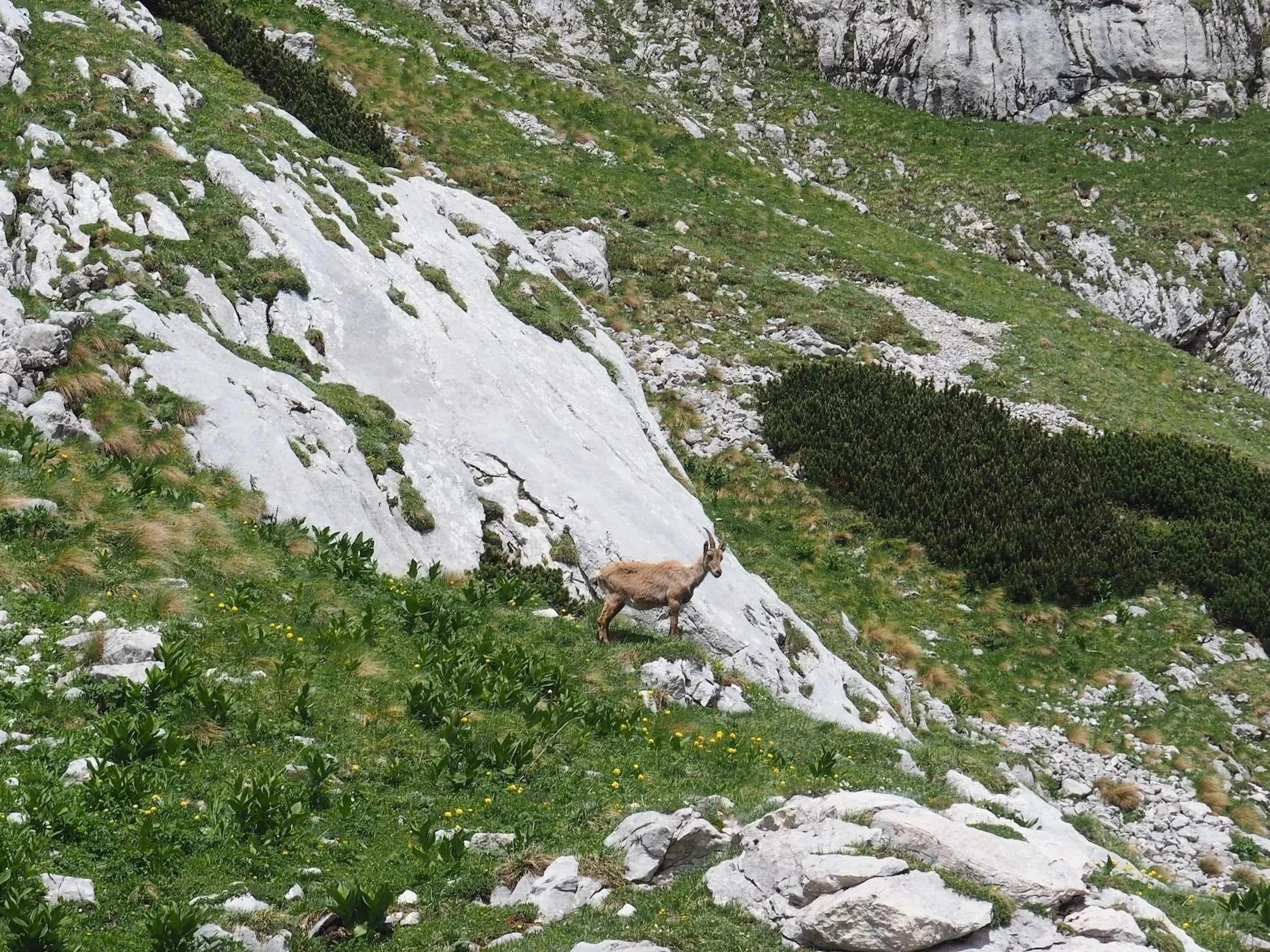
The final climb to the pass was the most demanding part, with a steep slope of loose rock and gravel that slowed our progress. At the top, we were rewarded with incredible views of the surrounding mountains and the sight of several chamois grazing among the rocks. The official ascent time is around two hours, though I would allow longer if you are less comfortable on this kind of terrain. Sturdy footwear, hiking poles, sure-footedness and stable weather are important. Experienced hikers can continue to Bovški Gamsovec, but this is a considerably longer and more exposed route with steep sections secured by fixed cables, requiring appropriate experience and equipment.
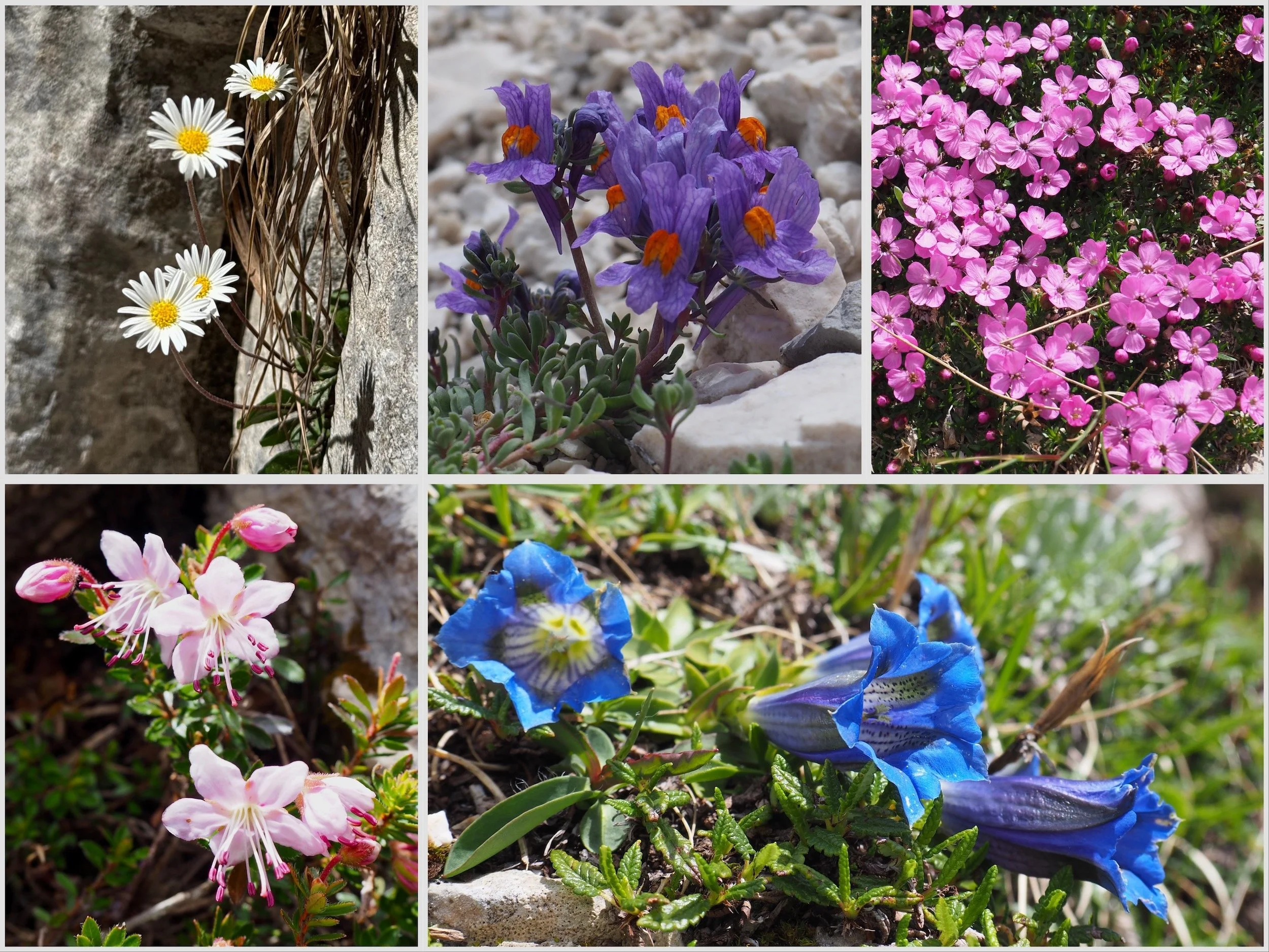
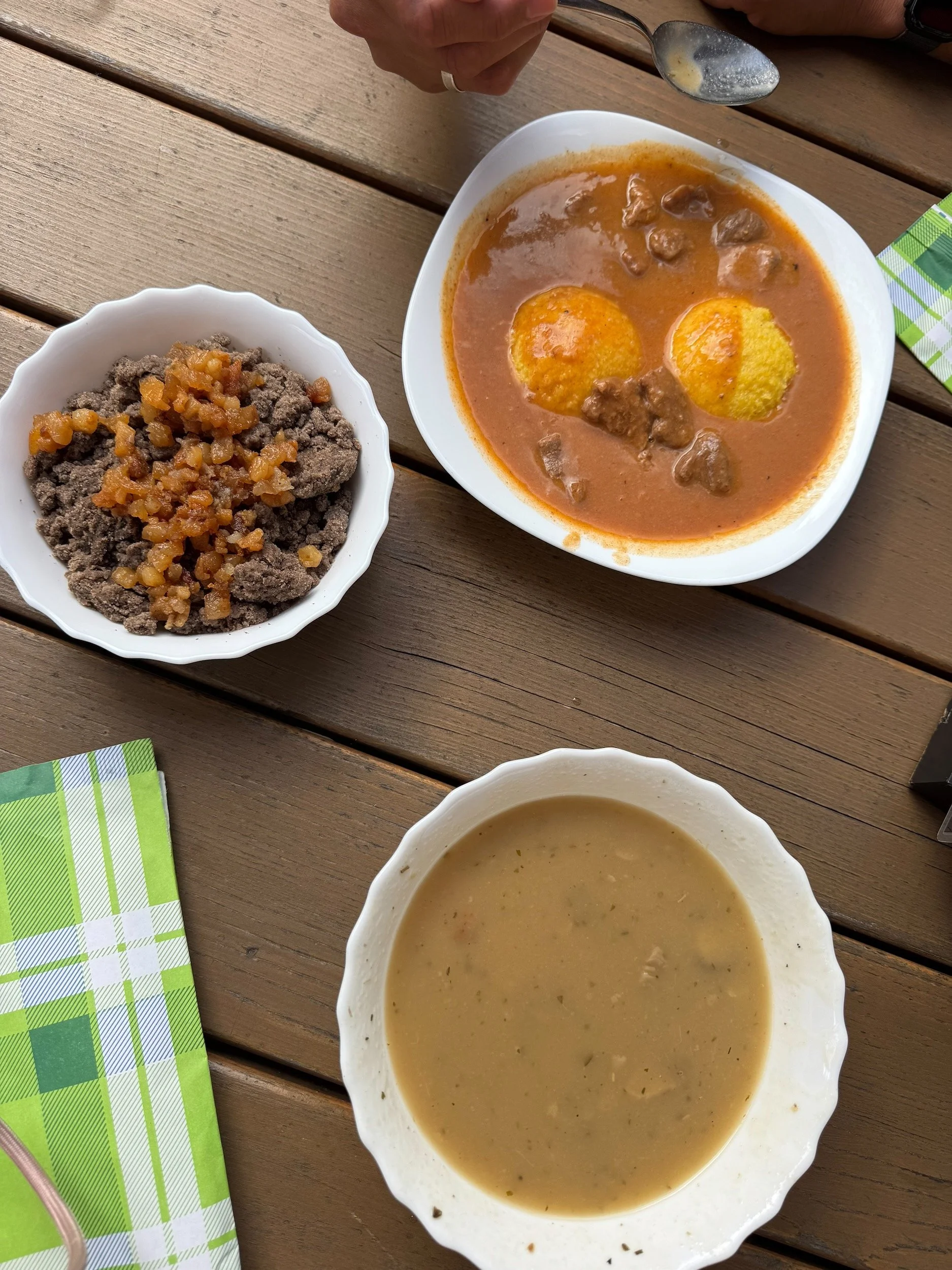
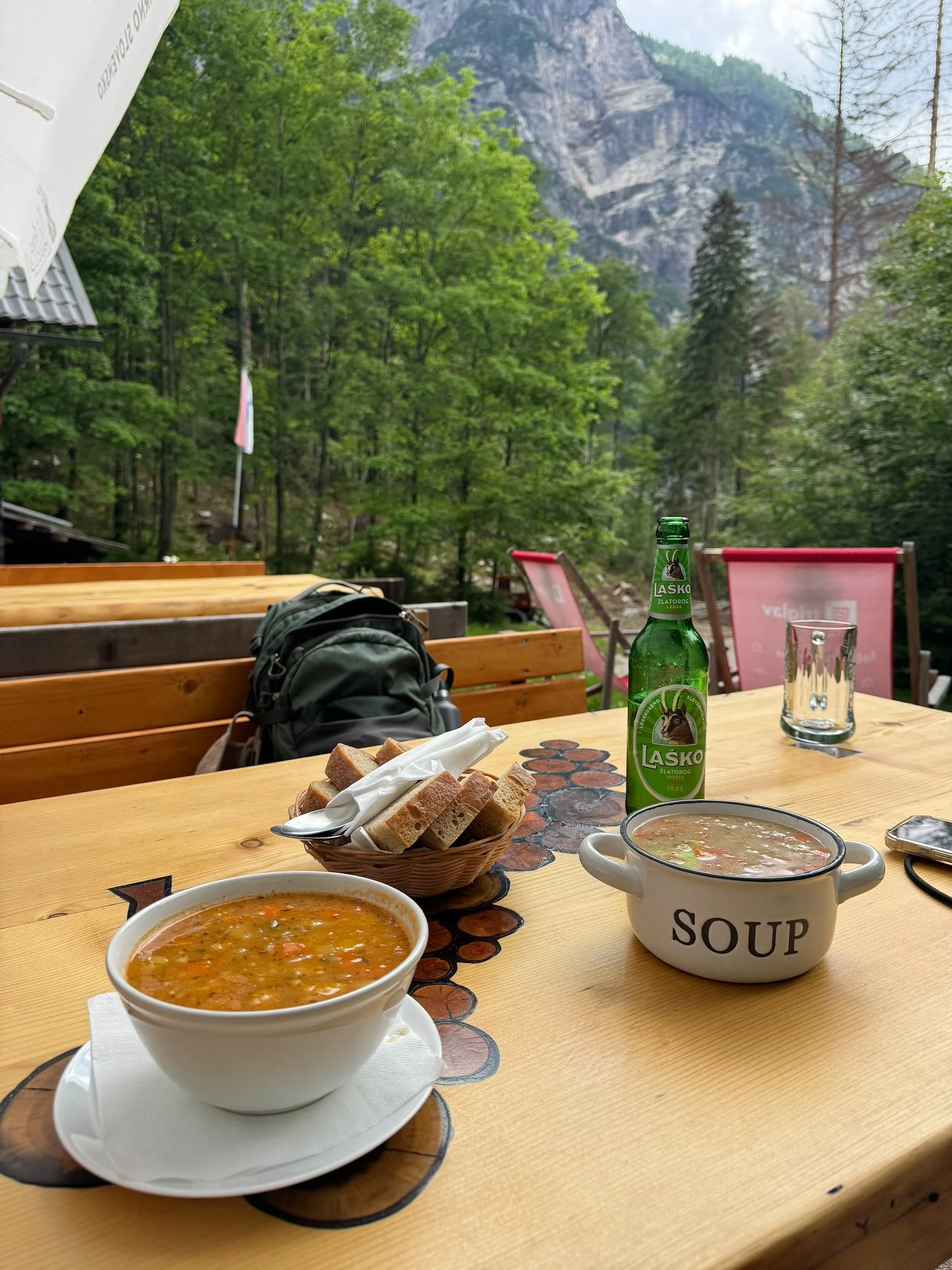
After returning, we stopped for food at Aljažev Dom. We had mushroom soup, dumplings, ajdovi žganci, a traditional Slovenian buckwheat dish and a rich goulash-style stew. It was hearty, satisfying mountain food and exactly what we wanted after the hike. You can also stay overnight at Aljažev Dom or other nearby mountain huts, which is useful for an early start on a longer route.
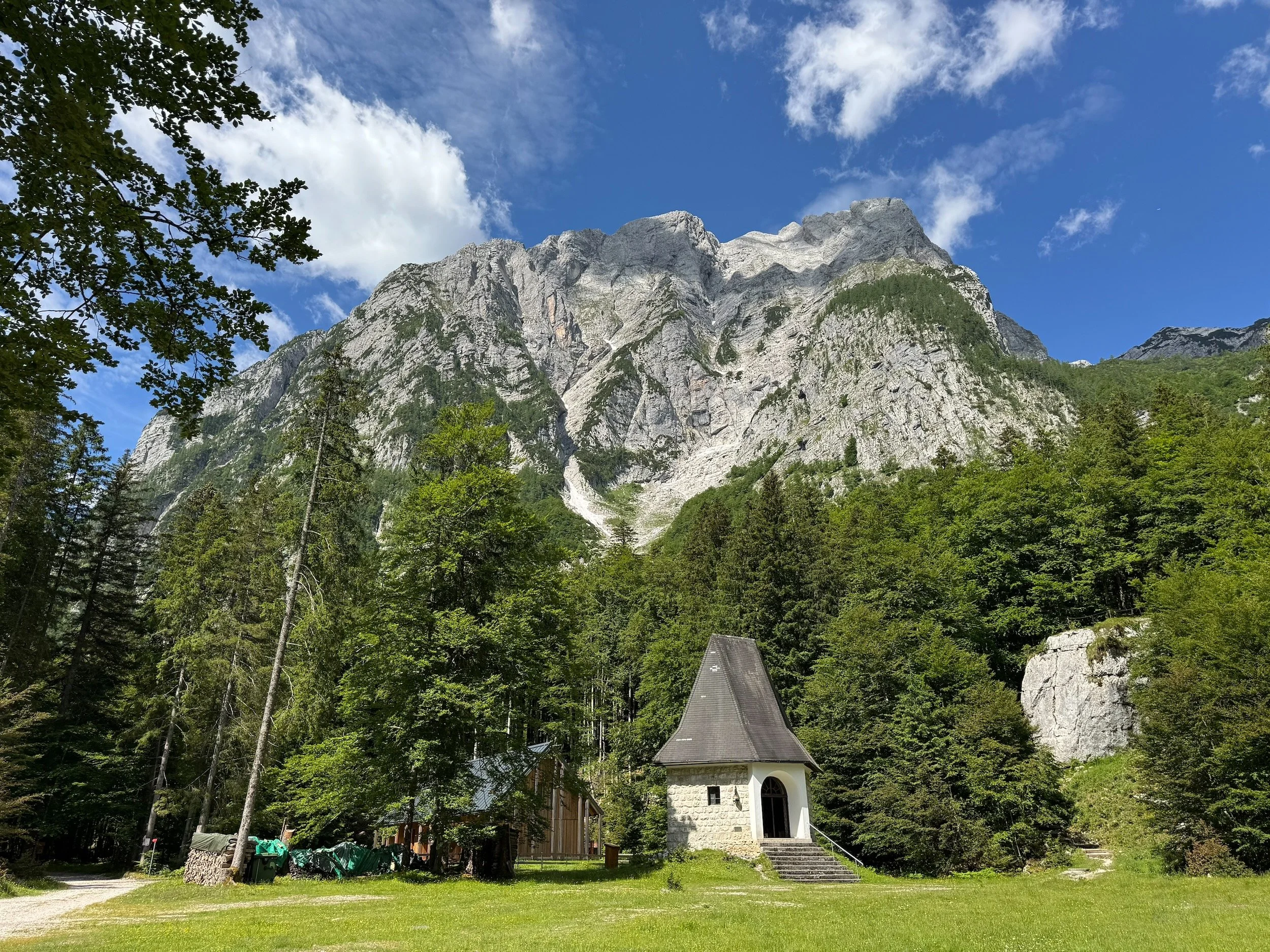
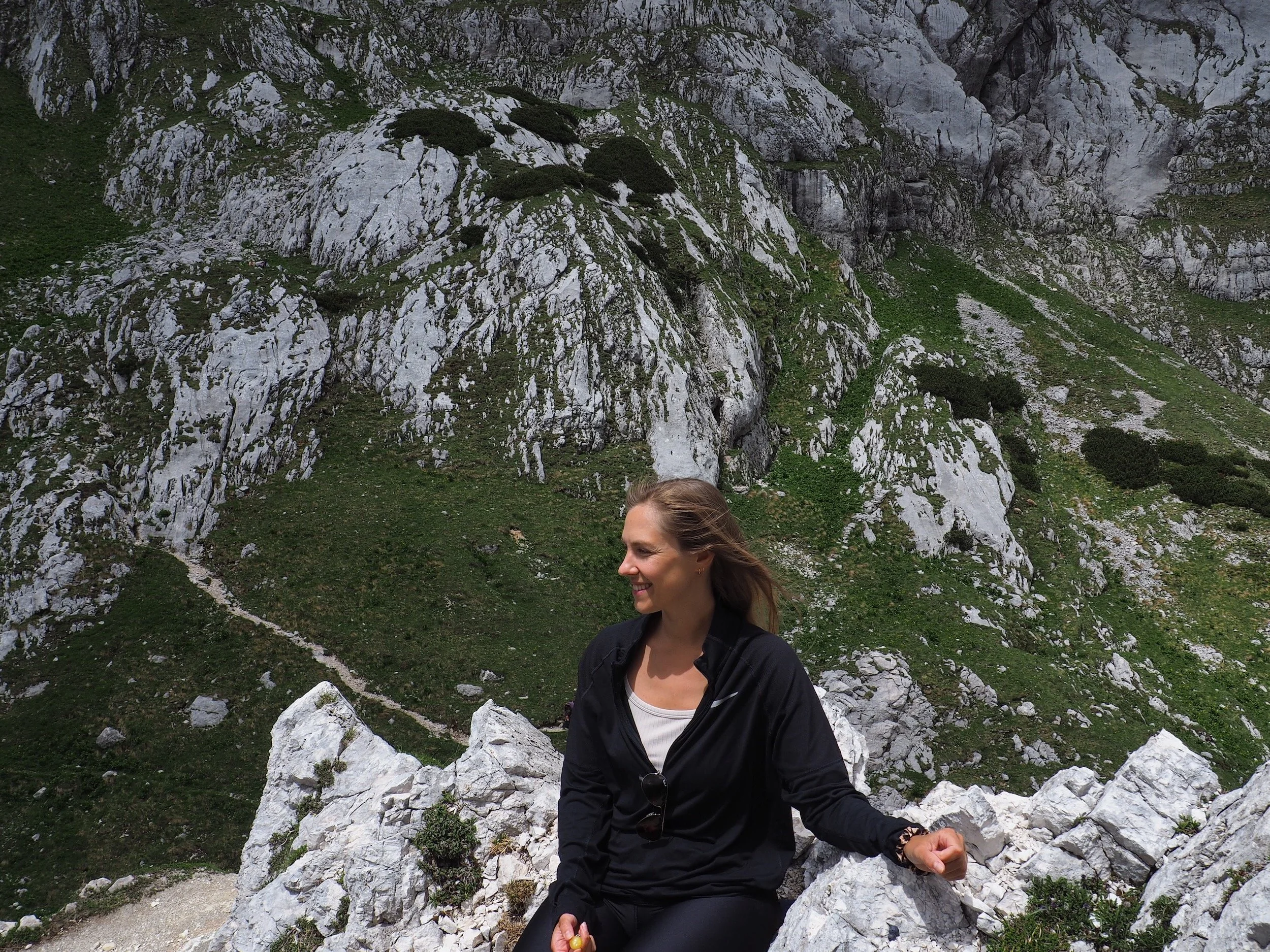
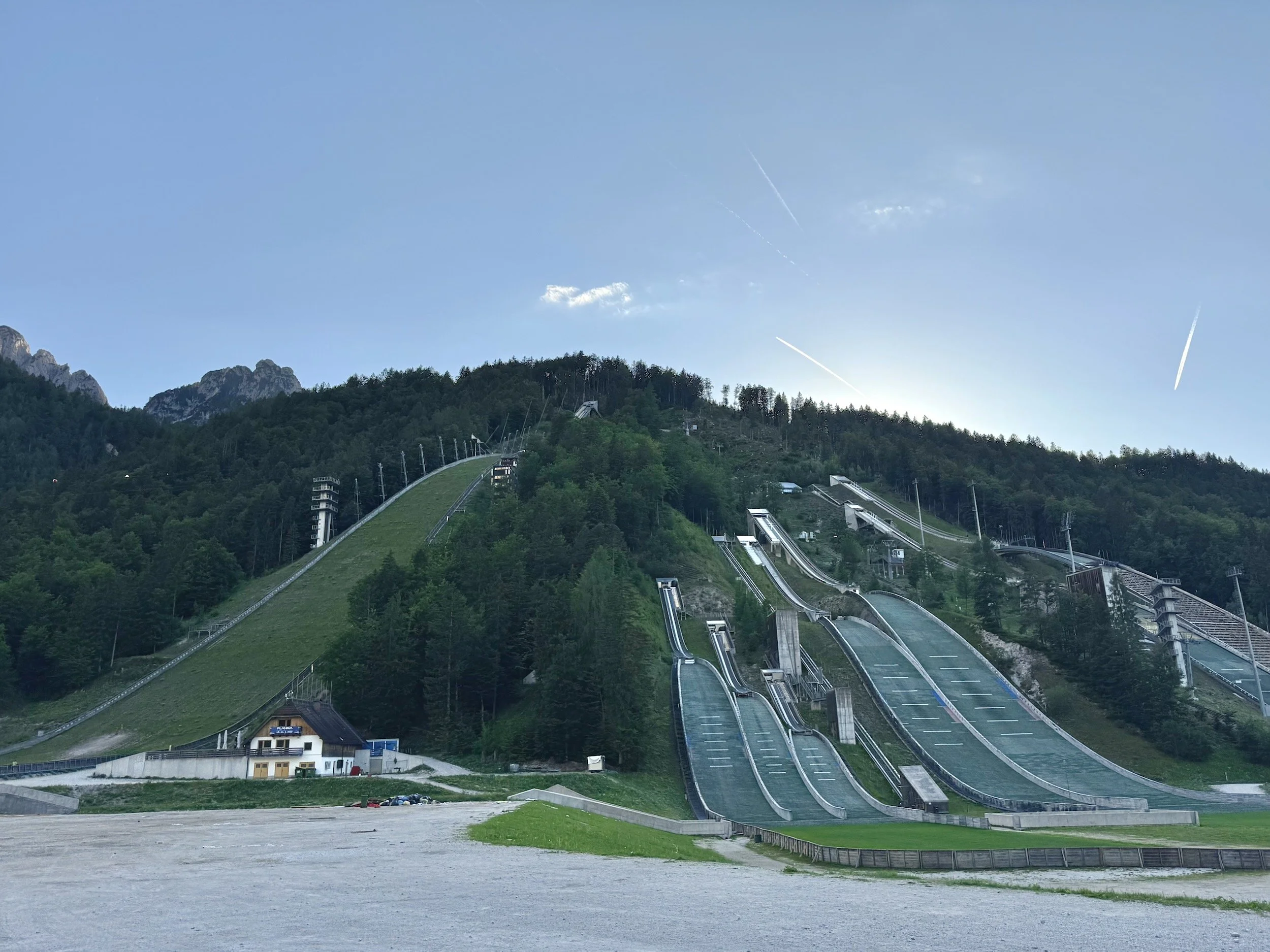
For a gentler mountain day, Planica and Tamar Valley are good alternatives. Planica is famous for its ski-jumping and ski-flying hills, but it is also the entrance to a scenic glacial valley leading towards Tamar beneath the distinctive peak of Jalovec. You can also spend an easier day walking or cycling between Kranjska Gora, Podkoren and Rateče, stopping at cafés and smaller nature sights along the way.
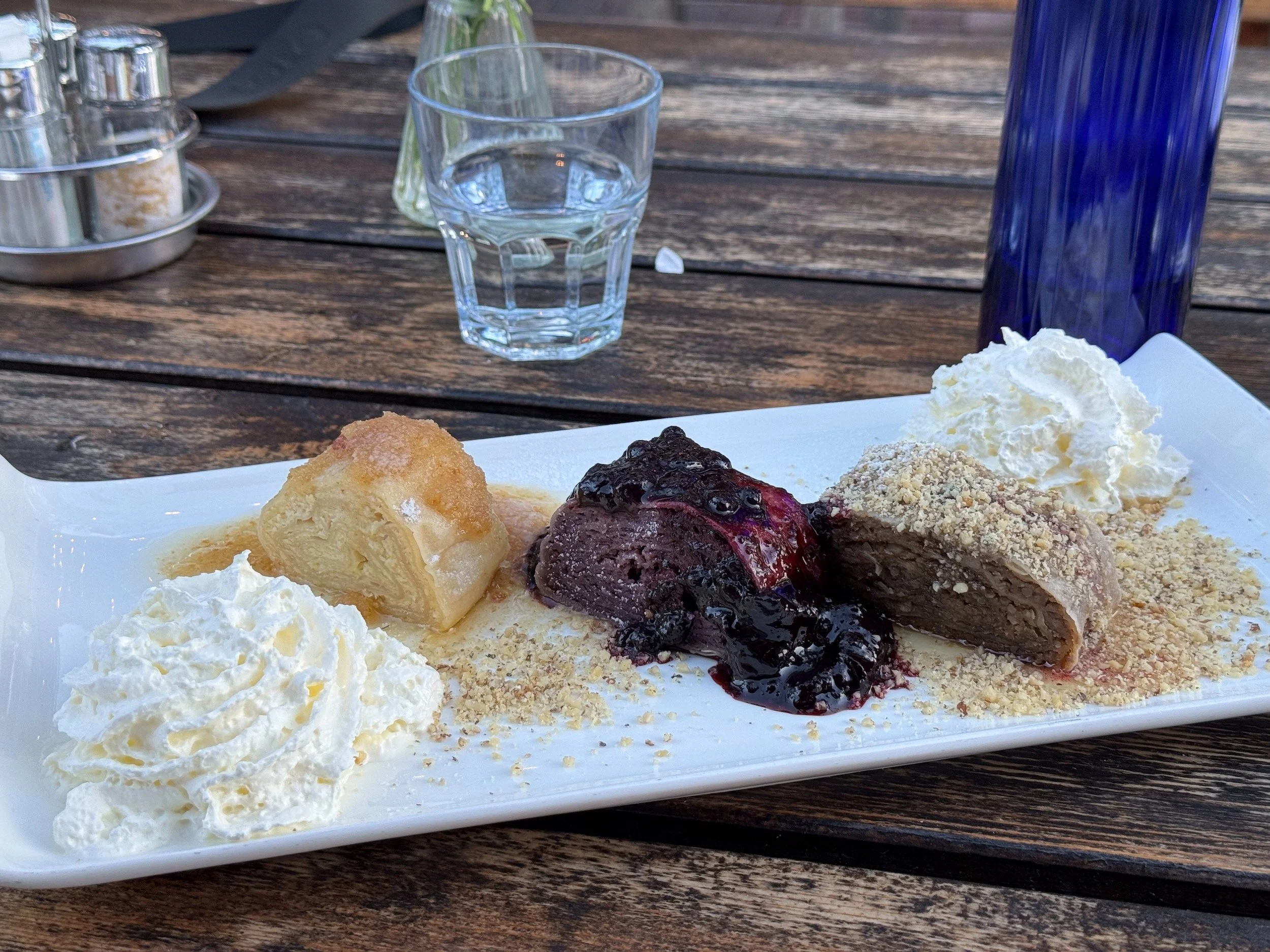
Another walk we enjoyed started directly in Kranjska Gora and led to Koča v Krnici. We passed Lake Jasna and followed the Pišnica River into Krnica Valley. The route was mostly gentle and relaxing, and the hut made a great lunch stop. We had stew, soup and strudel, which was simple but really tasty. Afterwards, we cooled off in Lake Jasna.
What we liked most about Kranjska Gora was the variety. You could do a demanding alpine hike one day, visit a waterfall the next and still have lakes, nature reserves and easy valley walks available when the weather was less reliable. It felt like the strongest hiking base of our Slovenia route and a fitting place to finish the trip.
Julian Alps
How long to stay: 3 to 4 nights. Add more time if you want several full-day hikes or greater flexibility around mountain weather.
Best for: Higher alpine hikes, waterfalls, lakes, scenic valleys, cycling and a lively mountain-town atmosphere
Good to know: Do not rely only on Google Maps for trailheads. Use marked trails, official route descriptions or a dedicated hiking app and always check mountain conditions before setting out.
Where to stay: Kranjska Gora is the most convenient base for restaurants, Lake Jasna and Vršič Pass. Podkoren and Rateče are quieter alternatives, while Mojstrana gives you easier access to Vrata Valley and Peričnik Waterfall.
Final thoughts on this Slovenia road trip
Looking back, Slovenia’s compact size never made the trip feel repetitive. Over a little more than two weeks, we travelled from the Adriatic coast and limestone caves to alpine valleys, turquoise rivers and the Julian Alps. Staying several nights in each region gave us time to hike, adjust our plans around the weather and experience places beyond their main viewpoints.
Just as memorable were the quiet villages, welcoming guesthouses and friendly people we met along the way. The best-known places can certainly feel busy, but it was still easy to find slower, more personal experiences away from the main stops. Slovenia is no longer a secret, but it still rewards travellers who don’t rush.
This guide reflects the slower route that worked well for us, but not everyone has 2+ weeks available. With a more efficient order and shorter stays, you can still experience a varied mix of Slovenia in one or two weeks. I plan to share a separate condensed itinerary for travellers with limited time, while this guide can serve as the more detailed version for choosing which regions and experiences matter most to you.